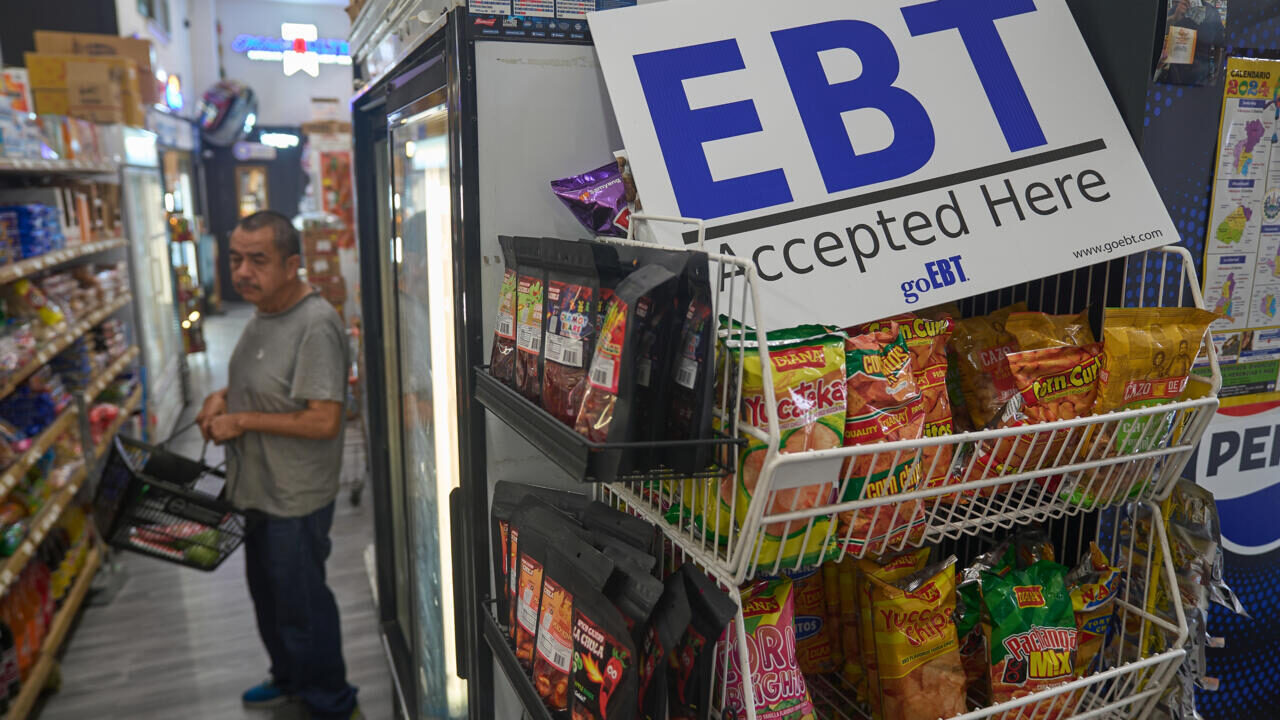
The Trump administration was ordered by two federal judges to continue providing food assistance during the protracted shutdown using emergency funding.
The White House cannot halt Supplemental Nutrition Assistance Program (SNAP) benefits, according to two federal judges who have ordered the Trump administration to continue providing food assistance for millions of Americans despite the prolonged government shutdown.
Judges from Massachusetts and Rhode Island rendered the rulings, which mandate that the government use emergency contingency funds to guarantee that low-income households receive their monthly food aid. The decisions were made while the shutdown, which is now in its second month, has prevented millions of people from accessing necessary services and stopped financing for a number of federal programs.
About 42 million Americans are supported by SNAP, commonly referred to as food stamps, which offer reloadable debit cards for grocery expenditures. The average family of four makes about $715 a month, or about $6 a day for each member. Since the government shutdown started on October 1, federal funding has been suspended while states manage the program.
On Truth Social, President Donald Trump stated that he had instructed federal attorneys to look for court rulings on the program’s legal funding, but that even with prompt guidance, “it will unfortunately be delayed.”
After the Department of Agriculture (USDA) said in November that it would not be allocating food assistance monies, citing “the well has run dry,” a number of US states filed lawsuits against the Trump administration. The states contended that in order to make payments, the government ought to draw from its $6 billion emergency contingency reserve.
According to Massachusetts District Judge Indira Talwani’s decision, the states’ argument that Congress intended for SNAP payments to continue “at a reduced rate if necessary” after federal funding runs out is likely to be successful. She gave the administration instructions to access the contingency funds and provide an update by Monday about the issuance of at least some November benefits.
Additionally, according to Judge Talwani, the USDA “erred in concluding” that it was legally prohibited from accessing emergency reserves during a funding lapse.
In a different ruling, Rhode Island Judge John J. McConnell Jr. mandated that the administration use the contingency fund or a separate $23 billion reserve established under the 1935 Agricultural Adjustment Act to provide full SNAP payments by November 3. He stated the government must make partial payments by November 5 if it doesn’t.
USDA has not responded to the decisions. Although he stated that a procedure still needed to be followed, Treasury Secretary Scott Bessent told CNN that payments “could be made as soon as Wednesday.”
Due to the shutdown brought on by a budget dispute between Republicans and Democrats, millions of people are uncertain about their access to critical assistance. Calling the administration’s decision to stop benefits “a moral disgrace and a direct assault on America’s working families,” the National Parents Union denounced the action.
Experts caution that the contingency fund would only cover roughly 60% of recipients for a single month, even if the administration were to activate it. Before things become worse, proponents are pleading with the White House and Congress to break the deadlock.