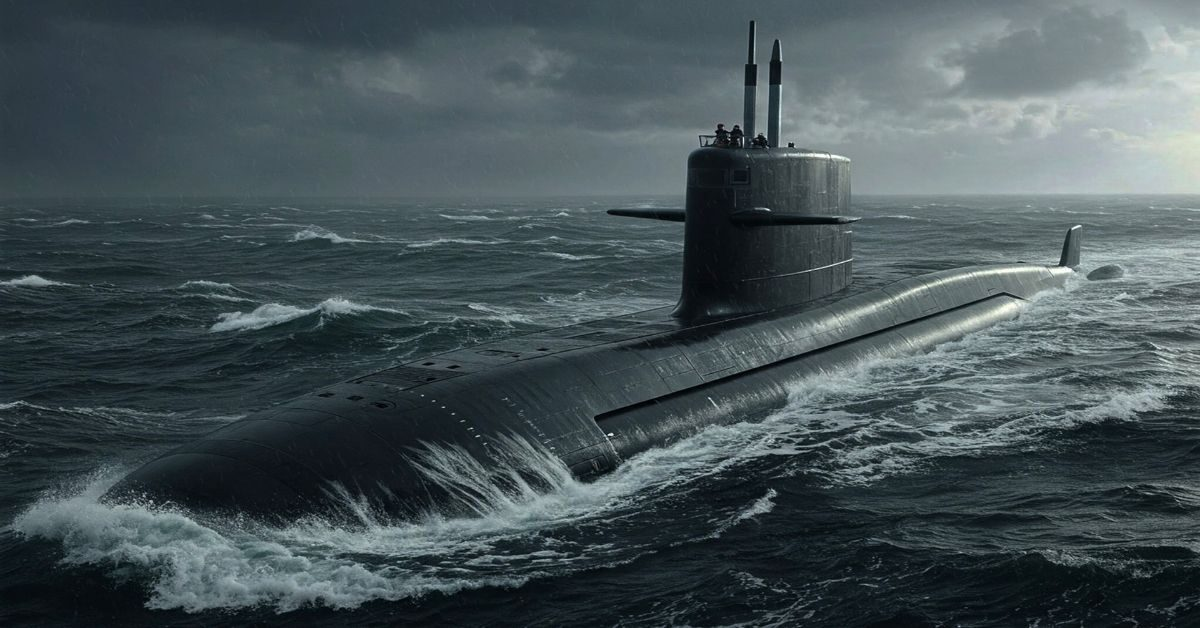
The first Chinese-built submarine will be put into service by Pakistan in 2026, enhancing its naval prowess and fortifying its military alliance with Beijing.
The first Chinese-designed Hangor-class submarine will be commissioned by the Pakistan Navy next year, a major step in rebuffing India’s regional power and highlighting the growing military collaboration between Beijing and Islamabad.
As part of an eight-vessel agreement with China, Pakistan’s naval head, Admiral Naveed Ashraf, told China’s Global Times that the submarine program was “progressing smoothly” and would significantly improve Pakistan’s capacity to patrol the Indian Ocean and North Arabian Sea.
Under the deal, which is reportedly valued at much to $5 billion, Pakistan would manufacture the other four diesel-electric attack submarines after the first four are built in China. This is an effort to increase local shipbuilding and technical know-how.
From a shipyard in the province of Hubei, Pakistan has already launched three of the submarines into the Yangtze River in China.
“Chinese-origin platforms and equipment have been dependable, technologically sophisticated, and well-suited to Pakistan Navy’s operational requirements,” Ashraf stated. The Navy is also concentrating on developing new technologies like electronic warfare, unmanned systems, and artificial intelligence, with China serving as a major development partner.
The submarine project is a component of a larger military and economic alliance between the two countries. Between 2020 and 2024, more than 60% of China’s weaponry exports went to Pakistan, according to the Stockholm International Peace Research Institute (SIPRI).
The partnership goes beyond defense to include trade and infrastructure through the China-Pakistan Economic Corridor (CPEC), a 3,000-kilometer project that connects the deep-water port of Gwadar on the Arabian Sea with China’s Xinjiang region.
As an essential part of China’s Belt and Road Initiative, CPEC gives Beijing a direct path to import energy from the Middle East without having to go via the Straits of Malacca, a strategically important chokepoint that could be disrupted during a conflict.
Following an altercation in May in which Pakistan’s air force allegedly shot down an Indian Rafale aircraft produced in France using Chinese-made J-10 fighter jets, tensions between Islamabad and New Delhi have escalated. This update on Pakistan’s submarine development comes amid these tensions.
The event demonstrated Beijing’s increasing sway over South Asia’s defense dynamics and rekindled discussion about the superiority and dependability of Chinese vs Western military gear.
In addition to enhancing Pakistan’s maritime deterrence capabilities, analysts predict that China’s new submarine fleet would expand its strategic reach across the Indian Ocean, extending its influence into the Middle East and Central Asia.