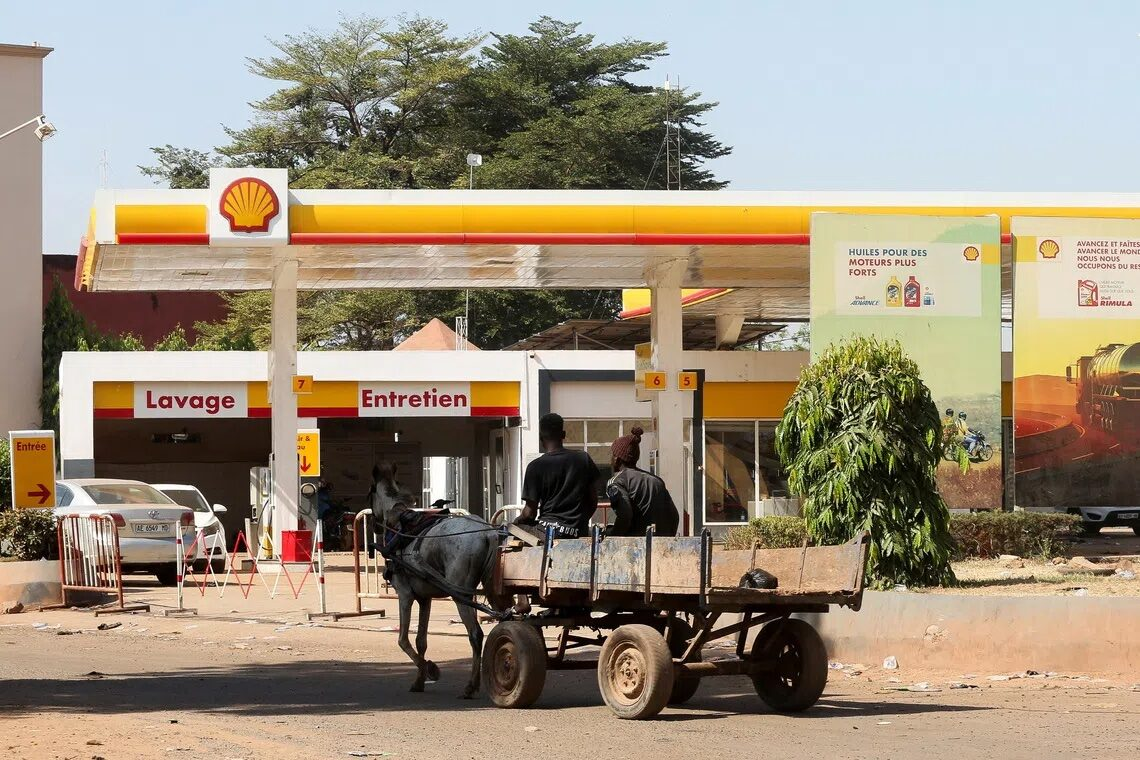
Mali’s military authorities face their greatest challenge to date from jihadists’ gasoline blockade
Al Qaeda-affiliated militants have been essentially paralyzing the capital of Mali with a fuel blockade that has been in place for two months. This has put pressure on the military administration and sparked fears that the jihadists may eventually attempt to impose their control on the West African nation.
The group known as Jama’at Nusrat al-Islam wal-Muslimin (JNIM), which has been active for months within 50 kilometers (30 miles) of Bamako, according to security analysts, does not now have the military capacity or the aim to take control of the 4 million-person city, which it briefly attacked last year.
But the biggest obstacle facing the military authorities who came to power in 2021 is the JNIM plan of gradually depriving Bamako of gasoline, causing schools to close, and denying businesses access to diesel-generated energy.
According to six security specialists and diplomats who spoke to Reuters, the jihadists’ most likely objective is to stage another coup. It would be the third since 2020, further depriving Mali of a functional power center and enabling JNIM to acquire further weapons and resources.
According to a Control Risks client note released last week, JNIM is aiming to negotiate with either the present government or a post-coup administration in the long run, which would be a significant step in its quest for political legitimacy.
“With JNIM’s activity putting unprecedented pressure on the government, we warn that the risk of a collapse of the regime, whether through a coup or another form of political crisis, will be very high over the coming weeks,” the document stated.
A request for comment regarding the objectives of the gasoline blockade was not answered by a source close to JNIM.
In a statement announcing the blockade in early September, it said that “these bandits who are in power” were the objective and that they were oppressing Malians, particularly those living outside the capital.
A request for response from Mali’s communications ministry was not answered.
Attacks escalating as military setbacks
JNIM, which was born out of an ethnic Tuareg rebellion in 2012, has been moving from northern Mali toward the country’s center and into neighboring Burkina Faso and Niger for more than ten years.
Mali’s current military chief, Assimi Goita, came to office with the promise of turning the tide in the war against the Islamist group, but his government’s strategy of relying on Russia instead of France and the United States for defense cooperation has failed.
This year, JNIM has intensified its attacks on military installations, claiming to have killed hundreds of soldiers while accumulating stolen weaponry and attempting to annex land surrounding cities.
It came to an agreement last week to pay a substantial $50 million ransom for two Emirati detainees.
While extending its operations in the west, JNIM has also made its first foray into southern Mali, enabling it to strike convoys from coastal nations like Senegal and Ivory Coast in order to enforce the gasoline blockade.
It seems to be focused on Bamako currently.
“The fuel blockade is a terrorist tactic in addition to being an act of economic warfare,” stated Justyna Gudzowska, executive director of the investigative research organization The Sentry.
“It instils fear among Bamako’s ruling elite and the general population, creating the perception that the capital is under siege and that JNIM is closing in.”
Mali’s unrest would destabilize neighboring Burkina Faso and Niger, whose troops have already seized power through coups. A political and security partnership has been established between the three nations.
“Everything collapses if Mali collapses,” a top diplomat in Bamako stated. “If the current balance of power collapses, the alliance of the Sahel states collapses.”
MILITARY LEADERSHIP TENSIONS
Residents of Bamako have largely remained calm while discussing the fuel shortage and have not yet staged protests, wary of authorities who do not hesitate to pursue critical comments.
“It’s been complicated, these past weeks,” said Abdoulaye, a ride-hailing app part-time driver who sent his brother to wait in line for fuel all night. He only revealed his first name out of concern for retaliation.
Goita’s position might become untenable if JNIM took advantage of rumored conflicts among the nation’s top military officers, even in the absence of protests.
In August, Mali detained scores of soldiers and two military generals on suspicion of taking part in a plot to destabilize the country.
“I don’t think the regime is strong enough to hold onto power indefinitely,” a security analyst not authorized to speak to the media stated. “There are too many forces, both from a political angle but also from the armed groups’ angle, that are trying to put pressure.”
HIJABS AND TRAVEL RESTRICTIONS FOR WOMEN
Many Malians would be alarmed by the prospect of a JNIM takeover of the capital, even though it is currently unlikely. JNIM has issued a directive requiring all women to wear the hijab on public transportation and set travel limits outside of Bamako.
“What JNIM’s rule would look like if it seized control of Bamako’s institutions is difficult to predict, but its brief occupations of towns and villages elsewhere in Mali paint a grim picture: restrictions on movement, extrajudicial executions, and severe curbs on education,” Gudzowska stated.
Foreign embassies, notably those in the United States, Britain, and Italy, have been warning their residents to leave the country, which has added to the worry.
Neither Malians nor foreigners are now escaping the nation in large numbers. A person with knowledge of the situation told Reuters that there hasn’t been a significant increase in airline ticket sales or any indication that the fuel issue is having an impact on air travel.
It remains to be seen if that holds true.
“No scenario at this point can be excluded,” stated the top diplomat in Bamako. “We cannot rule out the possibility that JNIM might try to enter the city.”