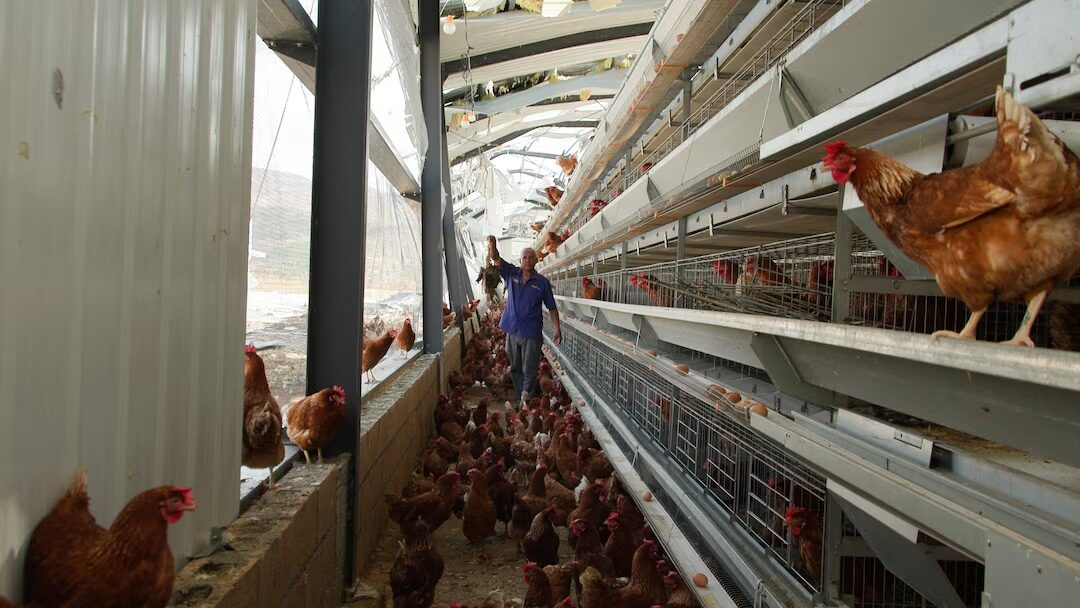
Osbourne Brumley used his life savings to build an egg farm in St. Elizabeth parish, western Jamaica, that was intended to withstand gusts of up to 150 mph, but it was no match for Category 5 Hurricane Melissa.
The western portion of the island was ripped apart by Melissa’s 185-mph (298-kph) gusts on Tuesday, which killed thousands of hens and damaged Brumley’s facilities.
Considered Jamaica’s breadbasket, St. Elizabeth was devastated by the storm, which destroyed livestock and crushed yam, pumpkin, potato, and cassava fields in western Jamaica.
Fear of Egg Shortage
The destruction has sparked concerns that the 2.8 million-person nation, where the storm claimed the lives of at least 28 people, may see food staple shortages as farmers work to recover and replant.
Brumley, 69, worries that Melissa’s blow might lead to a “massive” egg shortage on the island and anticipates losses on his uninsured J$540 million ($3.37 million) investment.
The huge metal feed silo and other equipment collapsed, and the storm tore off the roofs of two birdhouses. Brumley worries that the remaining birds will soon die due to staff shortages brought on by the storm and the lack of electricity for automatic feeds.
Additionally damaged was Brumley’s other farm in Springfield, which is 10 miles (16 km) away. Together, his facilities produced 75,000 eggs every day, which were sent to 14 hotels and more than 200 stores spread throughout six parishes.
He predicted that they would have difficulties. “My egg farm is larger than any other in Jamaica.”
Prior to Melissa, there were already limited eggs after Hurricane Beryl, a Category 4 storm that hit Jamaica’s southern coast in July 2024, destroyed cattle and crops in farming parishes Clarendon, Manchester, and St. Elizabeth, and caused brief shortages of food and vegetables.
“We are going to be short on food,” said 33-year-old Ricardo Williams, who works alongside his father in Mitcham, St. Elizabeth, growing pumpkins, potatoes, corn, and cassava.
Other farmers concurred, stating that when produce survives, some prices may double and that some crops won’t return until at least February due to cattle losses and damaged fields.
A FARM PLAN IS COMING
Melissa would have “a crippling effect on our agricultural sector,” according to Agriculture Minister Floyd Green, since some of the most productive parishes are also the most severely affected. He noted that until evaluations are finished this week, a more complete picture of the damage will not be known.
According to Green, a disaster-recovery task team will create a plan to increase output from the parishes that were least damaged after the evaluation is complete. International partners and Jamaica’s disaster-insurance funds will also provide assistance. To stabilize supply in the interim, the nation will depend more on imports, such liquid eggs.
Green said, “It won’t be a quick recovery,” but he had faith in farmers’ ability to bounce back. “They will once you give them a chance and make it simple for them to start over.”