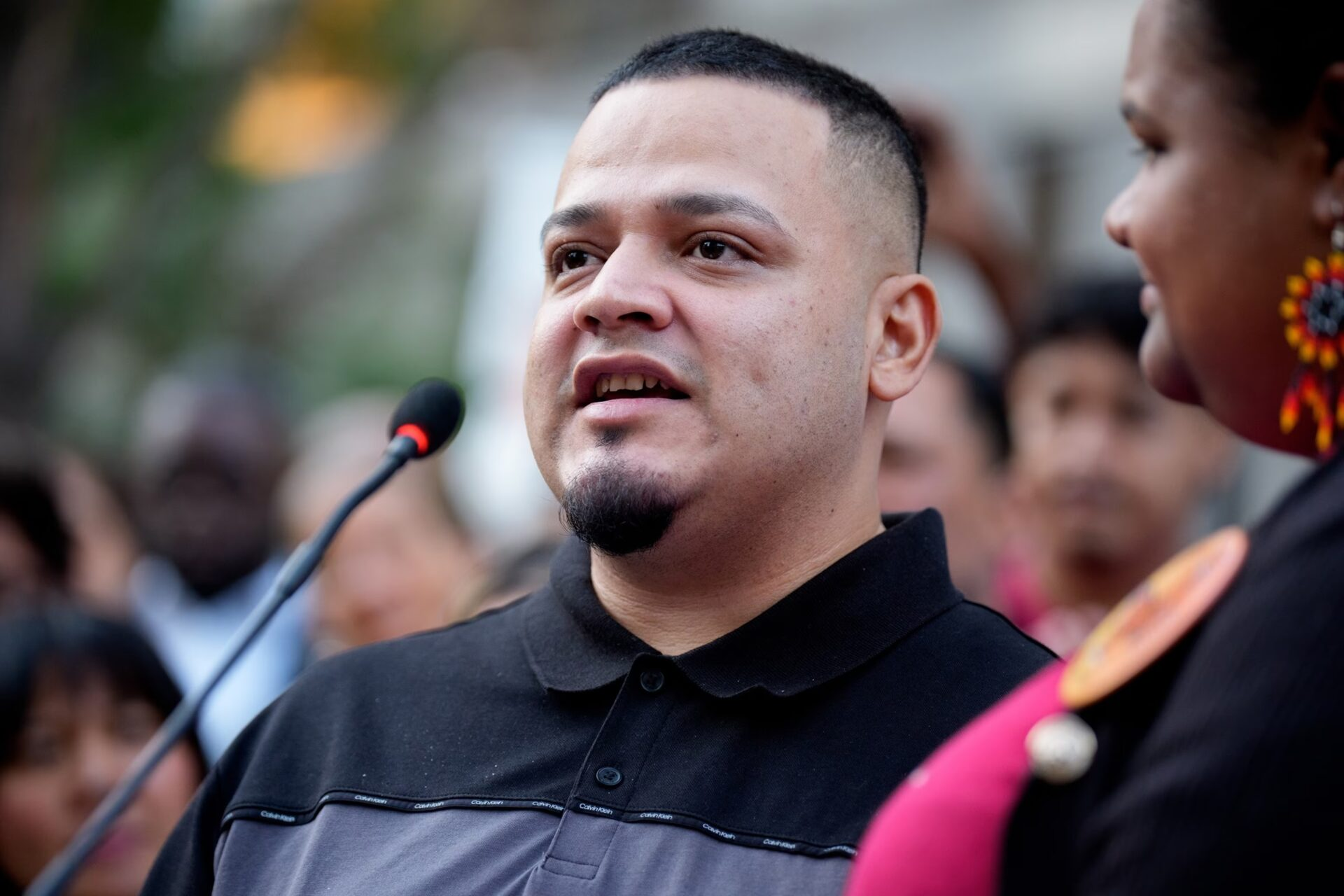
Kilmar Abrego, a migrant whose unlawful deportation to El Salvador in March became a focal point of the Republican president’s immigration crackdown, was accepted by Liberia, according to a Friday announcement from Donald Trump’s administration.
In a court filing, the Justice Department stated that Abrego might be sent back to the African nation as early as October 31.
While she reviews Abrego’s request to be released from immigration custody, U.S. District Judge Paula Xinis of Maryland has temporarily barred the U.S. government from deporting him. It’s unclear how the judge’s ruling would be affected by the administration’s arrangement with Liberia.
Abrego may possibly attempt to contest his dismissal by arguing that he was afraid of being tortured or persecuted.
According to Liberia, government accepted Abrego “on a strictly humanitarian and temporary basis” after the US requested it. In a statement, Liberia’s communications ministry said it would make sure Abrego wouldn’t be sent to “any country where he may face substantial risk of persecution, torture or other serious harm.”
Following the administration’s fruitless attempts to include Uganda, Eswatini, and Ghana as possible destinations for a second deportation, Liberia is the first African nation to consent to Abrego’s arrival.
When he was detained and deported to his home country of El Salvador, Abrego, a sheet metal worker who had entered the country illegally, was living in Maryland with his wife, their child, and two of her children, all of whom are citizens of the United States.
He violated a previous U.S. court order by being deported to El Salvador, where he was held in a harsh mega-prison.
Trump’s Justice Department filed criminal charges against Abrego in June, accusing him of smuggling migrants, and he was returned to the United States. His attorneys have accused the administration of spiteful persecution after he entered a not guilty plea. Abrego’s attorneys dispute the administration’s claim that he was a member of the MS-13 gang.
Abrego has no personal ties to Liberia, according to his attorney Simon Sandoval-Moshenberg, who also noted that the nation is far from his wife and kids in Maryland.
In a statement, Sandoval-Moshenberg stated, “The government has chosen yet another path that feels designed to inflict maximum hardship.” “Their actions are punitive, cruel and unconstitutional.”
In the past, his attorneys have charged that the administration has violated Abrego’s constitutionally guaranteed right to due process.
A court hearing in his criminal case, which is set for November 4 and 5 in Nashville, Tennessee, to determine if Abrego was wrongfully prosecuted in reprisal for his choice to contest his March deportation, may also be impacted by a deportation in the days ahead. A number of Justice Department officials have been called to testify by Abrego’s attorneys.
After Abrego was expelled from the United States in August, the government promised to expel him once more. Although the administration has not yet consented to send Abrego to Costa Rica, a Spanish-speaking nation in Central America that has stated it would accept him, Abrego’s attorneys have expressed a preference for the country.
In addition to its “humane treatment of refugees” and “robust” human rights protections, the Justice Department emphasized Liberia’s longstanding partnership with the United States. Extrajudicial killings and other serious human rights violations in the West African nation were highlighted in a 2024 U.S. State Department report.
In July, the Trump administration pressured five African nations, including Liberia, to accept the deportation of migrants to nations other than their own.