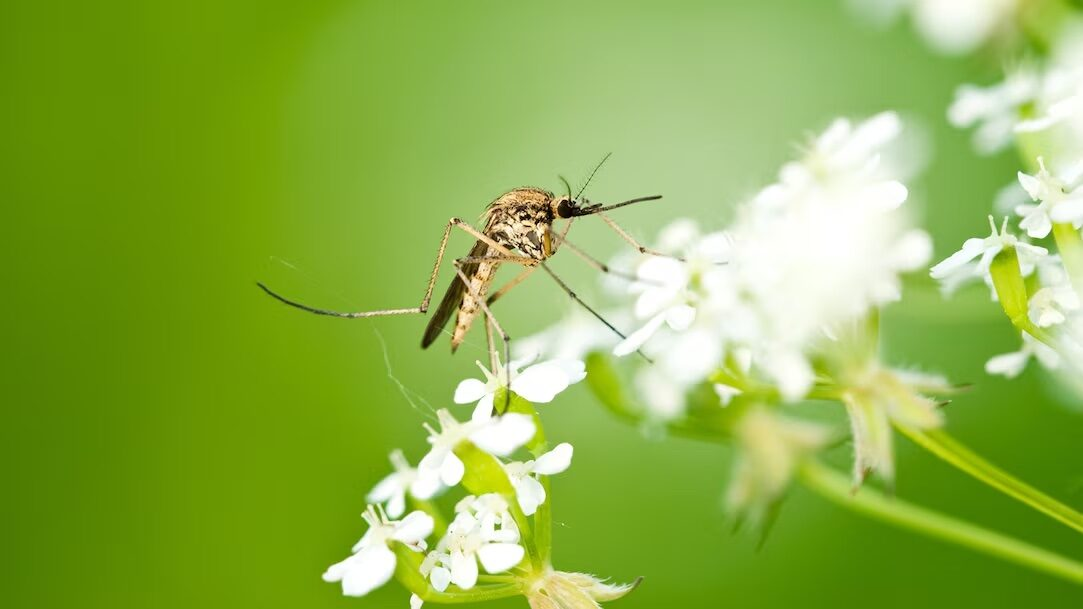
Scientists report the first ever mosquito find in Iceland, where record-breaking heat has caused people to worry about the changing climate and fragile ecosystems.
After a period of record-breaking heat, mosquitoes have been found for the first time in Iceland. Scientists say this could mean that the country’s fragile climate is changing.
Local media said that Bjorn Hjaltason, an insect lover, found the mosquitoes over the course of several nights last week while using wine-soaked lines to watch moths.
Mr. Hjaltason caught three mosquitoes: two females, one male, and later it was found that they were all Culiseta annulata, which is one of the few species that can survive winter.
Because it is so cold there, Iceland was one of only two places in the world (along with Antarctica) where mosquitoes didn’t live before the finding.
As you can see, the mosquitoes were found in Kjós, a glacial valley southwest of Reykjavik, the city. Icelandic media say that Hjaltason posted about the find on a Facebook page for local wildlife, calling it “a strange fly on a red wine ribbon.”
In the post, he said, “I could tell right away that this was something I had never seen before. It looks like the last fortress has fallen.”
The bugs were sent to the Icelandic Institute of Natural History, where entomologist Matthías Alfreðsson confirmed the discovery. He told CNN that the species lives in many places in Europe and North Africa, but it’s still not clear how they got to Iceland.
The World Population Review says that mosquitoes have not been able to breed in Iceland for a long time because of its historically cold climate and small bodies of still water. But the country has recently seen several record-high temperatures.
In May, Iceland rarely gets warmer than 20°C, and heatwaves only last two or three days on average. This year, however, temperatures rose above that level for 10 days in a row in many places. Also, it was the hottest May day ever in the country, with a temperature of 26.6°C at Eglisstaðir Airport.
The Global Heat Health Information Network warned in a study released in June that these kinds of changes in temperature could have “significant” effects on ecosystems that are used to living in cold places.
The world had its hottest year ever last year, and the UN’s climate panel has said that people have “unequivocally” warmed the land, seas, and atmosphere.
Alfreðsson said that more research will have to be done next spring to see if the type of mosquito has “truly become established in Iceland.”
“One always suspects Grundartangi—it’s only about six kilometers from me—and things often come in with ships and containers, so it’s possible something came in that way,” Hjaltason said about how the bugs got there.
“But there must have been more than three of them because they came right into my garden,” he said.