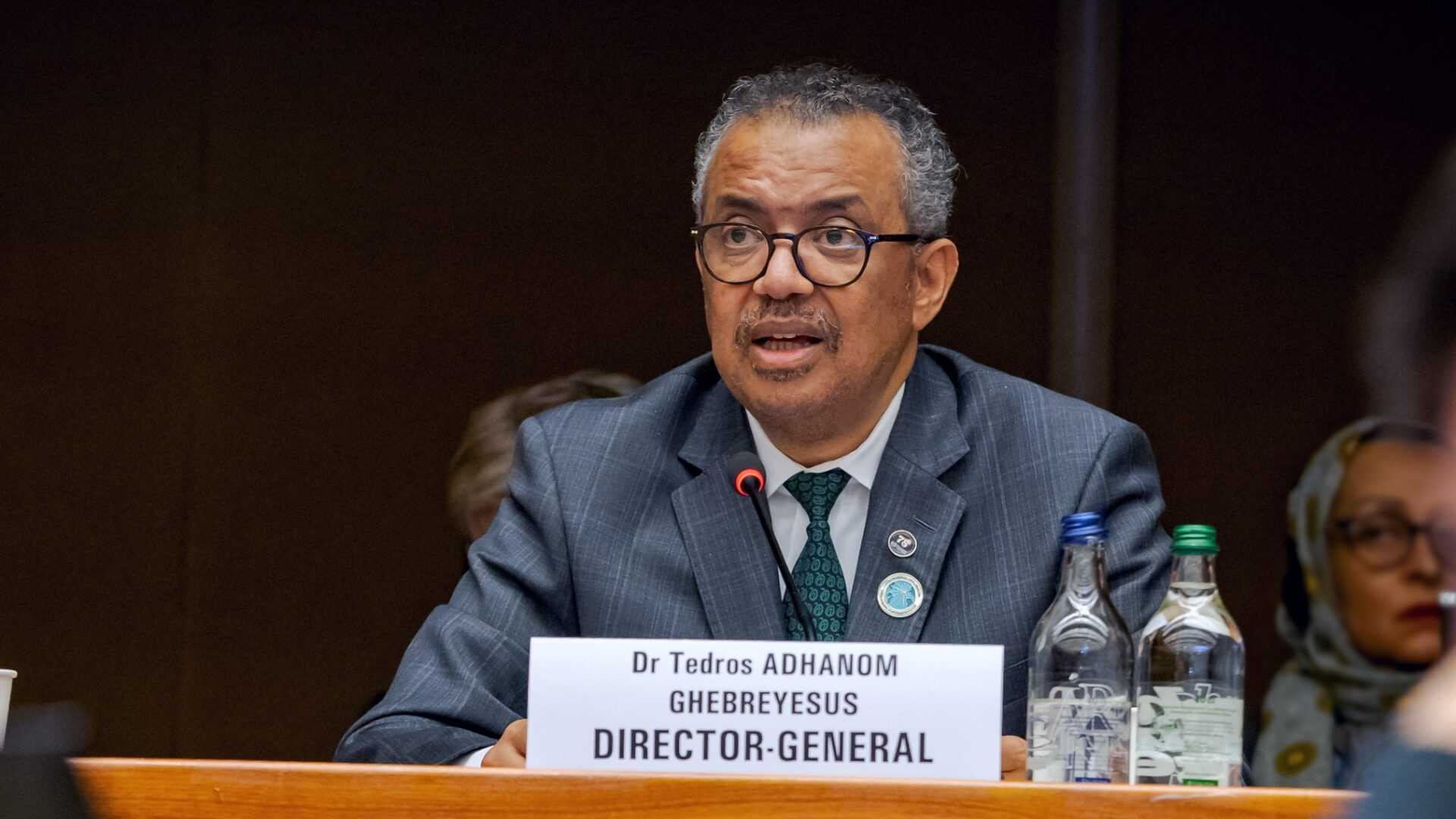
The head of the WHO warns that unless humanitarian access quickly improves, Gaza’s trauma, starvation, and destroyed health system will affect generations to come.
The head of the World Health Organization (WHO) has warned that Gaza is experiencing a “catastrophic” public health crisis that could impact its people for generations, and he has called for humanitarian aid to reach the war-torn enclave immediately and without restrictions.
WHO Director-General Dr. Tedros Adhanom Ghebreyesus called the situation in Gaza “beyond words,” pointing to a lethal combination of starvation, widespread sickness, injury, and a broken healthcare system.
“Famine combined with severe mental health trauma creates a crisis for future generations,” Dr. Tedros stated.
As the second week of a precarious ceasefire mediated by the United States between Israel and Hamas approaches, Dr. Tedros’ remarks are made. Even though Israel has recently permitted more aid, including medical supplies, to enter Gaza, the head of the World Health Organization believes that the amount of relief still falls well short of what is required to restore the region’s destroyed healthcare system.
The anticipated increase in humanitarian help “hasn’t materialized,” he said, but he welcomed the truce.
Thousands of sick and injured people cannot get care in Gaza because the country’s healthcare system has all but crumbled. According to Dr. Tedros, 700 patients have perished while awaiting medical evacuation planes, which have been halted for the last two weeks because of Israeli religious holidays.
He said that thousands of people are still waiting for life-saving care outside of Gaza and demanded that these flights be immediately resumed and expanded.
Furthermore, materials intended to repair Gaza’s medical infrastructure have allegedly been seized at Israeli border crossings. Some necessary supplies, like as tent supports for field hospitals, have been prohibited, according to Dr. Tedros, since they might be “dual-use” products with possible military uses.
“How do you set up a field hospital if you can’t bring in tent poles?” he inquired.
Full access to all border crossings under Israeli control has been demanded time and again by the WHO and other assistance organizations in order to expedite supplies. Aid flows are significantly less than what is required, despite the fact that only two crossings—Kerem Shalom and Kissufim—are open at the moment.
Only 200 to 300 assistance trucks per day are arriving, significantly less than the 600 needed daily, according to Dr. Tedros. He added, “Aid should not be weaponized,” and emphasized the need to “de-link” aid from political considerations.
Conditions imposed on the distribution of help, such as those pertaining to the return of Israeli hostages who have died, were also criticized by him. Only 15 of the 28 captives have been rescued by Hamas thus far, despite the recent exchange of 20 live hostages. Due to security concerns and ongoing disagreements over the return of remains, Israel has temporarily suspended help.
Dr. Tedros stated, “There should be no conditions.” “Any additional restrictions are unwarranted, particularly in light of the hostages’ release.”
Given that the United States facilitated the ceasefire, Dr. Tedros stated that Washington is accountable for making sure all parties adhere to the deal, especially with regard to humanitarian access.
According to the UN World Food Programme, almost 6,700 tonnes of food have reached Gaza since October 10; however, this amount is still less than the 2,000 tonnes per day required to alleviate the food crisis. Although aid organizations stress that much more is required, they claim to be starting to “turn the tide” on starvation.
Famine was identified in Gaza in July by a UN-backed investigation, but Israel denies the results, claiming there hasn’t been any starving.
Rebuilding Gaza is expected to cost $70 billion, of which about 10% will go toward healthcare. According to Dr. Tedros, future generations may be overwhelmed by mental health demands alone.
He issued a warning, saying, “This crisis will reverberate throughout time.” In the streets, many people rejoiced over the truce. Some of those same folks have now passed away. That’s what a broken peace is all about.