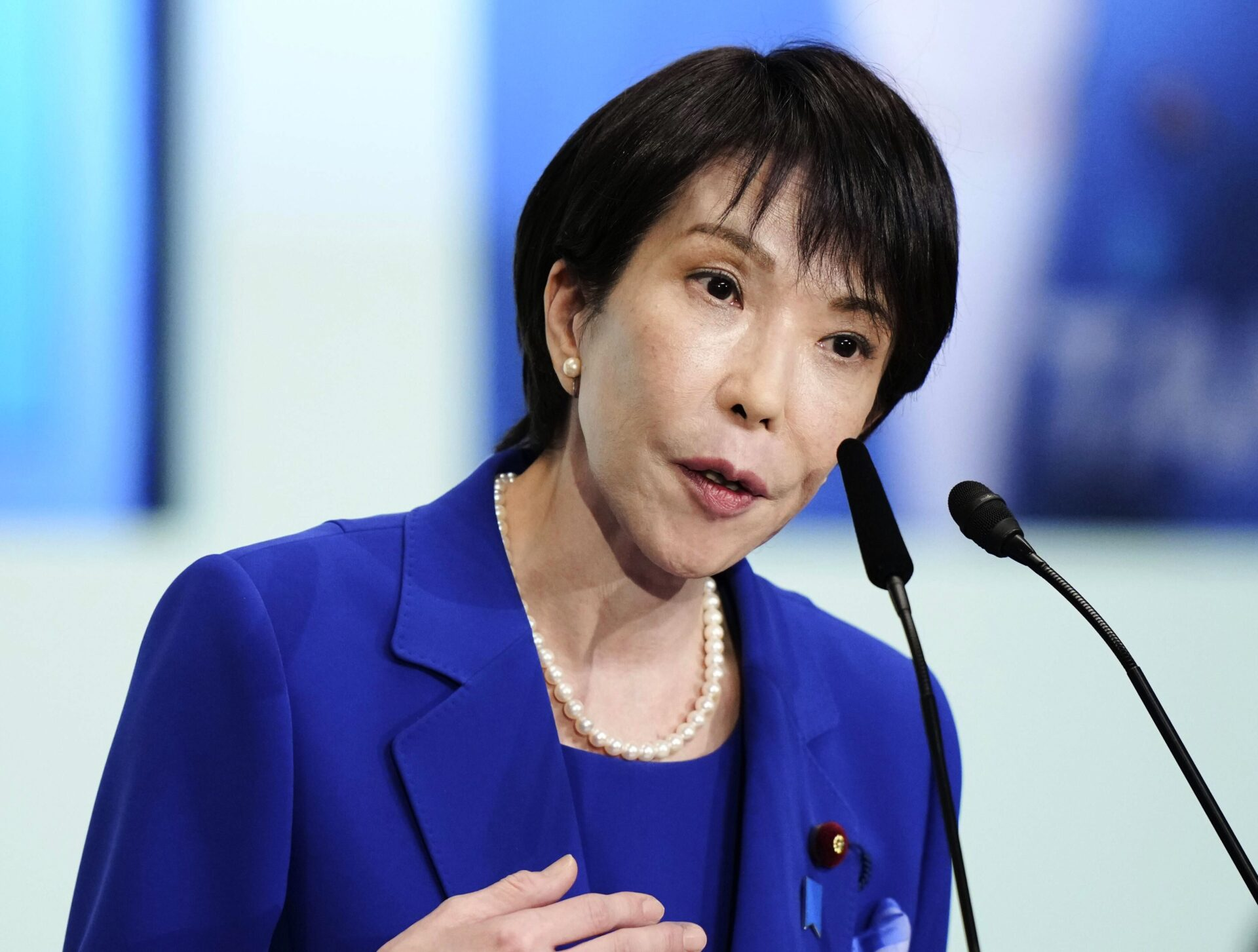
Sanae Takaichi’s historic premiership is made possible by the opposition Japan Innovation Party’s crucial backing.
Sanae Takaichi, a hardline conservative, is poised to become the first female prime minister of Japan after striking a coalition agreement with Ishin, the right-wing opposition Japan Innovation Party.
Ishin’s leader and Osaka governor Hirofumi Yoshimura told reporters in Osaka on Monday, “I told Takaichi that we should move forward together.” To finalize the alliance, he stated that he will meet with Takaichi at 6 p.m. (0900 GMT).
To discuss the alliance arrangement, Yoshimura and Fumitake Fujita, Ishin’s co-leader, met with party lawmakers earlier in the day. The yen fell as investors awaited a settlement that would result in higher government spending, while the Nikkei share index rose by about 3% to a record high.
Together, the Liberal Democratic Party (LDP) and Ishin would hold 231 seats in the lower house, two seats short of an absolute majority but sufficient to guarantee Takaichi’s probable win in Tuesday’s parliamentary vote to choose Japan’s next leader. If there is a runoff, she will just need a plurality of the votes cast, not all of the members.
Smaller opposition groups will continue to be crucial to Takaichi’s ability to govern, particularly in light of an impending supplemental budget.
The agreement comes after the LDP’s 26-year partnership with Komeito broke down, with the latter withdrawing its backing following Takaichi’s election as party leader. The opposition was negotiating to overthrow the ruling party for the first time in more than ten years after Komeito’s departure. By supporting the LDP, Ishin has now cemented its hold on power.
Takaichi, who is seen as a fiscal conservative, has criticized the Bank of Japan’s interest rate hikes and advocated for tax cuts and increased expenditure to lessen the impact of growing inflation. “A weaker yen and rising share prices seem to be made possible by expectations for Takaichi’s economic policies, which include monetary easing and fiscal expansion,” stated Fumika Shimizu, a strategist at Nomura Securities.
Ishin’s penchant for little government and lower spending, according to observers, may restrain some of her economic proposals.
In terms of foreign and defense policy, Takaichi advocates increased defense spending to contend with China, tries to amend Japan’s pacifist postwar constitution to acknowledge its military, and often visits Tokyo’s Yasukuni Shrine, which some Asian neighbors view as a sign of wartime aggression.
Additionally, she has advocated for more stringent immigration laws and is against reforms that she claims compromise traditional values, such as allowing women to retain their last names after marriage.
Ishin would not look for cabinet posts in Takaichi’s administration right away, according to Yoshimura. We are still a bunch of MPs who have never held a public office before. We therefore want to first concentrate on implementing our policies as part of the ruling coalition rather than requesting a ministerial position,” he stated in a television interview.