US-China trade war casts a shadow over the global economic outlook as a ‘new normal’ takes shape
International finance chiefs are exhausted by the seemingly endless uncertainty about the future, but they are also somewhat relieved by the world economy’s unexpected resilience to the series of policy shocks that have occurred during the first nine months of Donald Trump’s second U.S. presidency.
Anxiety over Trump’s recently announced “Liberation Day” tariffs was evident in April when World Bank and International Monetary Fund finance ministers and central bankers convened in Washington for the first of the two-yearly meetings. That had given way to weariness and apprehension that the policy landscape would never be completely determined at the recently finished October sessions, which took place six months later.
“Being a policymaker since Liberation Day, trying to make sense, then actually making policy, and communicating to the public about this has been just absolutely exhausting,” Piti Disyatat, deputy governor of the Bank of Thailand, stated. “So the uncertainty has been very difficult.”
“Several months ago, we believed that the world economy was more resilient than it now seems to be. A representative of the Japanese delegation who attended the discussions in Washington, however, stated that there is no space for complacency in light of the different forms of uncertainty. “There was a great degree of discussion over uncertainties.”
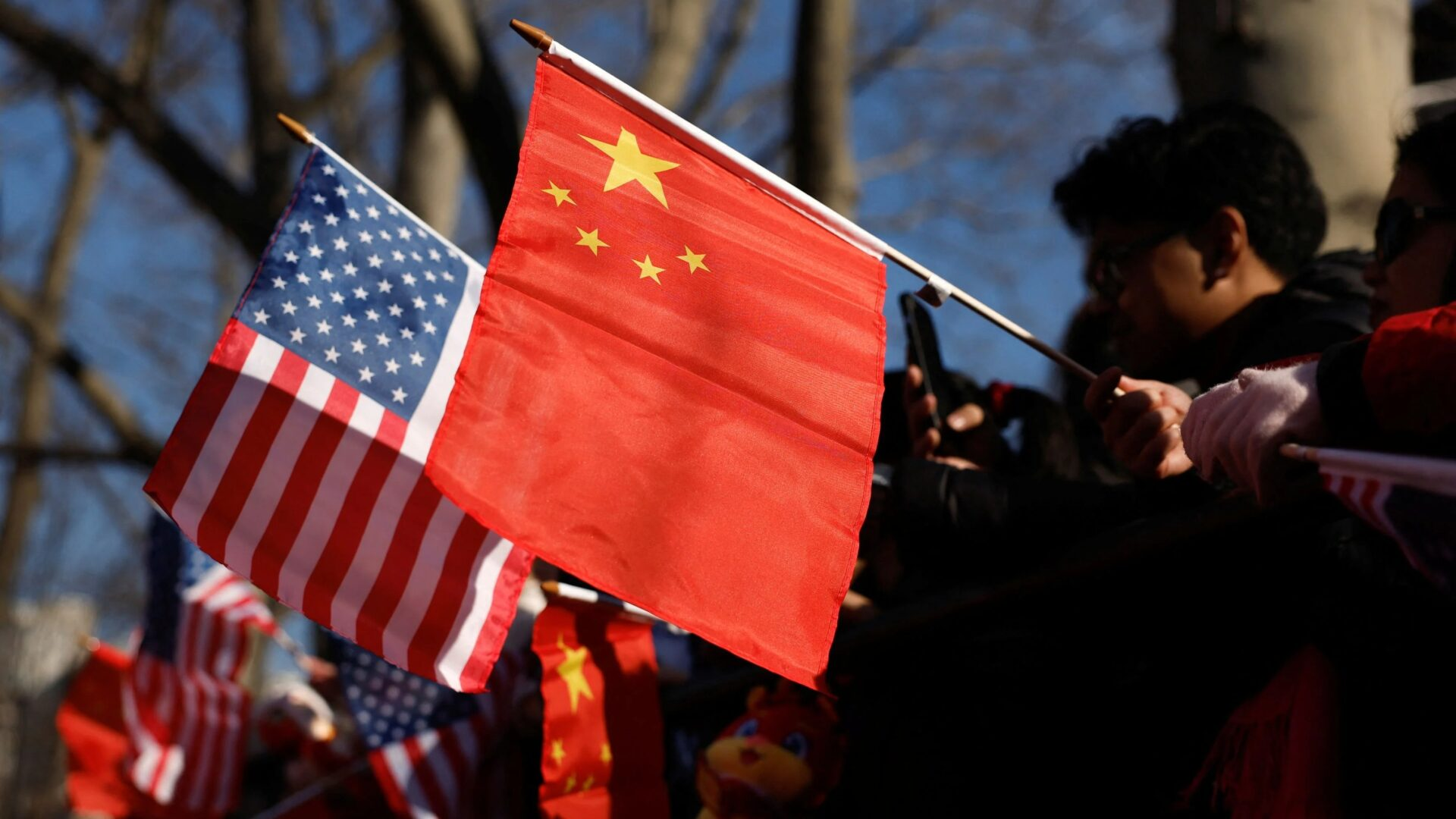
The issue was brought home by a week of heated back and forth between the United States and China, during which Trump reinstated 100% tariffs on Chinese shipments to the United States in response to new export restrictions on rare earth materials from Beijing.
As enthusiasm for new trade agreements outside of the U.S.-China orbit grew, the attention of the hundreds of policymakers attending the conference was heightened by the resurgence of tensions between the world’s two biggest economies.
“I have rarely witnessed as much constructive engagement at the semi-annual meetings of finance officials and central bankers,” said Kristalina Georgieva, managing director of the IMF.
“There may not be room for theatricals because of the high level of uncertainty,” Georgieva said at a banking conference on Saturday. “It may be because now many countries realize that what they took for granted – international cooperation that helps us do better – we should not take for granted.”
Fortifying regional and bilateral ties
The fact that U.S.-China tensions, despite their intensity, have not escalated into a larger trade war is encouraging, Georgieva and World Trade Organization chief Ngozi Okonjo-Iweala told participants, adding that many nations were actually looking to strengthen their bilateral and regional ties.
Amid growing economic and geopolitical uncertainties, New Zealand Finance Minister Nicola Willis told Reuters she anticipated that tendency to pick more steam.
It is noteworthy, she noted, because the European Union is currently seeking to connect with the Comprehensive and Progressive Agreement for Trans-Pacific Partnership, which is a free trade agreement among 11 parties.
“All of those trade relationships are very strong, and the messages that we’re having from our partners is that they wish to continue to build on them and expand them, rather than go the other way,” she said in a Reuters interview.
Greater regional collaboration is a “fallout” of global changes, but it will continue to be significant in the future, according to Rania Al-Mashat, Egypt’s minister of planning, economic development, and international cooperation, who spoke at the event on Saturday.
Changes are required everywhere.
Concerns about the non-bank sector, the disruption caused by artificial intelligence technologies, near-record debt levels, and chronic and “excessive” external balances were among the strains in the global economy that were brought to light by the scenario.
Andrew Bailey, the governor of the Bank of England, stated that open dialogue was required because the international community had previously failed to recognize and stop the subprime mortgage developments that led to the global financial crisis of 2007–2009.
In a world that was opaque and had close ties between private finance, banking, and insurance, transparency was essential.
Bailey stated during a gathering organized by the Group of Thirty on Saturday, “It’s our duty to lift the lid and see what’s going on.” The question of whether these are isolated incidents or the canary in the coal mine is evidently being raised by a few current happenings.
Georgieva emphasized that she was worried about “stretched valuations,” after the IMF warned on Tuesday that the potential of a “disorderly” market correction was increased because markets are too at ease with risks including trade wars, geopolitical tensions, and massive government deficits.
Okonjo-Iweala emphasized the need for WTO reforms, while the IMF chief said she concluded the week with a lengthy list of tasks, including inspections of the organization’s methods for monitoring nations’ economy and determining their debt levels.
WTO’s Okonjo-Iweala stated, “We need to diversify trade,” pointing out that although worldwide commerce has undoubtedly benefited certain nations, other nations have been left behind.
“We need to fix parts of it that don’t work,” she explained. We must reconsider the concept of globalization. She remarked, “We can’t have what we had before.
Mitigation of Climate Risks
Although Trump recently called climate change a “con job” at the United Nations, officials agreed that it was arguably the largest risk.
The topic came up at an IMF steering committee meeting on Friday when Lesetja Kganyago, the governor of the South African central bank, informed officials that climate risk was unquestionably a macro-critical issue with significant ramifications for financial stability, insurance, and economic fundamentals.
“In trade negotiations, you can walk away… and you can find another trading partner,” Kganyago said at the G30 seminar. “With climate, when you walk away from the negotiations, the whole planet gets warm and we will all suffer.”