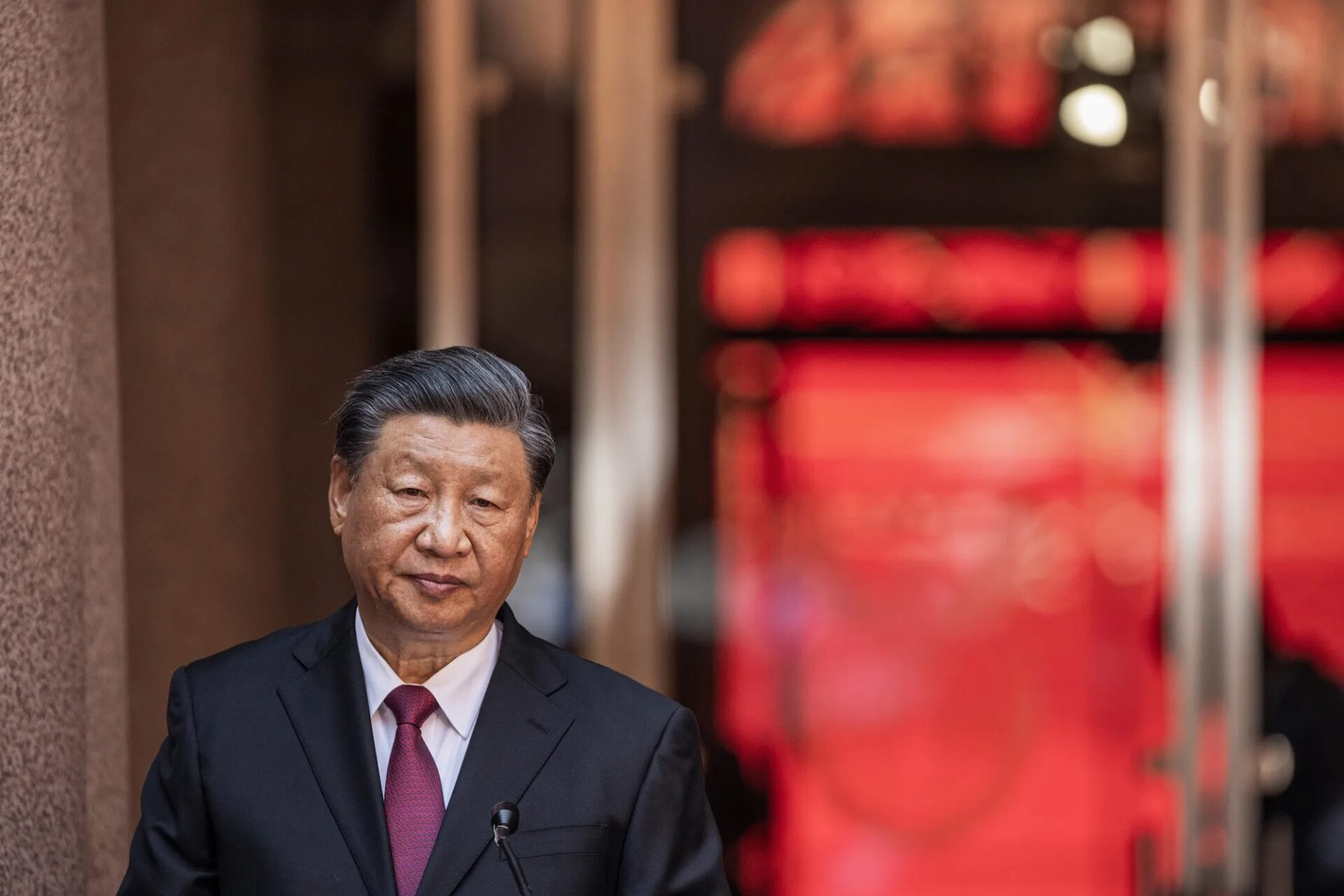
Chinese President Xi Jinping congratulated the new leader of Taiwan’s largest opposition party, whose election was held amid allegations of Beijing meddling, and urged for efforts to move toward “reunification” on Sunday.
Cheng Li-wun, a former lawmaker, won Saturday’s election at a time of growing tension with Beijing, which considers the democratically controlled island its own territory. Li-wun will become the next leader of the Kuomintang (KMT) party on November 1. China’s claims to sovereignty are vigorously opposed by Taiwan’s government.
The KMT has historically supported tight ties with China and is Beijing’s go-to conversation partner. China calls Taiwan President Lai Ching-te a “separatist” and would not negotiate with him or his Democratic Progressive Party (DPP) government.
According to the official Xinhua news agency, Xi told Cheng that the two parties should make their “common political foundation” stronger in a message he sent in his capacity as president of China’s Communist Party.
Both sides ought to “unite the vast majority of people in Taiwan to deepen exchanges and cooperation, boost common development, and advance national reunification,” he said.
The phrase “members of the Chinese nation” alludes to ethnicity rather than nationality, and Cheng used it to describe both sides of the Taiwan Strait in her address to Xi without mentioning unification with Beijing.
“Both parties should, in light of the current situation, strengthen cross-Strait exchanges and cooperation on the existing foundation (and) promote peace and stability across the Taiwan Strait,” Cheng stated in a party statement.
THE CHINESE INTERFERENCE ACCUSES
Despite losing last year’s presidential election, the KMT and its ally, the tiny Taiwan People’s Party, have the most seats in parliament.
Cheng, 55, defeated former Taipei mayor Hau Lung-bin, the KMT establishment candidate, for the leadership vote. Cheng’s opposition to Taiwan’s increased defense spending is a major policy tenet of Lai’s.
Jaw Shau-kong, Hau’s main backer and the KMT’s vice presidential candidate from the previous year, dominated the campaign with accusations of Chinese meddling in the election. Social media accounts have disseminated false information regarding Hau, according to Jaw.
China declared on Wednesday that the election was a KMT issue and that statements made online were not an official position.
On Sunday, Jaw wrote on his Facebook page that the majority of Taiwanese want to have peaceful relations and communicate with China, and that the KMT has to lessen its pro-China influence.
“The KMT must recognise that elections are held in Taiwan, and voters are in Taiwan, not mainland China,” Jaw said.
According to DPP spokesperson Justin Wu, there were unmistakable indications of Chinese meddling in the KMT election late on Saturday.
In response, the KMT issued a statement asking, “Who is this?” dismissing his remarks.