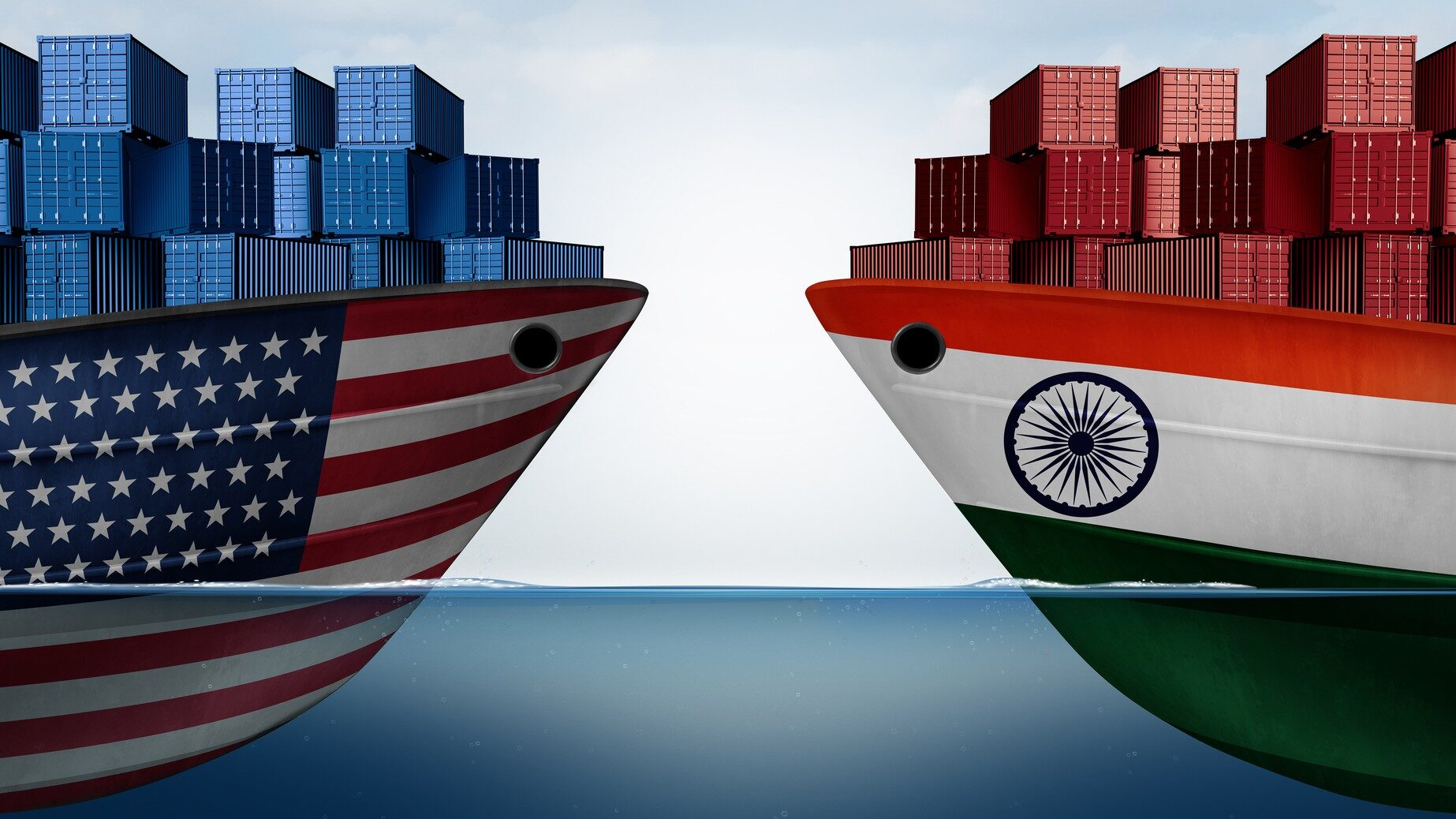
Since Trump slapped high tariffs in August, India’s exports to the US, its biggest market, have decreased by 40%.
Since President Donald Trump’s high tariffs went into force, India’s exports to the US, its biggest overseas market, have drastically decreased, falling 20% in September and almost 40% over the last four months, according to new data.
Washington’s 50% tariffs on Indian imports went into effect on August 27 and were in effect for the first full month of September. A further 25% penalty is included in the tariffs as a result of New Delhi’s reluctance to cease purchasing Russian oil.
Since the tariff increase started, the US has become India’s most negatively impacted market, according to Ajay Srivastava of the Delhi-based think tank Global Trade Research Initiative (GTRI).
India’s labor-intensive industries, such as textiles, engineering goods, jewelry, and chemicals, have been particularly hard hit by the new taxes, resulting in significant losses and employment concerns. For the fourth consecutive month, shipments to the United States have decreased, dropping 37.5% from $8.8 billion (£6.5 billion) in May to $5.5 billion in September.
The decline in exports has also increased India’s trade deficit, which stands at $32.15 billion in September, a 13-month high.
Stronger exports to nations like China and the United Arab Emirates helped to somewhat offset some of the losses from decreased trade with the US.
After several months of postponement, trade talks between the United States and India started last month. Both parties hope to reach an agreement by the end of next month, and an Indian delegation is presently in Washington in search of a historic agreement.
Trump claimed on Wednesday that as part of Washington’s larger attempt to cut off Moscow’s military funding, Indian Prime Minister Narendra Modi had decided to cease purchasing Russian oil “within a short period of time.”
Talks with the US were “ongoing,” according to a spokesman for the Indian foreign ministry, and Washington has “shown interest in deepening energy co-operation with India.”
Significant issues still exist, though, mainly with regard to US access to India’s dairy and agricultural industries, which have long been a source of tension in trade relations. Delhi has resisted pressure, pointing to food security, farmer livelihoods, and rural stability as reasons why Washington sees India’s farm market as a significant unrealized opportunity.
India’s biggest economic partner up until recently was the US, with $190 billion in bilateral trade in 2024. Trump and Modi have openly stated that they want to more than double that amount to $500 billion, but as exports decline and tariffs tighten, it looks like that objective will be harder to meet.