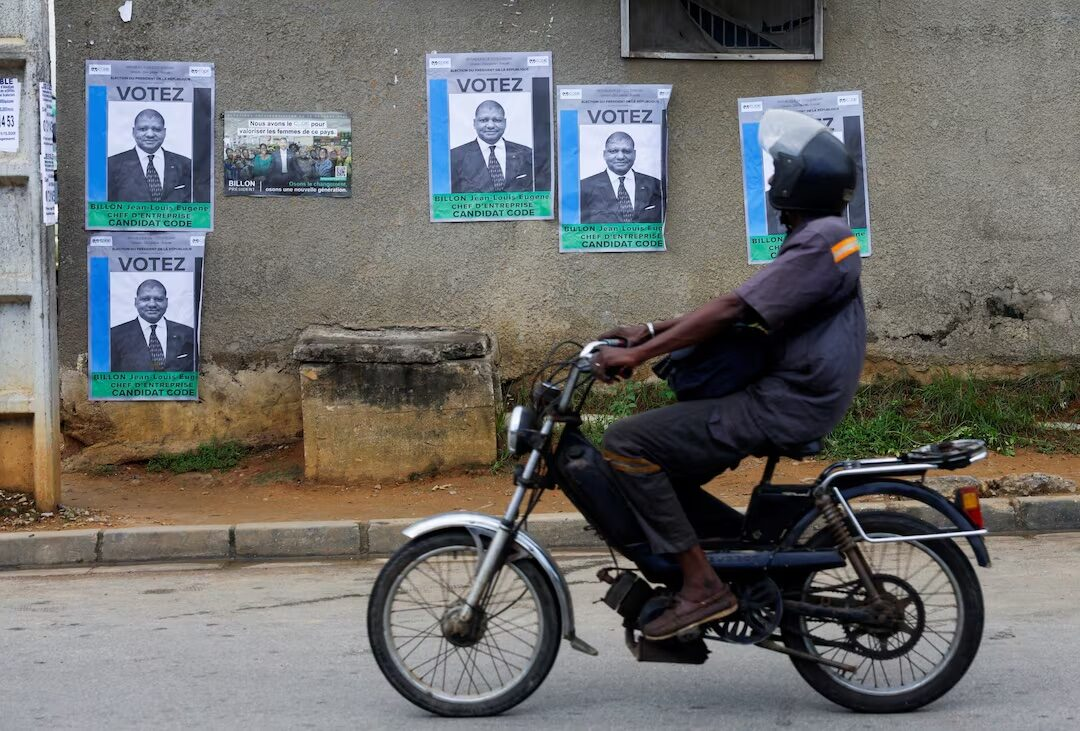
Ivory Coast, which grows more cocoa than any other country in the world, will hold its presidential election on October 25. The current president, Alassane Ouattara, is generally expected to win a fourth term.
Here are the important things that investors are paying attention to.
WHO IS RUNNING?
Ouattara is running against four people: two former government ministers, a former spokesman for Ouattara’s boss, Laurent Gbagbo, and Simone Gbagbo, who used to be first lady and was married to Laurent Gbagbo.
But none of them have the support of a big political party. This is why the race has been more interesting: Laurent Gbagbo and Tidjane Thiam, who used to be the CEO of Credit Suisse.
Based on what the court said, Thiam was French when he registered, which is against Ivorian law.
Ouattara, an economist who was trained in the U.S. and has worked at the regional central bank and the International Monetary Fund, is now the clear favorite to win the first round.
When he announced his run for office in July, the 83-year-old played down worries about his health and age, saying that Ivory Coast needed experience to deal with “security, economic, and monetary challenges.”
WHY DO BUSINESS PEOPLE CARE ABOUT IVORY COAST?
Ivory Coast has one of the fastest-growing businesses in the area. Market participants say that its foreign bonds are some of the best-performing in Africa. This brings in investors who don’t usually put their money into frontier debt.
The government has built on that success by shifting its focus to different types of debt and markets.
Some of these were a swap of debt for education in December 2018, a foreign bond denominated in a regional currency in March, and an ESG-certified Japanese samurai bond in July. It also got Africa’s first loan tied to sustainability last month.
But investors are paying close attention to the election to see how fair Ivory Coast is.
IS VIOLENCE DURING ELECTION TIMES A RISK?
Ivory Coast has had a history of bad polls.
The election in 2010 that put Ouattara in power led to a short civil war that killed 3,000 people because Laurent Gbagbo wouldn’t accept loss.
About 85 people were killed in fights before and during the 2020 election, which the opposition didn’t go to because Ouattara decided to run for a third term even though the law only allows for two.
Thiam thinks that the upcoming election is just a “coronation” for Ouattara and that leaving out party leaders is a “abandonment of democracy.”
Market players said that investors who have been buying African assets for a long time might be able to handle the ups and downs that come with elections, but investors who are new to Ivorian assets might feel uneasy if violence breaks out.
They did say that any violence probably won’t get out of hand, though.
WHAT PROBLEMS WILL THE WINNER HAVE WITH THEIR MONEY?
Cocoa is very important to the Ivorian economy, but less cocoa is being grown in West Africa. The reasons for the drop are changing weather patterns, disease, old tree stocks, and destructive small-scale gold mining. The winner of the race will have to deal with these problems.
Ivory Coast has a plan to fight the effects of climate change on its business, but it’s not clear how it will be carried out since Africa is getting less money for climate change.
The EU’s groundbreaking law against deforestation could also put pressure on the cocoa industry. The law has not yet gone into effect, but EU buyers would have to show that their goods did not cause deforestation.
The economy could also be hurt if Ivory Coast faces bigger threats from Islamist militant groups in Mali, Burkina Faso, and Niger, among other places in West Africa.