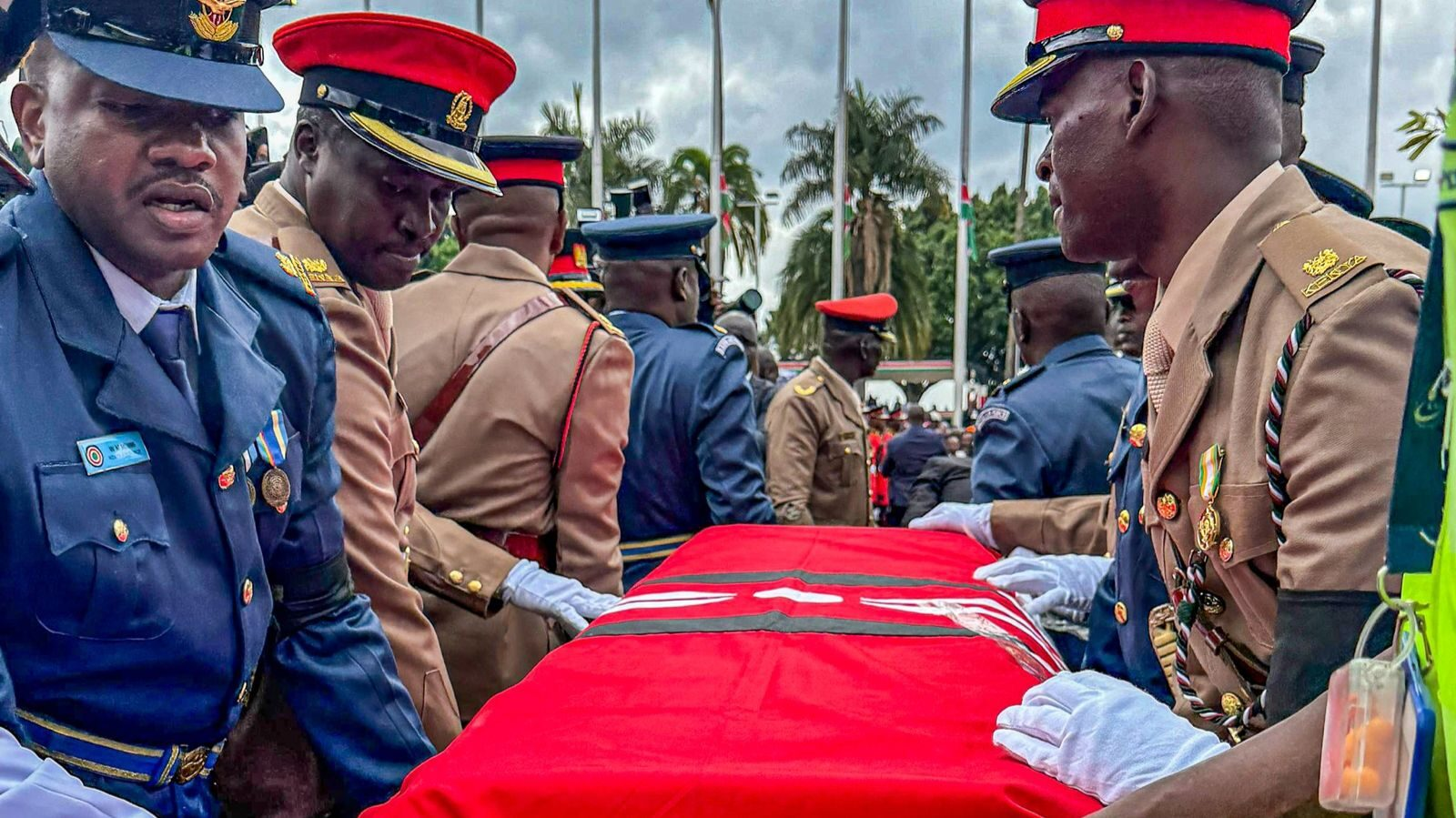
Gunfire broke out during the public viewing of late opposition leader Raila Odinga as mourners pressed their way into a stadium in Nairobi.
Nairobi, Kenya, saw gunfire Thursday as mourners broke over the gates of a stadium hosting a public viewing of the remains of the late opposition leader Raila Odinga.
A sizable group of mourners rushed through the main gate in tumultuous events captured on live video posted on the Kenyan presidency’s YouTube page.
Odinga passed away on Wednesday at the age of 80 while undergoing medical care in an Indian hospital.
Speculation regarding his health had increased in recent weeks, but his family and close friends consistently denied reports that he was in severe condition.
For decades, Odinga was a dominant figure in Kenyan politics, lovingly referred to by his fans as “Baba” (Father), “Agwambo” (Act of God), and “Tinga” (Tractor). In his five unsuccessful presidential runs, he was a tenacious campaigner and skilled political organizer who frequently accused others of electoral fraud and demanded reforms.
Odinga celebrated the 2017 Supreme Court ruling that invalidated then-President Uhuru Kenyatta’s reelection as a democratic victory, which was his most significant vindication. His eventual boycott of the replay, however, was due to unsolved problems.
When elections were hotly contested, Odinga frequently made amends with incumbent presidents despite years of political enmity. He agreed to establish a “broad-based government” with President William Ruto after losing in 2022, appointing a number of his supporters to important posts. He justified the action as an attempt to bring the country together following fatal protests that resulted in the parliament being stormed.
When Odinga ran for chair of the African Union Commission earlier this year, the Ruto administration supported him. Despite strong regional support, Mahmoud Ali Youssouf of Djibouti defeated him in the end.
Odinga was a symbol of Kenya’s fight for democracy, and his political life was characterized by sacrifice and tenacity. As the longest-serving political prisoner in Kenya, he was imprisoned twice during Daniel arap Moi’s oppressive government, from 1982 to 1988 and again from 1989 to 1991. He rose to fame in the country after being imprisoned, first for an alleged coup attempt in 1982.