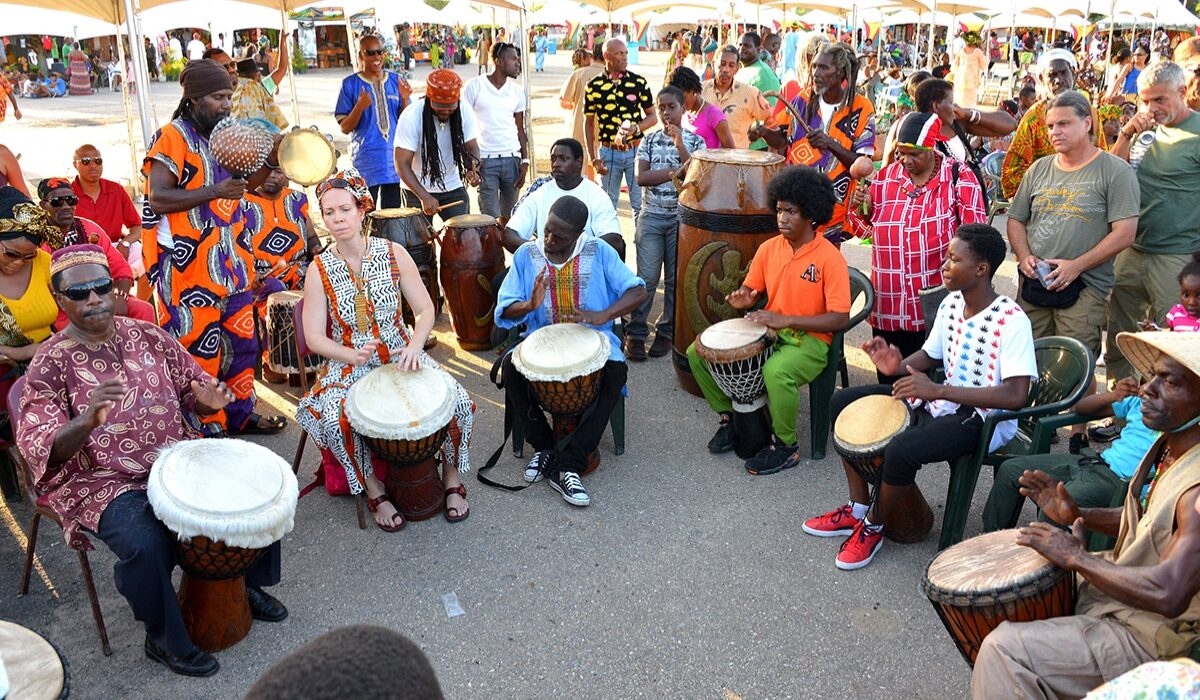
History will be made in Nairobi on October 22 and 23. A Pan-African celebration honoring reparations for slavery and colonial misdeeds will take place in Africa for the first time. Wakati Wetu, which translates to “Our Time” in Swahili, is an event that will unite over a hundred artists, musicians, activists, policymakers, academics, and philanthropists from both the continent and the diaspora.
As the African Union begins its Decade of Reparations, which is devoted to the emancipation and justice of Africans and people of African heritage, the event, which is co-organized by African Futures Lab, Reform Initiatives, Baraza Media Lab, and Deep South Solidarity Fund, comes at a perfect time.
One question we’ve received since we revealed the event’s dates is: Why a reparations festival, and why now? Time is of the essence. With the loss of foreign aid, restricted migration laws, enduring racial hierarchies, and selective public anger at the misery of white South African farmers that ignores the struggles of a Black majority, Western engagement with Africa is waning. A second race for African resources, European hydrogen dams, and Chinese lithium batteries is also taking place at the same time, accelerating energy transformations that benefit other people.
Our answer is Wakati Wetu. In order to imagine a new world order free from the colonial mechanisms that still tie us, such as racism, exploitation, and debt, the festival uses the power of art, culture, and intellect to recover the imagination that colonization attempted to eradicate. Rejecting the structures that led to Africa’s reliance and asserting its right to determine its own destiny are the first steps.
The African continent is currently dealing with intertwining security, financial, and climate issues, all of which have their roots in an unresolved colonial past. Africa bears the impact of climate change, including droughts, floods, declining biodiversity, and failing harvests, although contributing less than 4% of the world’s carbon emissions. By 2030, 100 million Africans might be uprooted from their homes, and 50 million could live below the poverty line. This is not a historical accident. It is the inevitable result of centuries of dispossession and racialized extraction.
The same is true with debt. Twenty-two African nations are either in or close to financial difficulty, and over half of the continent’s population resides in countries that spend more on debt repayment than on healthcare or education. The global financial system is unaffected even though certain African nations are compelled to borrow money at rates that are twelve times higher than those of their European counterparts.
These injustices cannot or will not be addressed by the international institutions left over from colonial control. For instance, without African representation, the UN Security Council still decides Africa’s political future. Africa has minimal voice, no permanent seat, and no veto power, despite the fact that nearly eight out of ten of the Council’s resolutions address African issues.
Africa needs to assert its position within the emerging global order. Reparations are not just about monetary recompense; they also include structural change, including the destruction of the organizations and ideologies that were established on the exploitation of African resources and lives and that still shape modern global hierarchies.
Wakati Wetu creates an opportunity to envision an Africa free from exploitation and dependency by uniting artists, activists, and academics from more than 20 African and diasporic nations. a future in which our economies, languages, cultures, and knowledge systems restore the dignity of its peoples.
Additionally, it is an appeal to forge enduring bonds of solidarity between Africans living on the continent and those living in the Americas and Europe.