The Congolese government and the AFC/M23 movement have formally agreed to form a joint committee to oversee and confirm the two warring sides’ permanent truce.
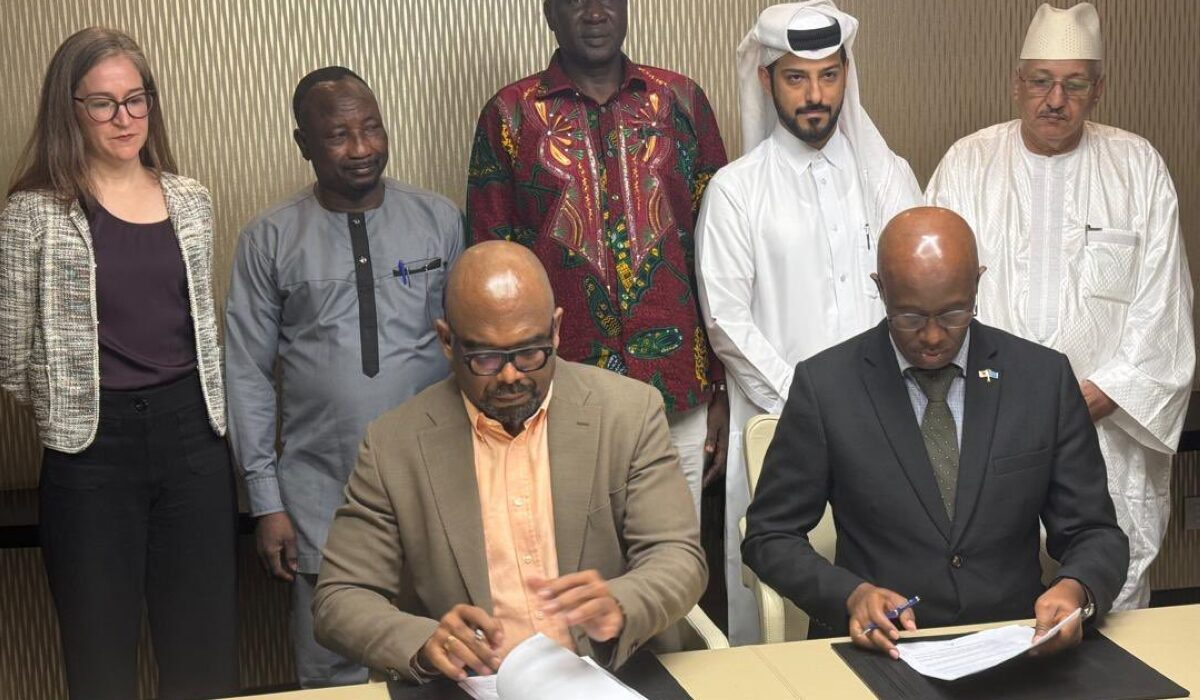
The peace talks have been mediated by Qatar since April, and the signing was held in Doha on Tuesday, October 14.
The long-awaited ceasefire is being enforced with the signature of the Ceasefire Oversight and Verification Mechanism, which raises optimism that the years-long armed conflict in eastern DR Congo may come to an end.
It expands upon the two sides’ July 19 Declaration of Principles and offers a methodical framework for tracking, confirming, and reporting truce observance.
As per the inked agreement, the mechanism will function as an unbiased entity made up of equal representatives from the AFC/M23 and the government of the Democratic Republic of the Congo. Additionally, in order to increase transparency and international trust in the process, observers from the United States, the State of Qatar, and the African Union (AU) will be included.
As the coordinating body, the International Conference on the Great Lakes Region (ICGLR) will use its Expanded Joint Verification Mechanism (EJVM). Representatives from both parties will be included in a new organization called EJVM+ to guarantee balanced involvement. As an extra participant, the United Nations mission in Congo (MONUSCO) will primarily assist with operational and logistical support.
“The mechanism’s mission is to supervise the permanent ceasefire’s implementation, look into and confirm any suspected violations, and take the necessary actions with the parties involved to prevent further breaches,” the paper stated.
All claimed ceasefire violations will be investigated by the EJVM+, which will also be in charge of gathering and recording evidence and publishing weekly reports that summarize confirmed instances.
Oscar Balinda, a spokesman for AFC/M23, told The New Times that the rebels are prepared to carry out their end of the bargain and pointed out that the Congolese government now has the responsibility to take the next step.
Balinda stated, “Despite its well-known history of not honoring agreements it has entered into, we are fully committed to implementing our part, and we hope the Congolese government will do the same.”
In the past, the Congolese government and its allies, including Burundian troops, foreign mercenaries, the Congolese-backed Rwandan genocidal militia FDLR, and Wazalendo and Mai Mai militias, have been accused by the AFC/M23 of attacking both civilian-populated areas and rebel-held areas.
Balinda went on to say that the movement participated in the talks willingly and honestly, and that both parties should aspire to see the signed mechanism through to completion.
In order to comprehend the underlying reasons of the problems in eastern DR Congo and advance the negotiations mediated by Qatar, he continued, “we must first cease the use of military force and hold substantive talks.”
The Congolese government pledged to ending the conflict and promised to “prepare the conditions for a comprehensive and lasting peace agreement.”
Tuesday’s signing was likewise praised by the observers and mediators.
The US President’s Special Advisor for Africa, Massad Boulos, described the signing as a “critical step” that advances the two sides toward a peace deal.
“We thank Qatar for its leadership in facilitating this process and look forward to supporting its full implementation to achieve lasting peace and stability in eastern [DR Congo],” stated Boulos.