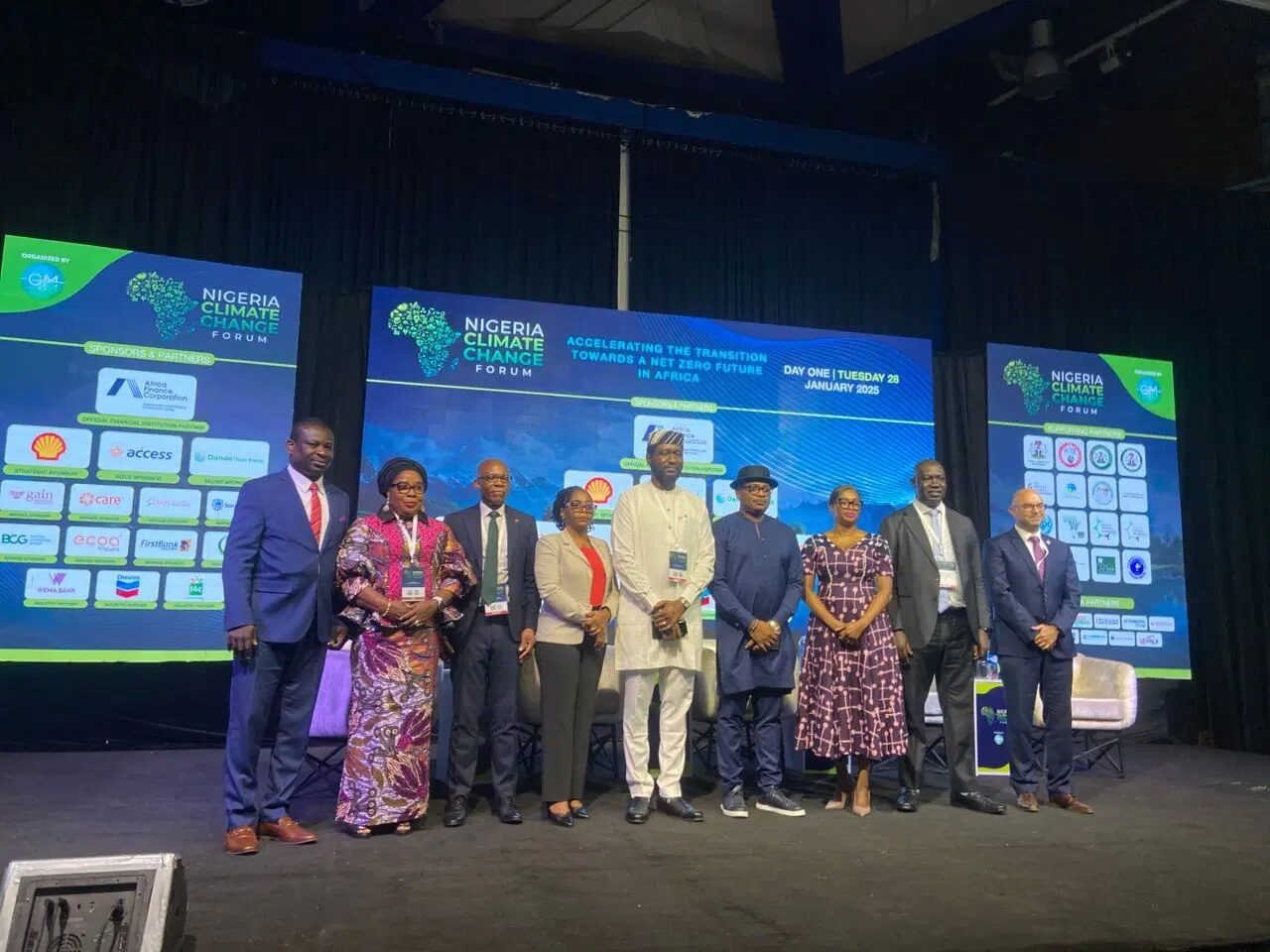
Nigeria wants to get $25 billion in climate capital by 2030 to pay for projects that cut carbon emissions, use clean energy, and make energy more useful.
As part of its plan to govern the whole economy around climate change, the federal government wants to raise about $25 billion in climate capital by 2030.
At the weekend, Mrs. Omotenioye Majekodunmi, Director-General of the National Council on Climate Change (NCCC), told reporters about the goal and said that the Nigeria’s Carbon Market Framework was complete and would be sent to the Federal Executive Council (FEC) for approval.
Majekodunmi said that the Nationally Determined Contribution (NDC3.0) that was recently submitted is different from the previous ones in many ways. It goes against the “business as usual” approach to reducing emissions across the whole economy, which is our most ambitious level to date. The goals are clearer, and there will be an investment plan to speed up implementation, Majekodunmi said.
She said that Nigeria’s goals to cut emissions are 32.2% higher than the baseline year of 2018. The country also wants to do a lot more to reduce emissions and react to climate change, and its goals are much clearer than in NDC2.0.
She talked about how the NDC3.0 wants to lower the rate of deforestation by 60%, which would help reduce greenhouse gas emissions by 304.8 MtCO2eq., and it also wants to get more people to use and adopt cleaner energy systems by installing 7 GW of cleaner fuels (50% renewable and 50% natural gas) as part of an achievable “Energy Mix Plan” to get to net-zero by 2060.
Majekodunmi said, “Health” and “Action for Climate Empowerment” have been added as priority areas for the first time in our NDC3.0, showing our dedication to climate governance across the whole economy.”
To keep its promises, she said, Nigeria is getting $20 billion to $25 billion in climate finance by 2030. This includes green bonds, blended finance, and public-private risk-sharing mechanisms. She also said, “We aim to unlock at least $7 billion in grants and concessional finance from global partners while promoting technology transfer.”
The head of the NCCC talked about plans for the 30th Conference of the Parties to the UN Framework Convention on Climate Change (UNFCCC) (COP30), which will take place in Belém, Brazil, from November 10–21, 2025.
said, “We have opened an online registration system for MDAs and private sector organizations that want to hold side events in the Nigerian pavilion to raise awareness and support our country’s goals.”
“We’re cutting down on paper use and our carbon footprint by using digital tools.” The government is setting a good example by doing this.
People can fill out an application and send in all of their details online.
She also said, “We just launched a strong Monitoring, Reporting, and Verification (MRV) system that is in line with best practices around the world to keep track of progress every year.”
“The MRV system helps make sure that our sectoral climate actions are measured and reported in a way that is open and accountable.” This will make investors and funding partners more likely to trust us, and most importantly, it will help us get the climate funds we need to meet our climate responsibilities and support our development goals.
MRV is a necessary part of making sure that high-quality and appealing carbon credits are made in Nigeria. John Michael Olugbode