Trump promises new tariffs as he intensifies the US-China trade conflict
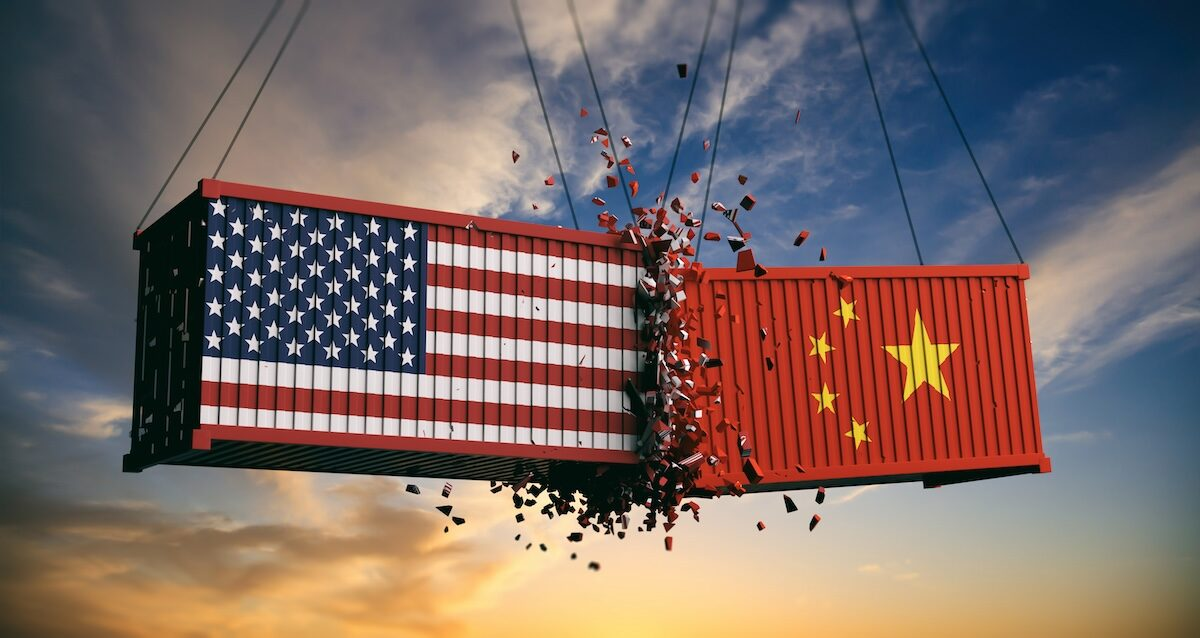
U.S. President Donald Trump reignited the trade war with Beijing on Friday, bringing an end to a fragile truce between the two largest economies by pledging to significantly increase tariffs in response to China limiting its essential mineral exports.
The president announced new levies of 100% on China’s exports to the U.S., as well as new export controls on “any and all critical software,” effective by November 1, just nine days before the current tariff relief is scheduled to end.
Trump raised doubts about the upcoming meeting scheduled for three weeks from now with Chinese President Xi Jinping in South Korea, stating on Truth Social that “now there seems to be no reason to do so.”
“I have not canceled,” Trump later informed reporters at the White House. “I would expect that we may have it.” The meeting has never been confirmed by Beijing.
The recent trade measures were a response from Trump to China’s significant increase in its export controls on rare earth elements. China holds a commanding position in the market for these elements, which are crucial for tech manufacturing.
“It was surprising,” Trump remarked regarding China’s actions, which were not aimed directly at Washington. “I found it to be quite poor.”
The actions indicated the most significant break in relations in six months between Beijing and Washington – the largest factory in the world and its biggest consumer. Many are wondering if the fragile economic truce established over the summer can endure.
Trump’s response was both quick and striking, as the Republican has utilized tariffs imposed on U.S. importers against both allies and adversaries. It has the potential to reignite a trade war that Washington and Beijing had put on hold earlier this year following careful negotiations.
Experts indicated that limitations on U.S. software exports to China could significantly impact the nation’s technology sector, particularly in areas such as cloud computing and artificial intelligence.
Trump additionally warned of potential new export controls on aircraft and aircraft components, with a source close to the situation indicating that the administration was outlining other possible targets.
Beijing has consistently urged Washington to lift unilateral trade restrictions that it claims hinder global commerce.
MARKETS PLUMMET DUE TO EMERGING THREATS
Trump’s trade threats, conveyed through a series of social media posts and a public exchange with reporters, caused markets and relations between the world’s largest economies to spiral downward.
China is responsible for more than 90% of the global production of processed rare earths and rare earth magnets. Numerous materials are essential in products that include electric vehicles, aircraft engines, and military radars.
Trump’s unexpected attack rattled global financial markets, causing the benchmark S&P 500 Index (.SPX) to decline by over 2%, marking its largest single-day drop since April, when a continuous stream of tariff announcements from Trump heightened market volatility.
Investors sought refuge in gold and U.S. Treasury securities, leading to a decline in the value of the U.S. dollar against a range of foreign currencies.
Tech stocks experienced significant losses in after-market trading following Trump’s announcement of the tariff and export control measures.
“According to Craig Singleton, a China expert at the Foundation for Defense of Democracies, Trump’s post may signal the start of the end of the tariff truce.” Singleton stated that Washington perceived China’s export control measures as a betrayal. “It seems that Beijing may have miscalculated its strategy.”
In his initial social media update on Friday, Trump stated that China has been dispatching letters to nations globally, indicating its intention to implement export controls on all aspects of production concerning rare earths. The mention of letters seemed to allude to Beijing’s policy documents.
Trump stated that he had received communication from unnamed countries upset with Beijing’s actions and expressed his surprise given the “very good” recent relationship with China.
Trump criticizes Beijing’s ‘hostile order’
Describing China’s actions as a “hostile order,” Trump stated that he had been compelled “to financially counter their move.”
“For every Element they have managed to monopolize, we possess two,” Trump stated.
The White House and the Chinese embassy in Washington have not provided a response to a request for comment.
A representative for the U.S. Trade Representative refrained from commenting on the countermeasures Trump was considering, while a spokesperson for the U.S. Treasury did not provide a response to a request for comment. The two offices have engaged in discussions with Beijing regarding trade.
Economic tensions have been escalating in recent days. On Thursday, the Trump administration put forth a proposal to prohibit Chinese airlines from operating flights over Russia on their routes to and from the U.S. On Friday, the U.S. Federal Communications Commission announced that major U.S. online retail websites have taken down millions of listings for prohibited Chinese electronics.
On Thursday, China took action by incorporating five new elements along with numerous pieces of refining technology into its export-restricting control list. It also mandated that foreign rare earth producers utilizing Chinese materials adhere to its regulations.
Analysts indicated that the stakes have increased for a favorable result from a potential Trump-Xi summit, should it take place, during the Asia-Pacific Economic Cooperation forum commencing on October 31 in South Korea.
“Things are about to become intriguing,” remarked Scott Kennedy, a specialist in China business and economics at the Center for Strategic and International Studies in Washington.
“Both parties are optimistic that increasing pressure will prompt the other to make concessions ahead of APEC, or they are re-escalating their positions under the assumption that a deal at APEC is unattainable, thereby gaining leverage for the next phase of negotiations.”