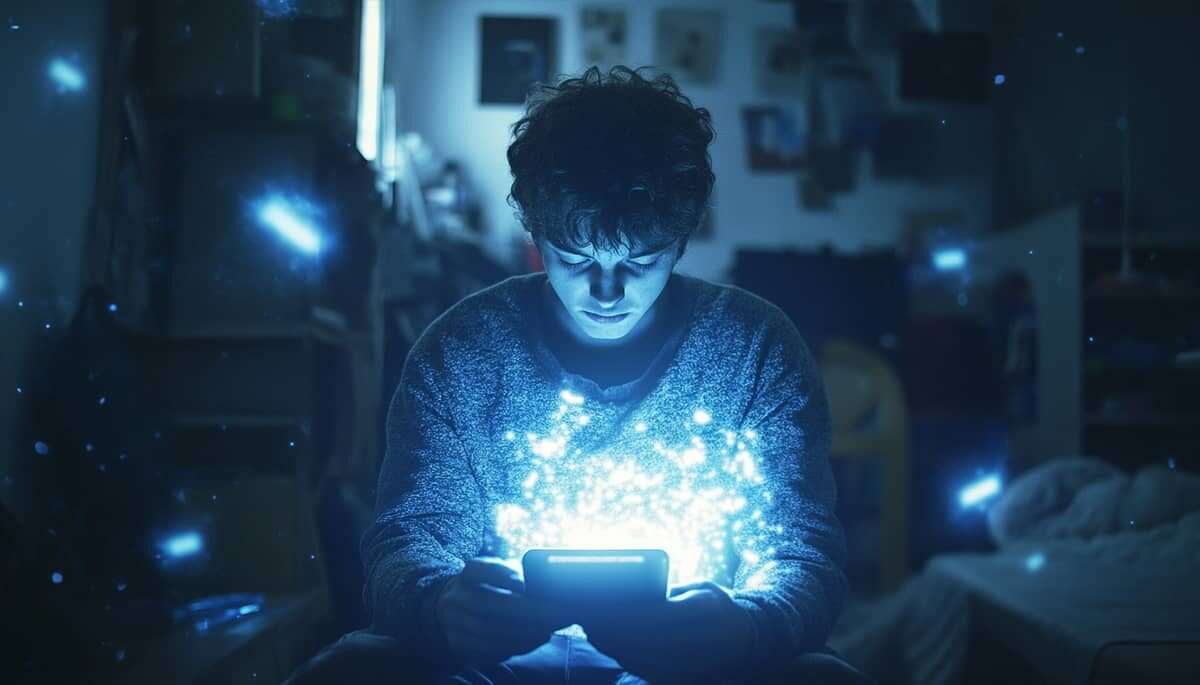
Social media users who post late at night are more likely to have mental health issues.
An analysis of 18,288 tweets and retweets over a 15-year period shows that those who post overnight are more likely to have poor mental health and to have higher levels of anxiety and depression symptoms. This analysis also coincides with long-term health data in the West of England.
According to the study, users who posted on average between 11 p.m. and 5 a.m. had “meaningfully worse mental wellbeing than those who tweeted during the daytime.” It attributes this to sleep displacement, “cognitive arousal,” and a reduction in melatonin production brought on by the blue light from screens.
According to Daniel Joinson, the study’s principal author from the University of Bristol, “Even though social media is frequently viewed as a single entity, the precise actions and experiences that users have on various platforms will determine how it affects their mental health.
“Our paper highlights the potential harm of a very specific behavior: nighttime content posting,” he continued.
“Research like ours could help inform interventions or legislation that aim to deter harmful social media use while enabling beneficial behaviors or experiences.”
Social media users who post late at night are more likely to have mental health issues.
An analysis of 18,288 tweets and retweets over a 15-year period shows that those who post overnight are more likely to have poor mental health and to have higher levels of anxiety and depression symptoms. This analysis also coincides with long-term health data in the West of England.
According to the study, users who posted on average between 11 p.m. and 5 a.m. had “meaningfully worse mental wellbeing than those who tweeted during the daytime.” It attributes this to sleep displacement, “cognitive arousal,” and a reduction in melatonin production brought on by the blue light from screens.
According to Daniel Joinson, the study’s principal author from the University of Bristol, “Even though social media is frequently viewed as a single entity, the precise actions and experiences that users have on various platforms will determine how it affects their mental health.
“Our paper highlights the potential harm of a very specific behavior: nighttime content posting,” he continued.
“Research like ours could help inform interventions or legislation that aim to deter harmful social media use while enabling beneficial behaviors or experiences.”