Macron re-appoints Sébastien Lecornu as prime minister after four days, which makes France’s political situation even less stable
Macron calls Lecornu back as prime minister after he quit suddenly, which causes more political chaos at a time of high debt and low support.
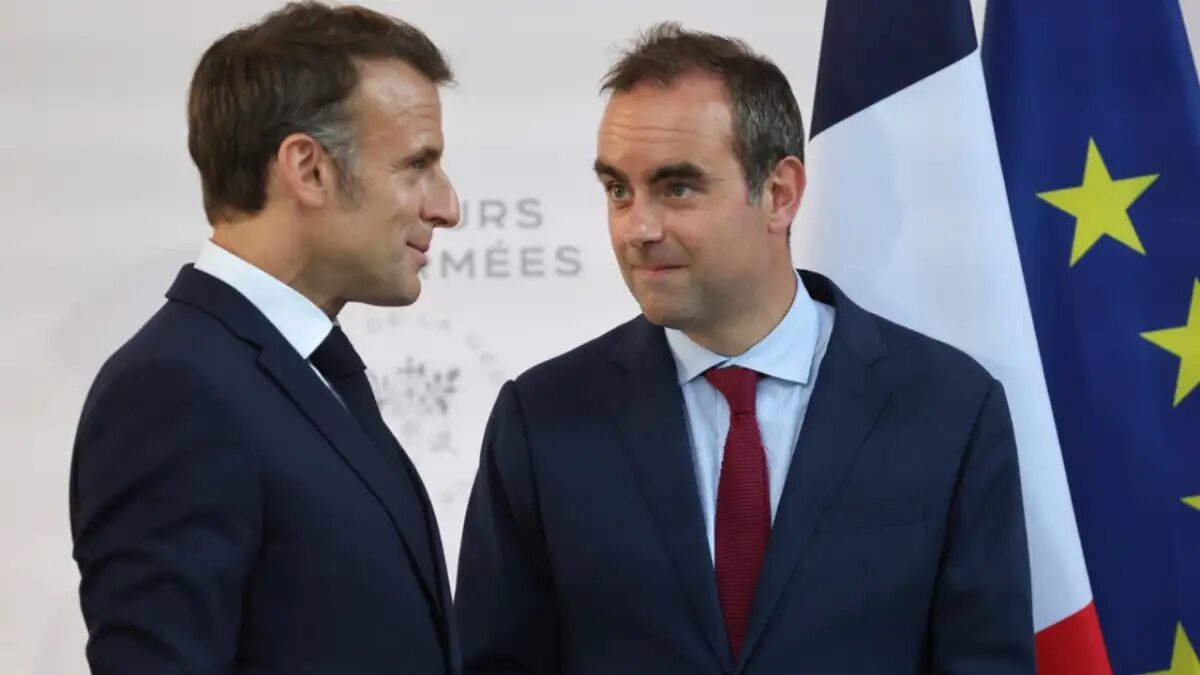
Just four days after resigning as prime minister, Sébastien Lecornu was asked to return by French President Emmanuel Macron. This is a dramatic turn in a week of political chaos that has left France’s government in doubt.
The decision was announced by the Élysée Palace late Friday night. This was soon after Macron held crisis talks with party leaders, but the far right and far left were not present.
Lecornu’s return was a surprise because he had told French TV earlier this week that he wasn’t going to run for office again.
He told the whole country on TV two days before he was reappointed, “I am not chasing the job, my mission is over.”
Even though Macron said those things, his office said that the president had “tasked [Lecornu] with forming a government” and given the 39-year-old friend “carte blanche” to act.
Lecornu said in a post on X that he was taking on the task “out of duty,” writing:
“Out of duty, I accept the president’s assignment to do everything I can to get France a budget by the end of the year and help our fellow citizens with their everyday problems.”
Lecornu said Friday night that he would “do everything to succeed in this mission.” He had once called himself a “soldier-monk.”
A political minefield and a budget deadline
The reappointed premier has to present the national budget for next year to parliament by Monday, which is a difficult job because the legislature is divided and opposition is growing from all sides.
France has almost a record amount of debt. There is 114% of GDP in public debt, which is the third most in the eurozone. This year, the budget deficit is expected to hit 5.4% of GDP.
Lecornu has made being responsible with money a requirement for the job and has warned that “no one will be able to shirk” the need to fix France’s finances. Macron also told officials that they should put aside their “presidential ambitions” until the end of his 18-month term was over.
A new poll from Elabe shows that Macron’s approval rates have dropped to a record low of 14%, and Lecornu must first pass a vote of confidence in the National Assembly. Macron does not have a majority there.
The far right spoke out against the reappointment right away.
The head of the National Rally, Jordan Bardella, said that Lecornu’s return was a “bad joke” from a president who was “more than ever alone and disconnected at the Élysée.”
He said that his party would start a vote of no confidence right away. He said that the government was “doomed” and that it only existed “out of fear of an election.”
Lecornu’s previous government fell apart just three weeks after it was formed because of a disagreement with Bruno Retailleau, the leader of the conservative Republicans. Retailleau didn’t like a choice to a minister and later said that the coalition between the centrists and conservatives was dead.
Retailleau has made it clear that he will not back “Lecornu II.” He is thought to want to be president. Even so, there are still disagreements within his party, though some moderates are willing to talk.
Lecornu is now trying to get left-wing parties to join Macron’s centrist group, which is a risky move but necessary to build a majority that can be used.
As a possible way to make peace, Macron’s team has said that some parts of his unpopular pension reform, which raised the age of retirement from 62 to 64, will not be put into action right away.
But that move could turn off centrist allies who worked to get the reform passed last year, and it won’t please those on the left.
The head of the Socialists, Olivier Faure, said:
“People haven’t promised us anything, so we won’t promise to back the prime minister in a vote of confidence.”
Fabien Roussel of the Communist Party said that the left wanted “real change” and warned that the French people would not accept a prime minister from the president’s center-right camp.
“All of this is going to turn out very badly,” said Marine Tondelier, head of the Green Party. She was “stunned” by Macron’s offer to the left.
Worries about the economy and growing tiredness
Also, the reappointment comes at a time when the economy is worried. This year, the Bank of France thinks growth will be 0.7%, but governor François Villeroy de Galhau said that uneasiness in politics had already taken 0.2% off of that.
He told RTL radio, “Like many people in France, I’ve had enough of this political mess.” “Compromises are the only way to move forward. Even forming coalitions is not a bad thing.”
Analysts say that France could fall into even greater political paralysis if Lecornu fails to form a government in the next few days. This would put markets on edge and further erode economic confidence.
For now, Macron’s sudden call to bring back his former prime minister shows how deeply France’s politics have become stuck and how few choices a president who is running out of time and friends has left.