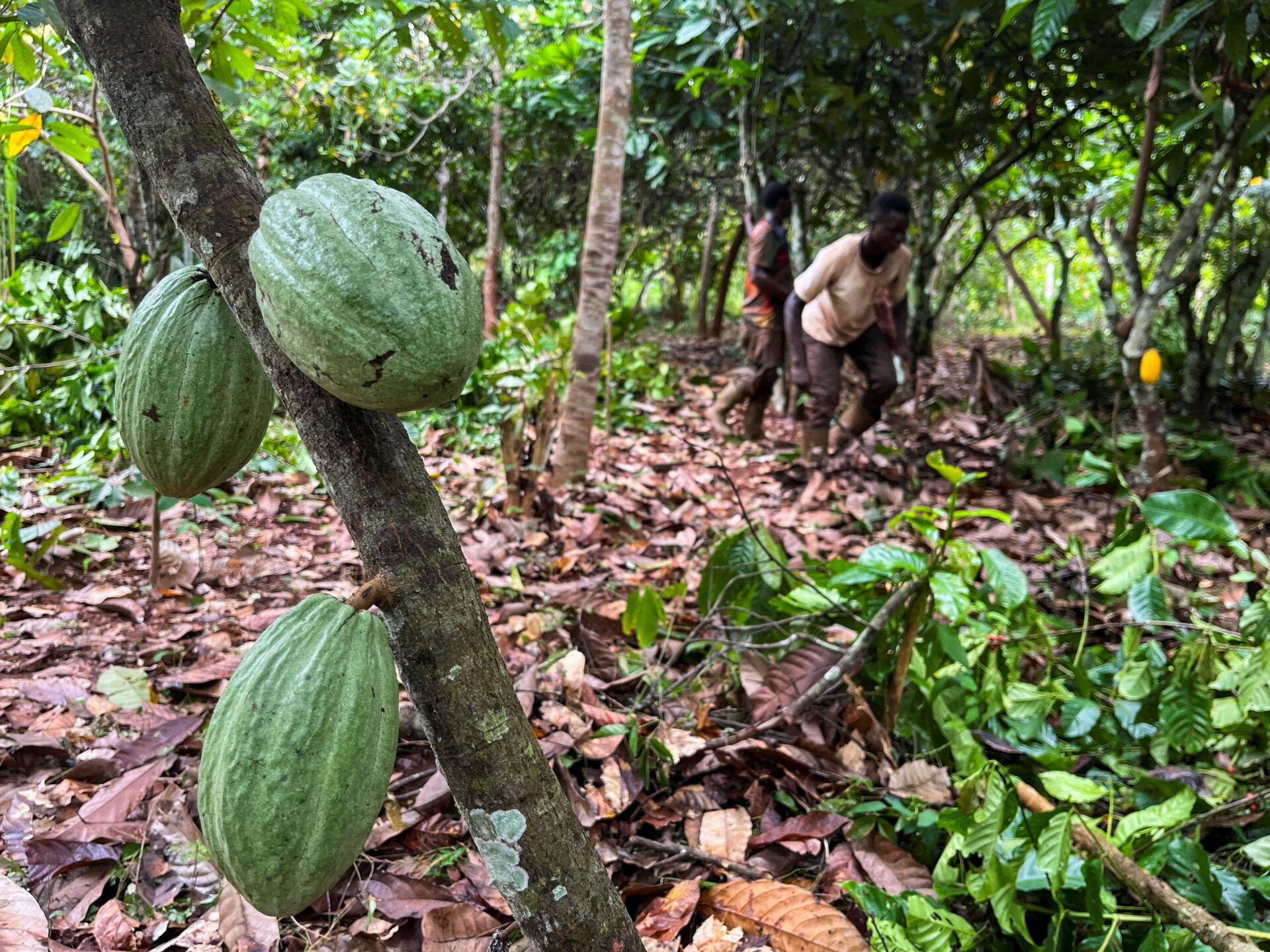
Leading cocoa producer Ivory Coast was able to track the origin of almost half of its beans last season as it got ready for the EU’s landmark law against deforestation, according to a big report on sustainability in the cocoa sector.
The groundbreaking policy, which aims to stop the 10% of global deforestation caused by EU purchases of foreign goods, was supposed to go into effect on December 30, but it will now be delayed by another year.
European Union buyers of soy, beef, oil palm, coffee, rubber, timber, cocoa, and products made from these things would have had to show proof that their goods did not cut down trees anywhere in the world, or they would have had to pay big fines.
Concerning the 2024-25 season (October to September), Ivory Coast was able to track down about 40% of its beans, according to the Cocoa Barometer study made by the VOICE Network group of civil society organizations.
It will find more cocoa beans along the Ivory Coast.
In spite of the fact that this wasn’t enough to follow the law (since about two-thirds of the world’s cocoa beans are shipped to the EU), Antonie Fountain, head of the VOICE Network, told Reuters that the country would be able to track down many more beans this season.
Additionally, he made it clear that the law’s enforcement was the only way to guarantee full obedience.
According to the report, Fountain and co-author Friedel Huetz-Adams said, “While almost all cocoa stakeholders, including industry, seemed to be on the same page, a sudden shift to the right has caused a slashing of funding for sustainability worldwide.”
“The regulatory unreliability of the EU is causing severe damage to planetary protection,” they pointed out.
For legal reasons, Ivory Coast has chosen a digital method for buying and selling goods that will also show where the beans came from. There are 1 million cocoa workers, and about 900,000 have gotten their digital ID cards, according to the report.
Industry groups and EU trade partners like Brazil, Indonesia, and most importantly, the U.S. have spoken out against Brussels’ plan to delay the start of its anti-deforestation law, saying that following the rules would be expensive.
The EU promised to work with President Trump to ease the concerns of U.S. producers about the rule as part of their trade deal.