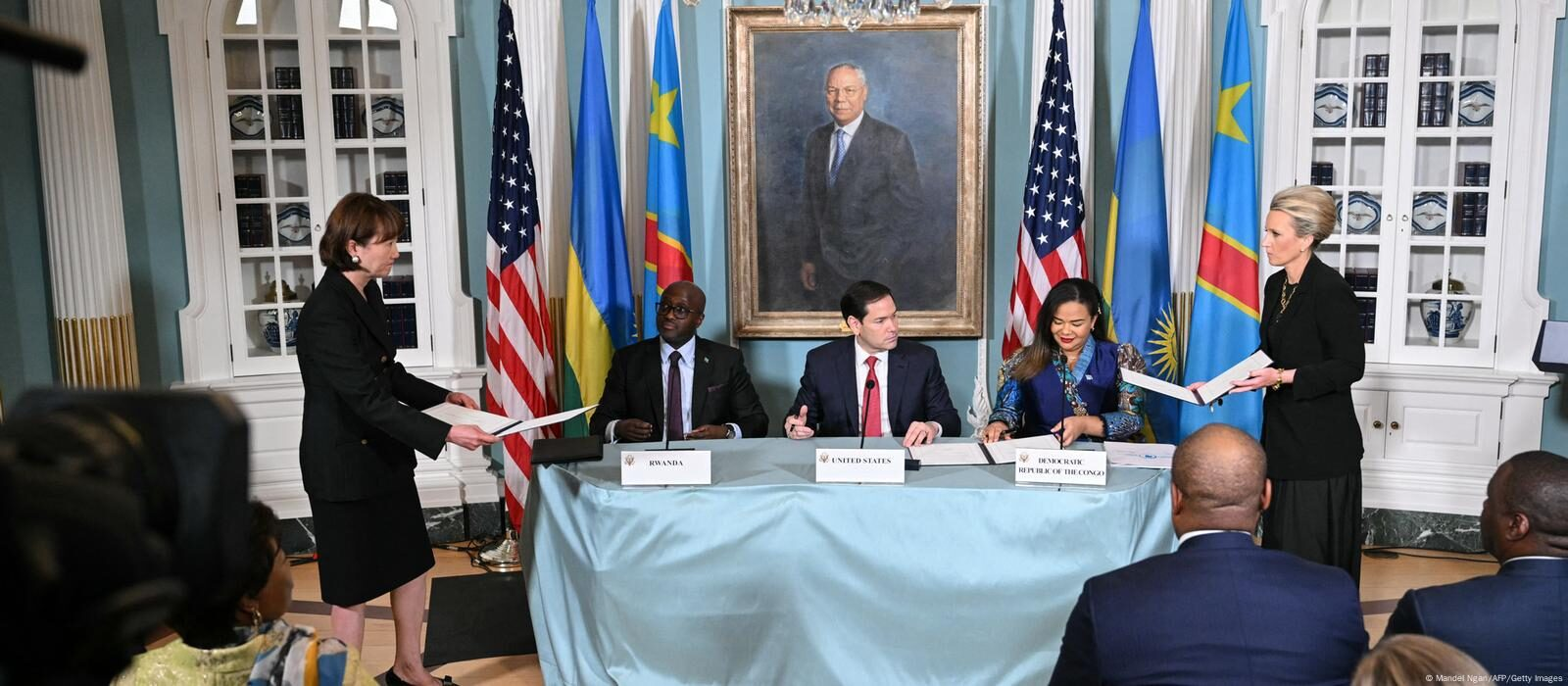
Foreign Minister Olivier Nduhungirehe praised the work of the Rwandan and DR Congo delegations on the Regional Economic Integration Framework (REIF). He also explained why the two countries didn’t sign the deal at the last minute, even though it was expected that they would.
As part of the US-led plan to improve relations and boost cooperation between the two neighboring countries, the REIF was created. It was thought that the economic plan would be signed this week.
In a recent statement, the US Department of State talked about a number of economic areas where Rwanda and DR Congo had said they wanted to work together as part of the peace deal that the US helped to broker between the two countries on June 27.
The statement says that both countries “plan to” look for “mutually beneficial partnerships, greater connectivity with international and regional economic development initiatives, and investment opportunities.” Mining, infrastructure, energy, industrial growth, agribusiness, public health, and managing national parks are some of the areas where cooperation is being considered.
In order to explain why the deal wasn’t signed, Minister Nduhungirehe said that Congolese President Félix Tshisekedi called off the signing at the last minute.
There is no doubt that the DRC and Rwandan delegations did a good job this week. With help from the US, they came to a deal on the Regional Economic Integration Framework (REIF). They were going to sign the document the next morning, but at the last minute, President Tshisekedi told his delegation NOT to because he was afraid of how his own people would respond negatively, he said through X.
Nduhungirehe also said that this new event showed that the DR Congo’s leaders have been inconsistent since the start of peace efforts three years ago.
He said, “Unfortunately, since the start of the peace processes, we have become used to these regular mood swings by President Tshisekedi on important issues related to peace and security in our region.” He was talking about past events that broke bilateral promises.
He used the example of what happened in Luanda, Angola, on September 14, 2024, when the military team from DR Congo agreed to the unified plan to neutralize the FDLR and lift Rwanda’s defensive measures, but President Tshisekedi stopped the signing in the middle of it.
“In the middle of the meeting, he called his foreign minister and told her not to sign,” Nduhungirehe said.
Concerning Reuters’s claim that the deal fell through because Rwanda failed to move 90% of its troops from eastern DR Congo, Nduhungirehe called the claim “a ridiculous pretext for media consumption.”
He also made it clear that the Regional Economic Integration Framework (REIF) is only an economic agreement and has nothing to do with the current talks about security.
The Minister said, “Negotiations on the REIF are only about money; they don’t touch on security issues, which are handled by the Joint Security Coordination Mechanism.” In the statement from the U.S. State Department, there was no discussion of such a condition during the September 17–18 JSCM meeting in Washington, where the implementation of the CONOPS was talked about.