The unrest led by youth reveals vulnerabilities in Morocco’s economic framework
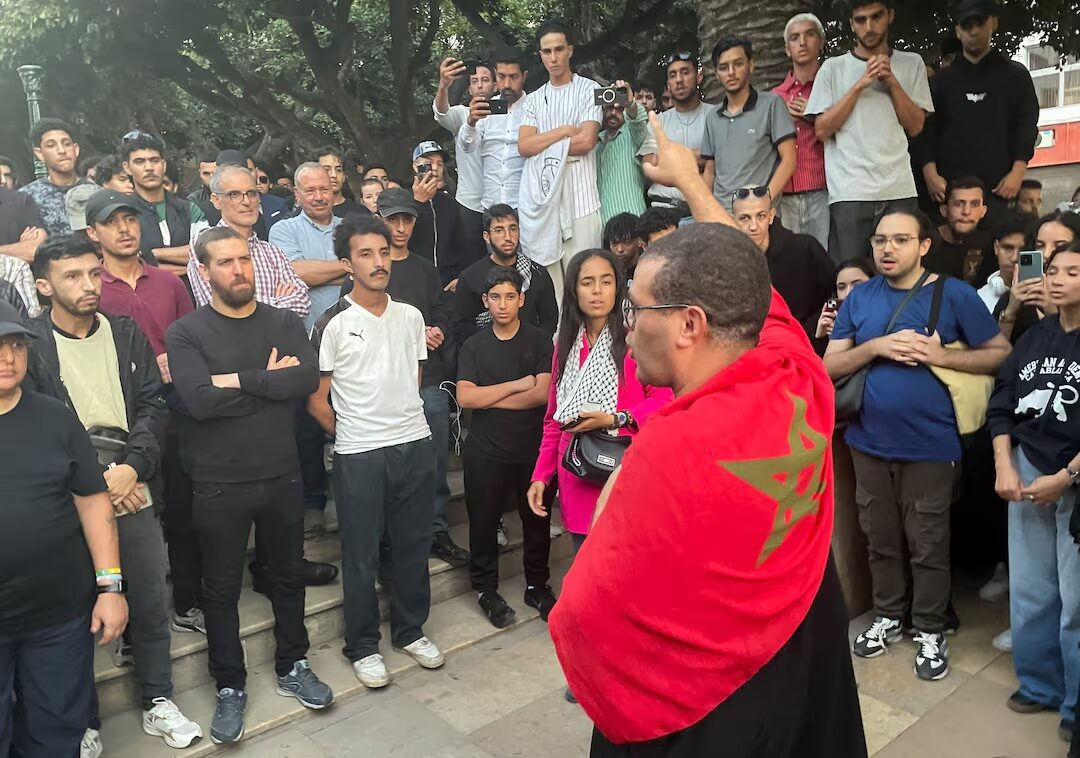
Behind a narrative of ambitious infrastructure projects and the launching of modern stadiums in anticipation of the 2030 World Cup, youth-led unrest that swept over Morocco this week exposed deep-seated resentment over poverty and public services.
Inspired by similar uprisings in Nepal, Madagascar, and Peru, the protests in big cities turned into rioting in rural towns and isolated communities. Before the violence subsided, more than 400 people were arrested and three individuals were shot dead after an attempt to overrun a security headquarters.
King Mohammed VI delegated significant powers to parliament as a result of the most extensive unrest since the Arab Spring events in 2011. Additionally, it was the bloodiest since the Rif region’s protests in 2016.
The demonstrations highlight the difficulties facing the government as they work to preserve law and order, accelerate economic growth, and improve Morocco’s standing abroad in preparation for the World Cup, which it will co-host with Spain and Portugal.
REQUESTS FOR IMPROVED EDUCATION AND HEALTHCARE
Morocco has distinguished itself from other non-oil Arab countries by investing billions in industry, ports, highways, rail, and renewable energy.
According to the nation’s statistics department, poverty has been nearly halved, and living conditions in some areas of the northwest coast are comparable to those in Europe.
GDP is expected to expand 4.6% this year compared to 3.8% last year, according to central bank figures. Morocco, one of Africa’s most diverse economies, received the coveted “investment-grade” rating last month from the S&P credit rating agency.
However, demonstrators lament that the wealth has not been shared equally. They have primarily called for improved healthcare and education, frequently making a clear analogy to the hectic schedule of tournament preparations.
“We do not want the World Cup,” is the recurring theme. Following the deaths of eight women in childbirth in the southern seaside town of Agadir last month, the phrase “health first” was implemented at a hospital there.
24-year-old medical student Naji Achoui, who participated in a protest outside Morocco’s parliament in Rabat, claimed that his motivation sprang from his experience working in an emergency department without essential supplies like a CT scanner. “I see poor people suffering every day because of the dire conditions in public hospitals,” he stated.
A quarter of Moroccans aged 15 to 24 are not enrolled in school, work, or training, according to research conducted last year by CESE, the nation’s economic and social council.
Jihane Ratma, a 19-year-old management student from Sale, which is close to Rabat, highlighted the shortcomings of the educational system. “We reject violence, but both the youth that protest peacefully and those engaging in riots are all victims of public policies,” she stated.
ONLINE MOBILIZATION OF PROTESTERS
Officials were originally caught off guard, according to reactions to the protesters. Initially, authorities prevented attempts to assemble and rallies were outlawed.
Hundreds of vehicles and dozens of structures, including a police station and banks, had been looted or set on fire by the time authorities decided to act.
Retired police official Mohamed Agdid told Reuters, “The government and members of parliament buried their heads in the sand, leaving the security forces to deal with the fallout of failed policies.”
The group’s anonymous persona, “GenZ 212″—a reference to Morocco’s dialing code—probably made matters more confusing. The group used the gaming apps Discord, TikTok, and Instagram to organize demonstrators online.
In just one week, the number of users on its Discord server jumped from 3,000 to 188,000.
RURAL AREAS PRESSURE
In rural locations like Ait Amira, an agricultural hamlet in Morocco’s southern breadbasket region, the protests took a particularly violent turn.
Due to the influx of seasonal workers to work on neighboring farms, the population has more than tripled over the past three decades, from 25,000 to over 113,000.
The services have not kept pace. Illegal construction is on the rise, and unemployment is widespread. Even the language has shifted, with Moroccan Arabic replacing Amazigh. “Ait Amira was a tinderbox waiting to explode,” activist and academic Khalid Alayoud stated.
Alongside these issues, people’s trust in traditional politicians is eroding. According to a survey conducted by the Moroccan Institute for Policy Analysis, a think tank, trust in political parties fell from 50% in 2021 to 33% in 2023.
Officials have adopted a conciliatory stance since the violence subsided. Prime Minister Aziz Akhannouch, whose resignation was sought by many protesters, stated that discussion was the best way ahead, while Employment Minister Younes Sekkouri accepted the “sincerity” of the demonstrators’ demands.
Many are anticipating the king’s remarks during this month’s start of parliament. The monarchy is one of the red lines that protesters have avoided.
One of GenZ 212’s statements included a 2017 speech in which the king urged officials to “either discharge your obligations fully or withdraw from public life.”