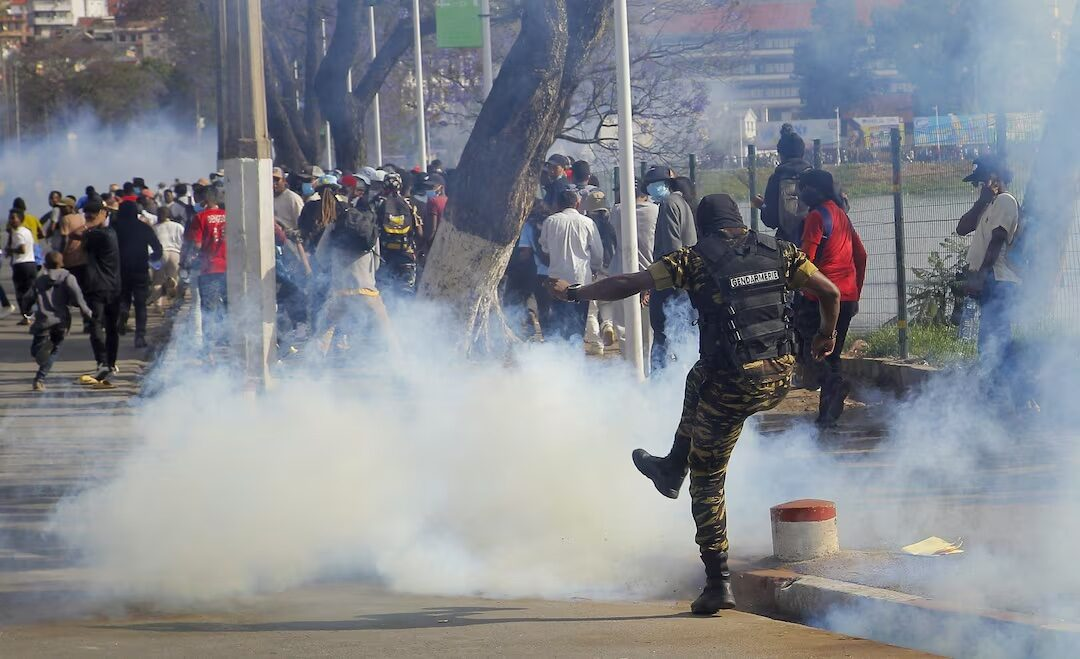
Madagascar’s towns were filled with protesters again on Monday, marking the third week of anti-government rallies. The protesters want President Andry Rajoelina to step down.
A Reuters reporter said that police in Antananarivo used tear gas to get the protesters to stop. Many of the people who protested last month against water and power cuts were college students who used the event to call for bigger changes in the government.
The protests are the biggest wave of unrest on the Indian Ocean Island nation in recent years. They were inspired by similar “Gen Z” marches in Kenya and Nepal and give people a chance to share their anger over widespread poverty and high levels of corruption.
Images of police officers interacting with protesters in the cities of Toliara in the south and Diego Suarez in the north were shown on Malagasy TV on Monday.
Madagascar is one of the poorest countries in the world, even though it has a lot of minerals, wildlife, and farmland. Between 1960, when it became independent, and 2020, when it became a country, the income per person dropped by 45%.
Rajoelina fired his cabinet last week, but now many protesters want the 51-year-old boss to step down too.
The government has denied that at least 22 people were killed and more than 100 were hurt in the first days of the protests, according to the UN.
Rajoelina said in a speech on Friday that he was ready to hear what the protesters had to say, but he didn’t answer the calls for him to step down.
Over the weekend, a spokesman for Rajoelina’s office told Reuters that the protest movement was being “used by political actors who want to make the country less stable.”
“President Rajoelina remains committed to dialogue, to accelerating solutions that improve people’s daily lives,” she wrote in a statement.
In a separate statement released on Monday, the president said that some civil society groups had met with Rajoelina on Saturday, but did not give any further information.
In their own statements, other groups said they didn’t want to take part because the government hadn’t promised that protests would go ahead without any problems and that people who had been arrested would be freed.