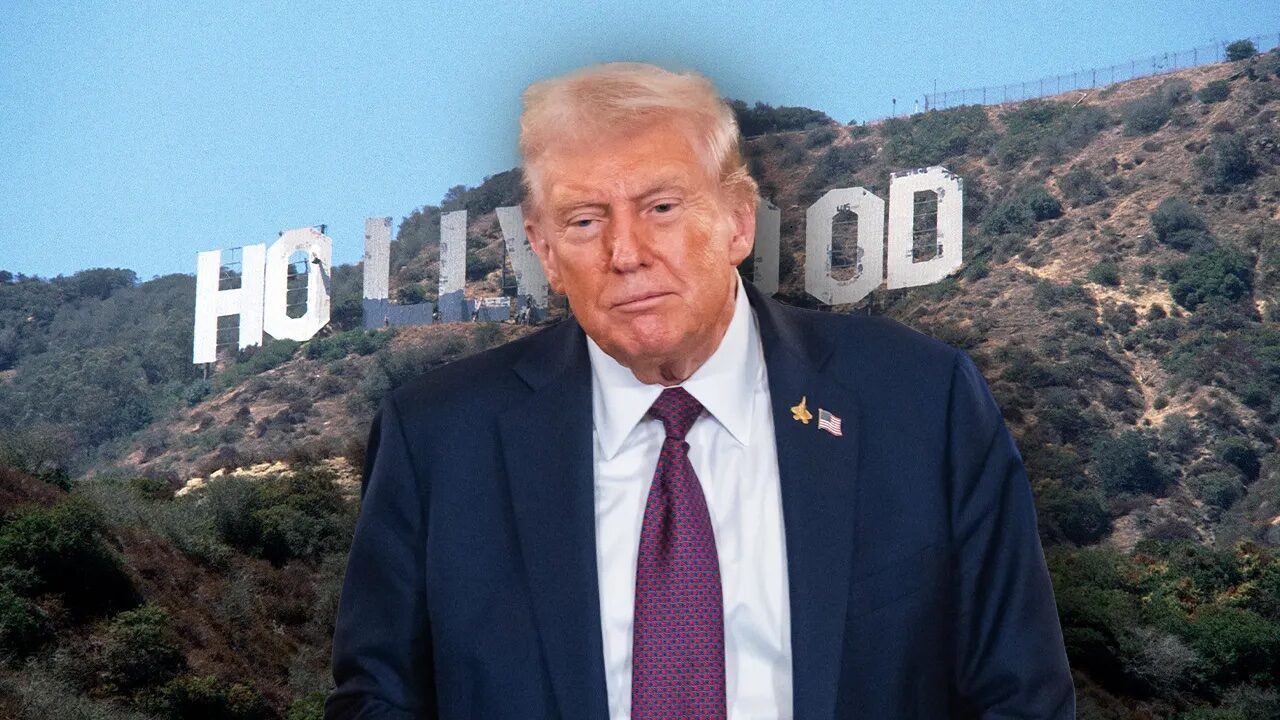
Donald Trump has caused the global film industry to seek clarity following his announcement of imposing 100 percent tariffs on movies produced outside the United States.
In a recent announcement that has drawn skepticism from many in Hollywood and elsewhere, the 79-year-old U.S. president took to his Truth Social platform earlier this week to declare that the “movie making business has been stolen from the United States of America, by other Countries, just like stealing ‘candy from a baby’.” He further pledged to “impose a 100 percent Tariff on any and all movies that are made outside the U.S.”.
The message came through while Trump was balancing a White House meeting with Israeli Prime Minister Benjamin Netanyahu and concurrent discussions with congressional leaders to prevent a government shutdown.
Studios and streaming companies have expressed their astonishment, indicating that they received no prior notice from the White House or the Motion Picture Association.
A studio executive shared with Variety: “He’s the president, so it’s important to take it seriously, but overall, people are just mostly confused by this.”
The Motion Picture Association chose not to provide a comment; however, sources have verified that the matter will be addressed at an upcoming board meeting featuring prominent industry leaders such as Disney’s Alan Bergman, Amazon MGM’s Mike Hopkins, and NBCUniversal’s Donna Langley.
It is reported that lobbying teams from the major studios are in communication with each other, according to one source.
The absence of clarity has only intensified doubts regarding Trump’s promise.
Entertainment lawyer Stephen Weizenecker of Barnes and Thornburg stated, “When Trump sent out a tweet a couple of months ago, details were never provided.” What is the process for applying a tariff to a movie? Who is ultimately responsible for paying the tariff? However, this marks his second discussion on the topic, so I assume he has something in progress.
Producers across the globe responded with a mix of tired disregard and intense frustration.
British producer Phil Hunt, co-managing director of Head Gear Films, stated: “It’s just hot air again.” It’s his unique take on Looney Tunes. I don’t believe it will benefit North America. He lacks an understanding of the intricacies of film as a worldwide industry.
Kayvan Mashayekh, the head of the network Producers Without Borders, recognized the concerns regarding overseas production but raised questions about the methodology being used.
He remarked, “The implementation of the tariffs is far from ideal, as the situation is rarely straightforward.”
French producer Charles Gillibert, known for his work on Coutures and The Chronology of Water, stated: “The current cost of filming in the United States does not permit the production of certain auteur films that aren’t commercial vehicles.” This law is aimed, in part, at this auteur cinema.
Other figures highlighted the possible harm to America’s influence on global culture.
Joshua Astrachan, producer of Jim Jarmusch’s Venice Golden Lion winner Father Mother Sister Brother, stated: “If the president genuinely aimed to support the American film industry – and foster the creation of more American jobs — he would collaborate with Congress to establish national programs that incentivize production in the U.S. to match the initiatives available in Europe and globally.”
Lawmakers seemed caught off guard.
Laura Friedman, a Democratic congresswoman from Burbank, stated: “I have no idea what it looks like to tariff a movie.” I am still worried that it will increase the expenses for viewers. The industry certainly does not wish to witness that.
For some, the outburst was met with contempt.
Trevor Birney, a Northern Irish producer of the BAFTA-winning Kneecap, expressed his feelings candidly: “Go f*** yourself!” Once more! He remarked, “Trump clearly didn’t handle the Ryder Cup loss very gracefully!”