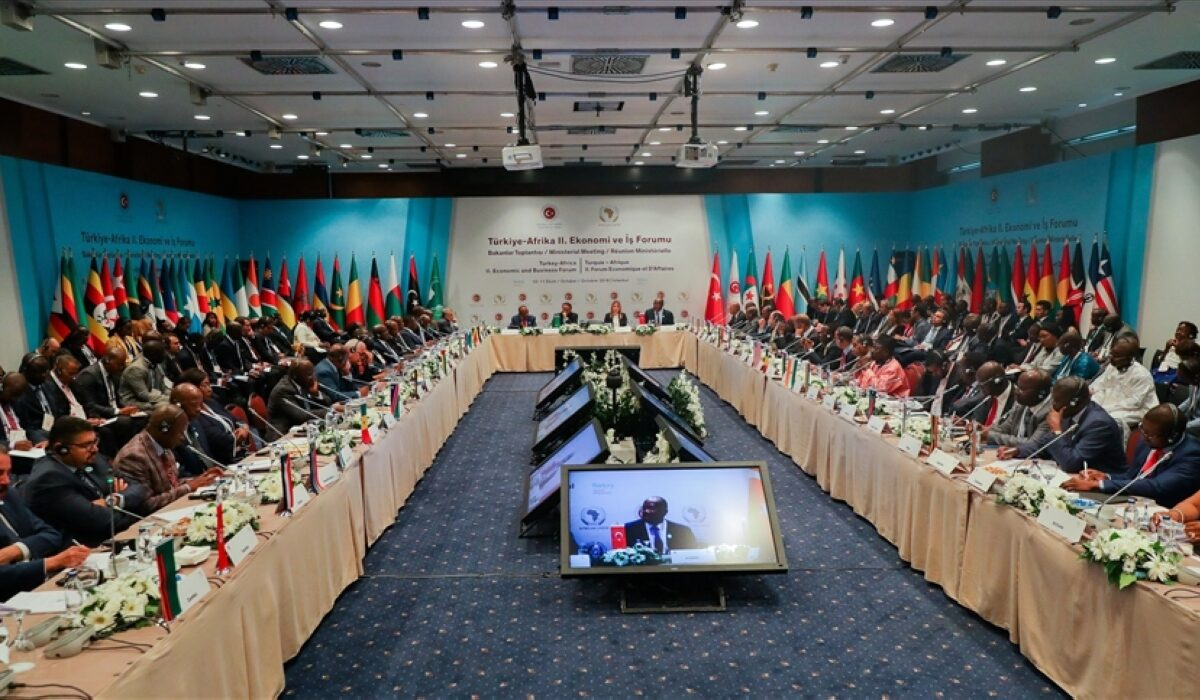
The fifth Türkiye-Africa Business and Economic Forum (TABEF) is scheduled to take place in Istanbul in mid-October, bringing together African business executives and officials as the Middle Eastern nation looks to strengthen its economic relations with Africa, with a target of $75 billion in trade by 2030.
The Turkish government said that more than 4,000 people will attend the two-day summit, which is scheduled for October 16–17. Participants will include entrepreneurs, financial institutions, government officials, and businesspeople from Africa and Turkey.
The Foreign Economic Relations Board (DEİK) is organizing it in coordination with the African Union and in partnership with the Turkish Ministry of Trade.
The meeting will be attended by important ministries and African business executives, including Presidents Recep Tayyip Erdoğan of Turkey and João Goncalves Lourenço of Angola, who is also the African Union’s chairperson.
Priority industries including mining, construction, automotive, textiles, digital technology, agriculture, renewable energy, and logistics will be the focus of the event.
Topics will be covered in panels and seminars, from technology transfer and digital trade to food security and pharmaceuticals.
From $5.4 billion in 2003 to $32.8 billion in 2024, Turkey’s trade with Africa has increased, with imports of $11.3 billion and exports of $21.5 billion in the previous year. Through joint ventures, infrastructure projects, and sustainable investment models, the nation today seeks to widen industrial development, economic cooperation, and African integration.
A unique feature of the meeting will be the Türkiye-Africa Women Leadership and Entrepreneurship Dialogue, which will bring together African and Turkish businesswomen to discuss joint ventures, encourage female leadership, and exchange experiences.
The forum facilitates trade agreements, investment partnerships, and cross-border collaborations through the use of thematic panels, bilateral business meetings, and Government-to-Business (G2B) sessions.