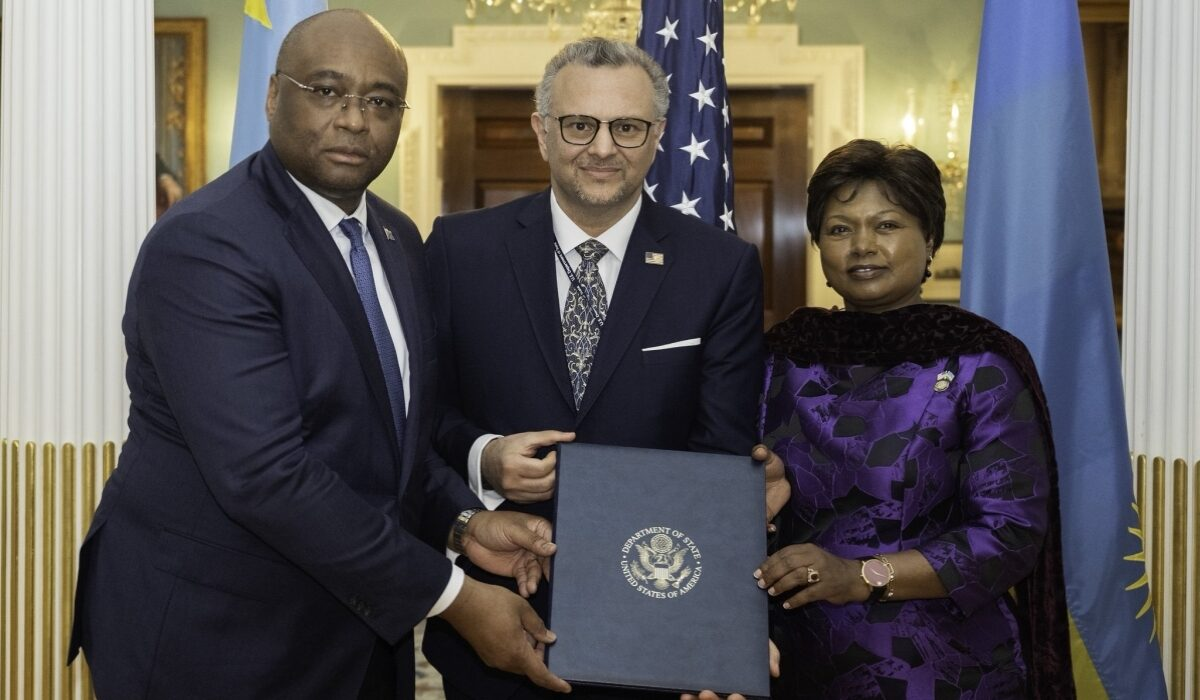
In Washington, D.C., officials from Rwanda and the Democratic Republic of the Congo finished the second meeting of the Joint Security Coordination Mechanism (JSCM), reaffirming their resolve to eliminating the threat posed by the FDLR genocidal militia.
During the two-day summit, which took place on September 17–18, representatives from the United States, Qatar, the African Union Commission, and Togo—the AU-appointed facilitator—met with delegations from Rwanda and the Democratic Republic of the Congo.
This was the most recent stage in the implementation of the peace deal that the United States mediated and that Kigali and Kinshasa signed on June 27.
After the conference, participants evaluated the “current security posture in eastern DR Congo and exchanged intelligence and information to establish a shared understanding of the situation on the ground,” according to a joint statement issued.
This guided the implementation of the Concept of Operations (CONOPS) in stages to neutralize the FDLR and its affiliated groups, as well as to disengage forces and remove Rwanda’s defensive measures.
Additionally, the parties discussed and approved an Operational Order (OPORD), which will serve as a roadmap for the plan’s actual implementation. On October 1st, the OPORD will go into effect.
In accordance with the Washington Accord, the JSCM was created to facilitate cooperative planning and coordination between the two nations and their allies. As part of its purpose, it is to neutralize the FDLR, a paramilitary group established by those responsible for the 1994 Genocide against the Tutsi, and make sure that Rwanda’s security is no longer threatened by DR Congo’s territory.
The two nations thanked the African Union, Togo, Qatar, and the United States for their ongoing assistance and support of the peace process. All sides also committed to promoting long-term peace and stability in eastern DR Congo and the larger Great Lakes area.