China will fortify its strategic partnership by constructing Africa’s first insulin plant in Nigeria
China will construct Africa’s first insulin factory in Nigeria, reducing imports and strengthening the two countries’ strategic alliance.
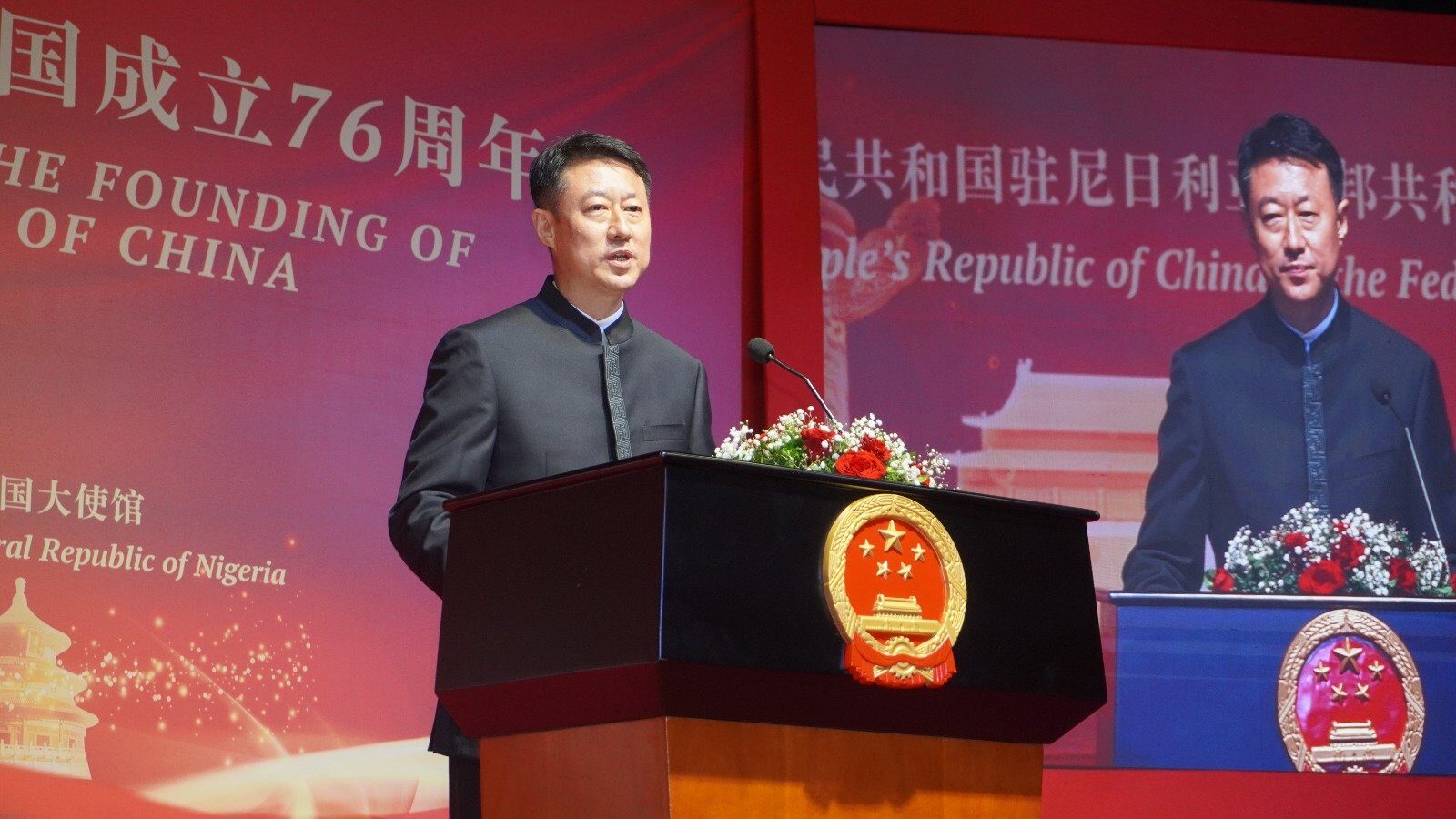
Chinese firms are planning to construct a local insulin production facility in Nigeria, according to Yu Dunhai, the ambassador of China to Nigeria.
Yu revealed the information during a lavish celebration in Abuja to commemorate the 76th anniversary of the PRC’s establishment.
He claimed that once the project was finished, Nigeria will no longer be dependent on imports.
“Chinese companies are in talks with Nigeria to build Africa’s first local insulin production facility,” the ambassador stated. This might help Nigeria become a hub for African medical biotechnology and possibly reduce its need on imported insulin.
According to him, the relationship between China and Nigeria is developing into a “comprehensive strategic partnership” with increasing political, economic, and cultural collaboration.
According to Yu, 2025 will be a crucial year for global diplomacy, China-Africa ties, and China’s development.
China’s Global Governance Initiative provides “Chinese wisdom and solutions to strengthen and improve global governance,” he said, adding that this year marks the 80th anniversary of the United Nations’ creation.
He referred to China’s accomplishments during the last seven decades as “miraculous” and transformative.
He claimed that the Chinese people have been unified and guided by the Communist Party of China, which has a strong spirit of self-reform, to accomplish two miracles during the past 76 years: rapid economic growth and long-term social stability.
“The great rejuvenation of the Chinese nation has entered an irreversible historical trend,” he continued.
He enumerated some of the advancements made, mentioning the reduction of poverty.
that over 800 million people have been pulled out of poverty in China, calling it a “Chinese poverty alleviation miracle.”
“China’s GDP surpassed $18 trillion in 2024, with a per capita GDP exceeding $13,000,” he continued. China has long made up more than 30% of the growth in the world economy.
Yu pointed out that peace, progress, and reciprocal advantages will be the main focuses of China’s upcoming stage of national renewal through modernization.
He revealed, “We are excited to share development opportunities with the rest of the world and African countries, including Nigeria.”
“Days ago, the Nigerian government issued a statement to endorse the Initiative,” he said, praising Nigeria’s recent support of the GGI. China supports Nigeria’s larger role on the global scene and is very grateful for this support.
The envoy went on to say, “We are prepared to collaborate with Nigeria and African nations to promote cooperation within the framework of the GGI.”
Additionally, he emphasized the growing diplomatic and economic ties between the two nations. He stated, “A year has passed since President Bola Tinubu’s state visit to China,” which improved bilateral relations to a “comprehensive strategic partnership.”
The visit’s ambassador cited a number of significant projects, such as the Abuja Water Supply Project and the Lekki Deep Sea Port, as proof of real development. “Over the next 45 years, the Lekki Deep Sea Port is expected to create 170,000 jobs and generate $360 billion in economic benefits, making it a new ‘national gateway’ for Nigeria’s international trade,” he said.
Yu mentioned the Abuja Water Supply Project, which was finished in June, in reference to water infrastructure. It will supply around 3 million people with clean water thanks to its 480,000 cubic meter daily capacity.
“Ms. Issah Abiola, known by her Chinese name Bai Yang by Chinese netizens, was honored with China’s ‘Friendship Envoy Award,’ one of only six global recipients,” he said, highlighting the tale of Nigeria’s first female train driver, who received training from China Civil Engineering Construction Corporation.
He applauded the Federal Government’s recent decision to add Chinese to the senior secondary school curriculum.
Additionally, Deputy Senate President Barau Jibrin emphasized the symbolic relationship between China and Nigeria, pointing out that the two countries celebrate the same national holiday on October 1.
The Deputy Senate President, who was represented by Senator Babangida Hussaini of the Jigawa North-West Senatorial District, stated that the two nations’ partnership has developed into a “comprehensive strategic partnership,” which he said is demonstrated by the obvious investments made throughout Nigeria in areas like power plants, roads, railroads, and industrial parks.
Chinese businesses and investments are currently present throughout Nigeria, helping to modernize our infrastructure.
A pivotal moment that “consolidated our shared vision for a future where the resources, talent, and strength of both countries are harnessed for the prosperity of our people,” Jibrin also characterized Tinubu’s state visit to China.
He was upbeat about upcoming partnerships under initiatives like China’s Belt and Road Initiative and Nigeria’s 10-Year Development Plan.
All of them, he claimed, are “creating new chances for development, connection, and shared prosperity.”
Regarding interpersonal relationships, he stated, “Today, thousands of young Nigerians are studying in China, gaining knowledge and skills that will shape our country’s future.” Nigerian culture is also receiving positive reception in China.
Jibrin also restated the National Assembly’s resolve to use parliamentary diplomacy to improve relations.