Airports in Denmark Close Due to Drone “Hybrid Attack,” Minister Dismisses Russian Connections
Denmark shut down several airports following drone incursions that were considered hybrid assaults, although officials emphasized that there is no proof that Russia is involved.
For the second time in a week, drone incursions disrupted airspace, prompting Denmark to close several airports, including Aalborg and Billund. Defense Minister Troels Lund Poulsen stressed that there was no evidence connecting Russia to the synchronized flights, despite growing NATO fears, and called them a “systematic hybrid attack” by a professional actor. The Kremlin brushed off suspicions as “absurd provocations,” while Prime Minister Mette Frederiksen described it as the most significant infrastructure strike in Denmark’s history.
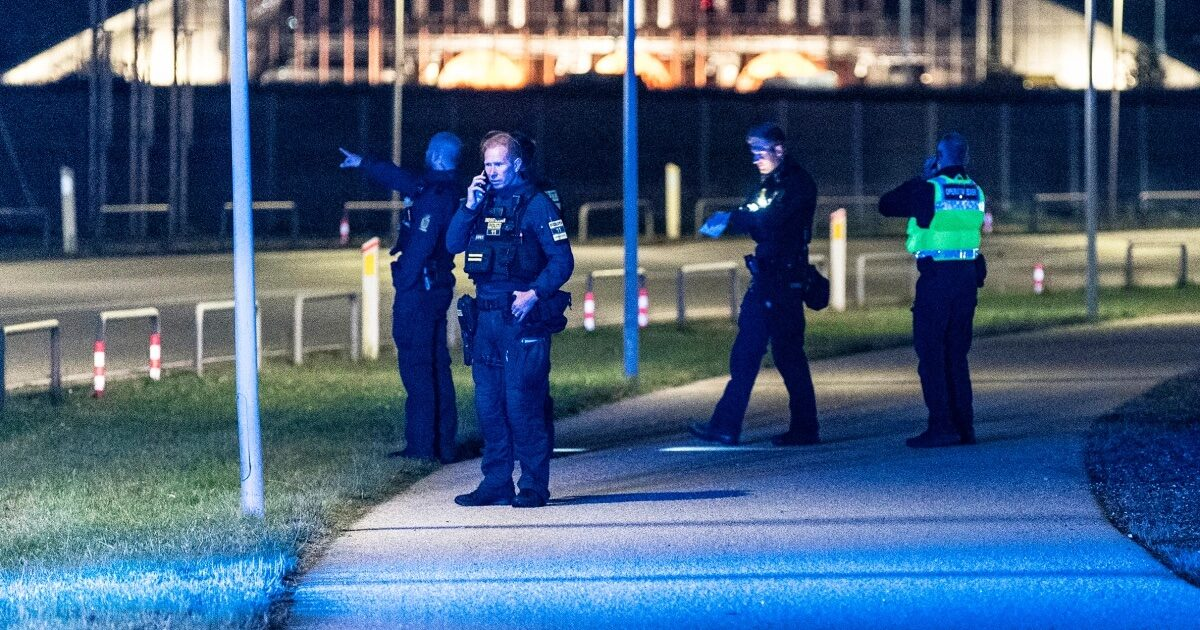
In what the government has called a “hybrid attack” on national infrastructure, five airports were forced to close, leaving Denmark reeling from an unprecedented wave of drone invasions. The interruption, the second of its kind in less than a week, closed airports in Aalborg, Billund, Esbjerg, Sønderborg, and Skrydstrup late Wednesday and early Thursday. Flights were rerouted, and passengers were left stranded.
At approximately 21:44 local time, authorities noticed drones with green lights hovering over Aalborg airport. Three other airports further south soon followed, with more reports rapidly arriving. In a matter of hours, the second-busiest international airport in Billund, Denmark, also briefly shuttered. Aalborg and Skrydstrup, which serve as military airbases, were both immediately impacted, according to police later, highlighting the possible danger to Denmark’s military.
The action was part of a planned and “systematic operation,” carried out with a degree of sophistication suggesting a professional actor, according to Defense Minister Troels Lund Poulsen. Even while NATO partners continue to be on edge about recent Russian invasions across Eastern Europe, he attempted to allay fears by stating, “This is a hybrid attack, but let me be clear: we have no evidence whatsoever that Russia is behind it.”
Quickly denying any involvement, the Kremlin called any claims of Russian involvement “absurd provocations” that were created to support escalation of the conflict in Ukraine. According to Danish Prime Minister Mette Frederiksen, the recent drone disruption in Copenhagen was “the most severe attack on Danish infrastructure so far,” but she cautioned that Moscow should not be ruled out.
The closures affected hundreds of passengers and resulted in the diversion of at least three aircraft. Just before three o’clock, airspace was once again open, but the event brought up new concerns about how equipped European governments are to resist off low-cost, high-impact drone operations.
Although they acknowledged having the technical capability to fire down the drones, police and military officials chose not to do so out of concern for the civilian populations in the area. “We will remove the drones if we have the chance,” Chief Inspector Jesper Bøjgaard Madsen told reporters, advising people to stay away from the impacted areas but emphasizing that there was no imminent danger to locals.
The strikes occur during a period when NATO is on high alert. Poland and Estonia complained last week about Russian drones and fighter jets invading their airspace, and Romania reported that a Russian drone had hit one of its border areas. NATO Secretary-General Mark Rutte has issued a warning that the organization will use “all necessary tools” to protect its members, and US President Donald Trump has recommended that allies start shooting down Russian planes that threaten their borders.
Ursula von der Leyen, the president of the European Commission, has also proposed the idea of a continental “drone wall,” which is still up for dispute but is thought to include improved surveillance, detection systems, and quick interception capabilities. Danish Justice Minister Peter Hummelgaard echoed calls for a more robust European response, emphasizing that “hybrid threats are here to stay.”
To discuss coordinated drone defense measures, Denmark has scheduled an emergency EU conference for Friday. Poulsen has promised to bring up the Aalborg and Billund incursions as proof of Europe’s increasing vulnerability. “This wasn’t a random incident,” he claimed. “It was planned to test our preparedness and was well-coordinated.”
Denmark, whose airports are now the target of mysterious invasions twice a week, views the episode as a domestic security issue as well as a component of a bigger strategic struggle between Russia and NATO. As Europe tries to adjust, Wednesday night’s attack might be remembered more as a warning shot at the core of the continent’s security system than for the brief flight disruptions.