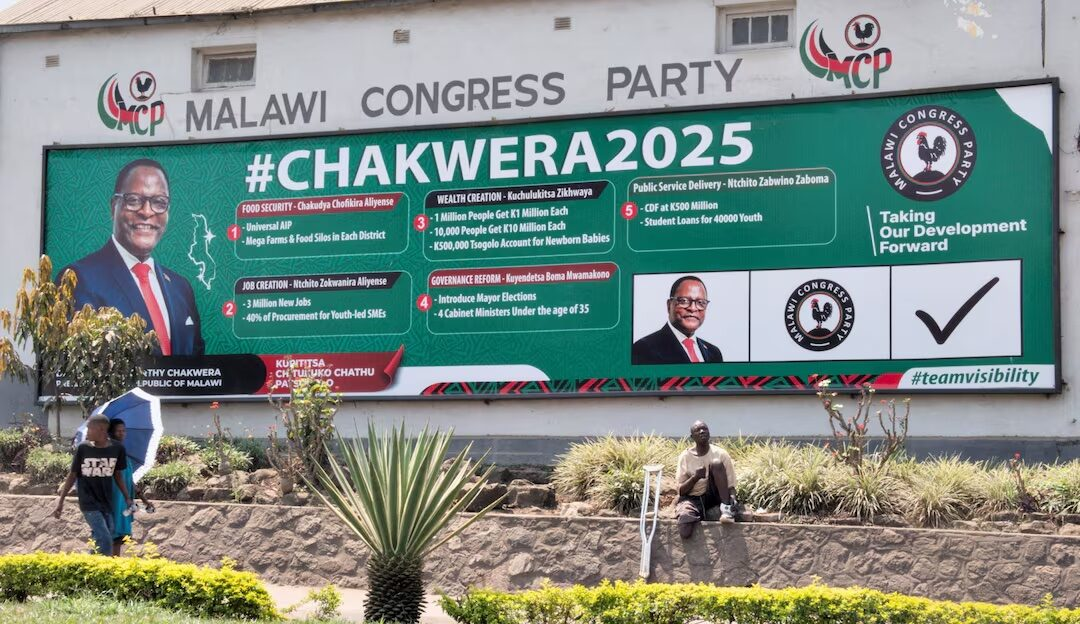
Lazarus Chakwera, the president of Malawi, admitted defeat on Wednesday in the election held this month and promised to facilitate a peaceful handover of power to Peter Mutharika, his major opponent, who has established a strong lead based on the results thus far.
The final results were supposed to be announced by Malawi’s electoral commission at 1200 GMT, but they were postponed until Wednesday night.
“It is only right that I concede defeat out of respect for your will as citizens and out of respect for the constitution,” Chakwera declared during a national address.
When Mutharika’s supporters learned that Chakwera had given up, they rejoiced in the streets of Lilongwe and at the election results center.
THE FOURTH MUTHARIKA AND CHAKWERA SHOWDOWN
Lilongwe had strict security, with banks closed in case of violence and armed police officers policing the streets.
In this month’s election, Mutharika, 85, and Chakwera, 70, faced up for the fourth time.
Mutharika won both the 2014 and 2019 elections, but the constitutional court revoked his victory in 2019 due to several irregularities, such as the use of correction fluid on the results sheets.
In 2020, Chakwera prevailed in the rerun of that election.
TOP ELECTION ECONOMIC STAGNATION ISSUE
Given that the economy has deteriorated since the last election, political commentators had anticipated that Mutharika would present a formidable challenge to Chakwera’s reelection campaign.
According to Boniface Dulani, a politics scholar at the University of Malawi, “this election result is more of a protest vote against Chakwera, especially in regards to his government’s handling of the economy, than it is about Mutharika.”
Since former pastor Chakwera was elected in 2020, during the height of the COVID-19 outbreak, Malawi has experienced economic stagnation.
Climate change is to blame for a deadly typhoon and a widespread drought that have destroyed crops and made matters worse. For more than three years, inflation has been higher than 20% (MWCPIY=ECI).
The World Bank’s poverty threshold of $3 per day is reached by nearly three-quarters of Malawians. The bank believes that about half of the population does not receive the minimal quantity of calories required for proper nutrition.
One of Mutharika’s top priorities, according to Bertha Bangara Chikadza, president of the Malawian Economic Association, would be stabilizing the economy by tackling the country’s ongoing high inflation and foreign exchange shortages.
“Doing this will automatically have a direct positive impact on social issues such as unemployment and poverty reduction,” she stated to Reuters.
During his administration from 2014 to 2020, former law professor Mutharika was praised for reducing inflation and enhancing public infrastructure, including highways. However, he has refuted accusations of cronyism.