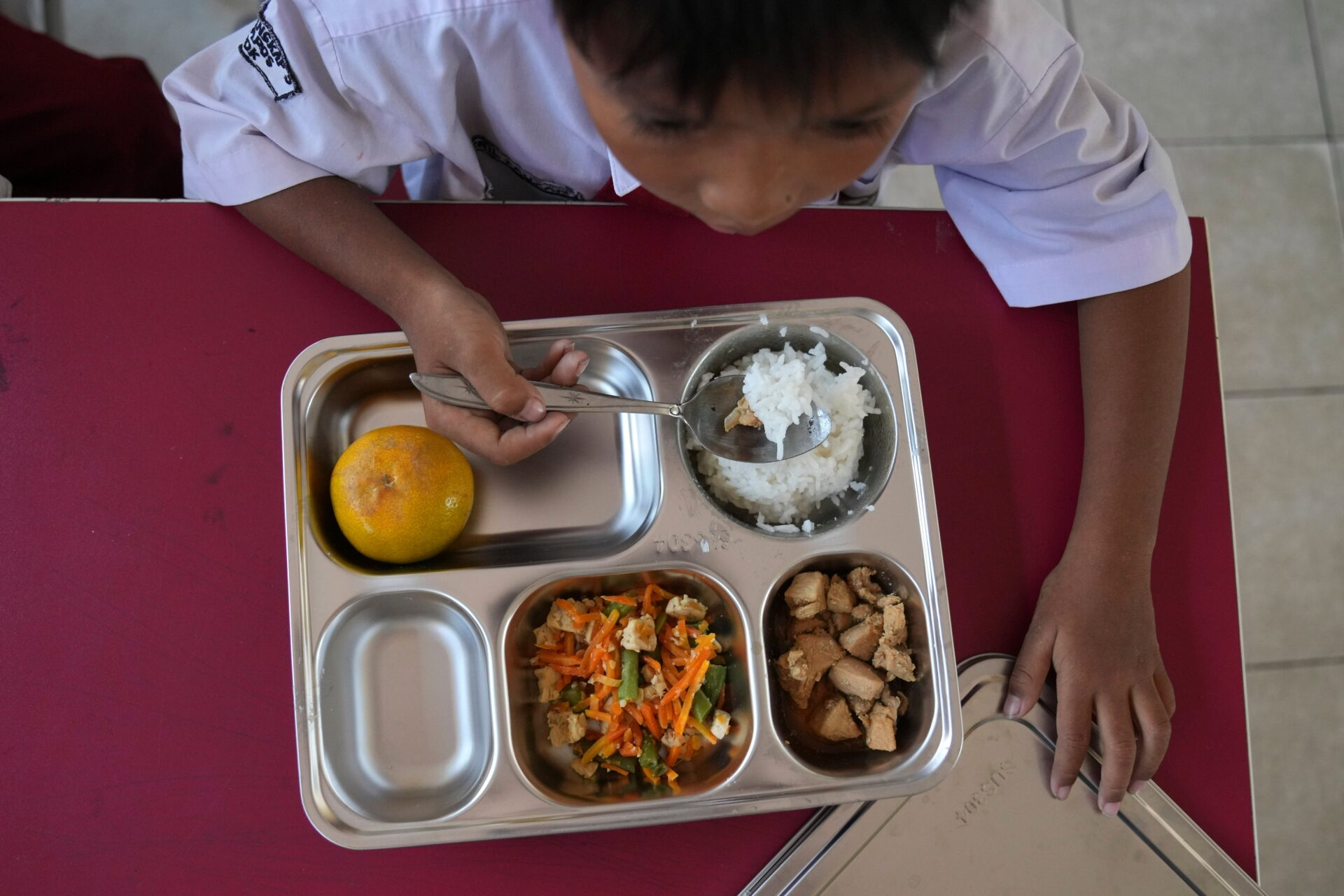
Safety concerns were raised when more than 800 Indonesian students contracted food poisoning after consuming free school lunches provided by the government.
Officials revealed on Friday that the government’s free school lunch program is responsible for two distinct episodes of mass food poisoning that have sickened over 800 pupils nationwide this week.
In the Garut district of West Java, the greatest epidemic was on Wednesday, when 569 children from five schools experienced nausea and vomiting after eating rice and chicken. About 30 pupils needed to be admitted to the hospital, while hundreds of others received treatment at home, according to Nurdin Yana, secretary of the Garut regional administration. As of Friday, ten pupils were still in the hospital.
Local officials responded by stating that they will temporarily reduce the menu to safer items including bread, milk, boiled eggs, and fruit and strengthen monitoring of the cooks preparing the meals. Officials emphasized that the feeding program itself would not be halted, though.
On Wednesday, 277 pupils in the Banggai Islands of Central Sulawesi became ill in a second outbreak. Food distribution in the area has been temporarily suspended, according to a statement from the National Nutrition Agency, which oversees the program.
On Friday, government spokeswoman Prasetyo Hadi apologized for the numerous food safety violations. “These cases are obviously not intentional or what we had hoped for,” he stated.
According to data from the Institute for Development of Economics and Finance, more than 4,000 incidents of food poisoning have been documented since the start of President Prabowo Subianto’s signature free meals program in January. The program’s safety standards and quality control have come under scrutiny due to the think tank’s conclusions.
The government is nevertheless dedicated to its expansion objectives in spite of the setbacks. With aspirations to reach 83 million by the end of the year, the program already serves over 20 million beneficiaries. In 2026, its budget, which is currently 171 trillion rupiah ($10.32 billion), is expected to treble.