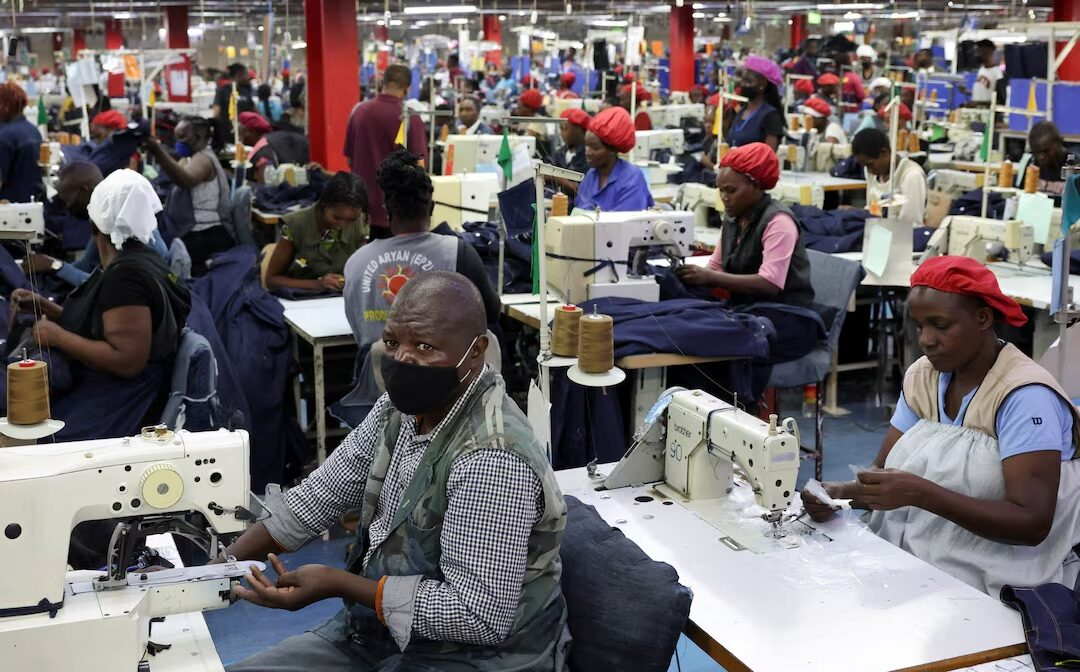
Kenya’s trade minister told Reuters that the country hopes to finalize a trade agreement with the United States by the end of the year. This might protect its exports to a vital market in the event that a regional trade agreement that ends this month is not extended.
The first sign of a possible schedule for a trade agreement by either side came from comments made by Trade Minister Lee Kinyanjui. Should an agreement be achieved, it would be the first time Washington and a sub-Saharan African country have done so.
According to Kinyanjui, “it depends also on them (the Americans), but our view is that before the end of the year, we should be able to have something on the table,” the spokesperson stated late Thursday.
When asked about the status or timing for a deal, Jamieson Greer, the Office of the U.S. Trade Representative, did not respond.
Kinyanjui agreed to begin negotiations for a reciprocal trade agreement with Greer during their meeting in Washington last month. Since then, no more rounds of negotiations or discussions have been announced.
There is urgency to talk because the duty-free program is about to expire.
Nairobi’s efforts have been bolstered by the imposition of a 10% tariff on Kenyan goods during President Donald Trump’s April tariff sweep and the possibility that the Africa Growth Opportunities Act (AGOA), a duty-free trade program for eligible African countries, will expire at the end of September.
Kenya resumed trade negotiations in August to protect market access, aiming to wrap up a process that began in 2020 during Trump’s first term. Kenya exported $737 million worth of goods to the U.S. last year, or 10% of its total exports.
Before Trump took office again in January of this year, new negotiations on a trade and investment partnership that would remove non-tariff barriers had been initiated under President Joe Biden’s administration but had not yet been concluded.
Despite being one of Washington’s closest regional partners and being named a significant non-NATO ally by the United States in 2024, Kenya has recently faced criticism from U.S. officials for its closer connections with China.
Kenya has to send more commodities to the Asian economy in order to narrow a trade gap that is skewed disproportionately in Beijing’s favor, according to President William Ruto, who supported the reconciliation with China.
Although Kinyanjui declined to disclose possible clauses in any new trade agreement, he stated that it was “largely the wish” to duplicate AGOA’s parameters, which grant duty-free access to the United States for thousands of goods from 32 qualified African nations.
Although African companies and governments have been advocating for an extension, the likelihood of a renewal has been called into question by Trump’s assertive trade policies.
Attempts to reach the White House, Greer’s office, and the Speaker of the U.S. House on AGOA were not answered.
PRESERVING WORK IN THE TEXTILE SECTOR IN KENYA
“There would be disruption if there isn’t a clear transition,” Kinyanjui stated, adding that the government hoped for an extension of some kind to protect textile and apparel jobs from “a sudden end to AGOA.”
According to Kinyanjui, AGOA supports 300,000 direct and indirect jobs in Kenya’s textile industry, where companies produce uniforms, jeans, and other apparel for American shops such as Walmart and Target.
Even if AGOA is terminated, authorities say Kenya’s comparatively lower levy of 10% on U.S. exports in the wake of Trump’s tariff effort is lower than levies on nations like South Africa and Vietnam.
Kinyanjui declared, “We think we can still be competitive.” “You may see those big companies actually wanting to come to Kenya.”