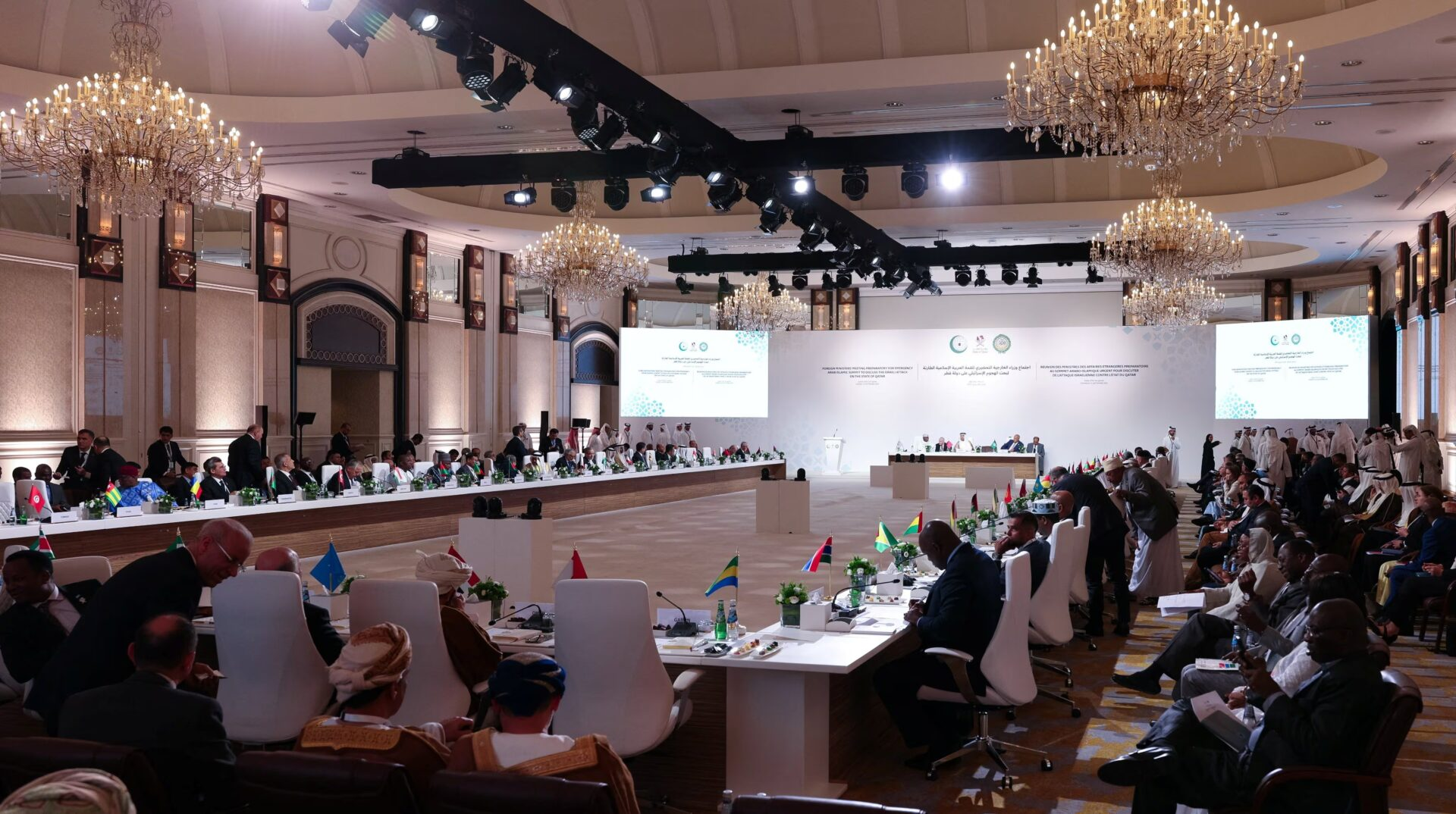
The Doha summit brings together Arab and Islamic nations in support of Qatar following the Israeli attack, while the US and UAE voice their concerns.
On Monday, leaders of Arab and Islamic nations will convene in Doha to express solidarity with Qatar in the wake of last week’s Israeli strike aimed at Hamas officials in the Gulf state.
The assault, which Hamas reported resulted in the deaths of five of its members while sparing its leadership, has escalated regional tensions and elicited strong condemnation from Qatar, an important mediator in the attempts to resolve the Israel-Hamas conflict.
An emergency summit, organized by the Arab League and the Organisation of Islamic Cooperation (OIC), commenced on Sunday with a gathering of foreign ministers to formulate resolutions in preparation for today’s session of leaders.
“This gathering conveys that Qatar is not isolated … and that Arab and Islamic nations support it,” stated Arab League Secretary-General Ahmed Aboul Gheit in an interview with Asharq al-Awsat newspaper.
Israeli Prime Minister Benjamin Netanyahu, resolute amid international criticism, cautioned Qatar to either remove Hamas officials or “bring them to justice,” asserting that Israel would take action if Doha did not comply. He contended that Hamas leaders in Qatar continued to be the primary barrier to achieving the release of hostages still detained in Gaza.
Qatar, in reply, charged Israel with engaging in “state terrorism” and undermining peace initiatives. A member of Qatar’s internal security forces was included among those who lost their lives in the strike.
The United States expressed its disapproval of the Israeli action. Former President Donald Trump characterized Qatar as “a close ally working hard to broker peace,” stating that the attack did not benefit either Israeli or US interests. He cautioned that “such a thing will not occur again on their territory.”
The fallout has intensified tensions in Israeli relations with Gulf Arab states, particularly the United Arab Emirates (UAE), which established normalized relations with Israel through the 2020 Abraham Accords. On Friday, the UAE called in Israel’s deputy ambassador, denouncing both the strike and Netanyahu’s following remarks as aggressive.
The UAE emphasized that Qatar’s stability is an essential component of the security and stability of the Gulf Cooperation Council, which includes Saudi Arabia as well.
Hamas, responsible for the attacks on October 7, 2023, that initiated the current conflict, continues to hold 48 hostages. Qatar has played a pivotal role, in conjunction with the US, in negotiations focused on achieving a ceasefire and ensuring the release of captives.