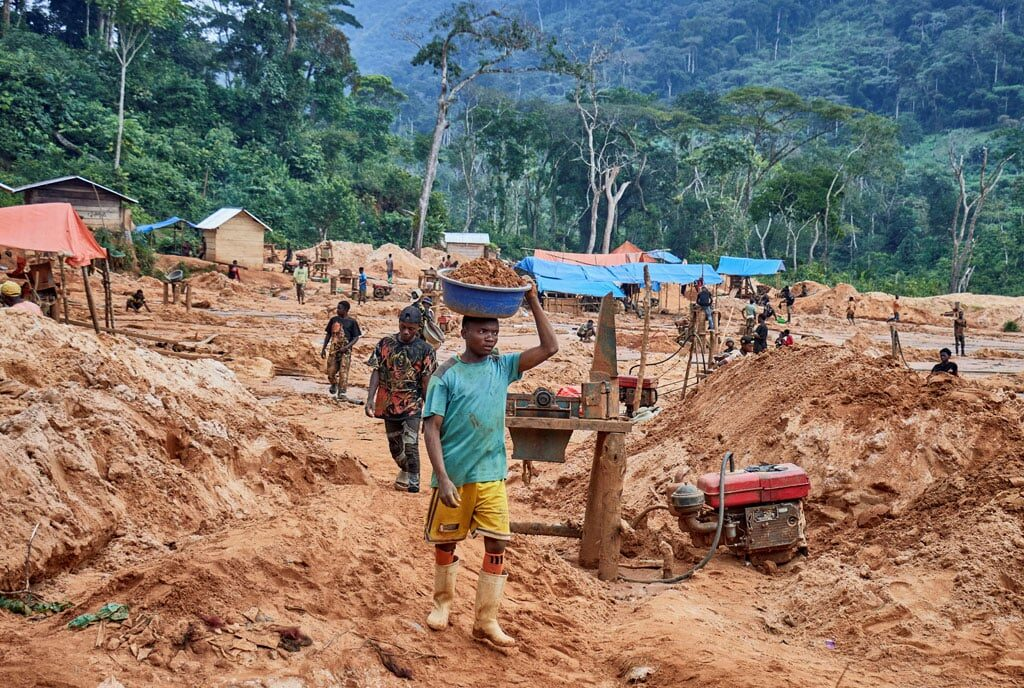
Exclusive: Draft agreement between Congo and Rwanda details the US and other parties’ responsibilities in reviving the mines industry
Rwanda and the Democratic Republic of Congo are set to collaborate with third parties, including the U.S., to enhance their mineral supply chains and implement reforms, as outlined in a draft of an economic framework obtained by Reuters. This initiative aims to stimulate investment following a peace agreement established in Washington.
A source familiar with the matter stated that the countries reached an agreement on the draft framework, which forms part of the peace deal. The draft is currently under discussion among stakeholders, including the private sector, multilateral banks, and various donor agencies from other nations.
Congo and Rwanda are expected to convene in early October to finalize the framework, according to the source. It will be signed by heads of state at a future date.
The 17-page framework follows the signing of a peace deal in Washington in June during talks facilitated by the administration of U.S. President Donald Trump. The agreement seeks to halt the violence that has resulted in the loss of thousands of lives and to draw in billions of dollars in Western investment to a region abundant in tantalum, gold, cobalt, copper, and lithium.
The draft expands upon the outline for the framework established in August and details the implementation measures and coordination mechanisms. The August outline emphasized collaboration in areas such as energy, infrastructure, mineral supply chains, national parks, and public health.
The Congo, Rwanda, and the U.S. State Department have not provided comments in response to requests.
Regulatory initiatives and reforms
The draft indicates that the parties would commit to collaborating with the United States and other international partners to create further regulatory initiatives and reforms deemed essential for minimizing risks associated with private sector investment in a cost-effective way, aimed at reducing illicit trade and enhancing transparency.
They would also embrace external transparency mechanisms, including a commitment to implement guidance from the Organisation for Economic Co-operation and Development, among others.
The proposed framework outlines the necessity for third-party inspections of mining sites and emphasizes collaboration with private sector partners to establish cross-border special economic zones, as stated in the draft.
The framework outlines coordination mechanisms, which include timelines for an annual high-level summit focused on regional economic integration, as well as meetings for a steering committee and technical working groups.
Kinshasa and Kigali, under the agreement made in Washington in June, committed to initiating the regional economic integration framework within a 90-day period.
The agreement stipulated that the parties committed to executing a 2024 deal, which would result in the withdrawal of Rwandan troops from eastern Congo within a period of 90 days. The Congolese military’s operations aimed at the Democratic Forces for the Liberation of Rwanda (FDLR), an armed group based in Congo that comprises remnants of Rwanda’s former army and militias involved in the 1994 genocide, are intended to wrap up within the same timeframe.
CHALLENGES
However, there are worries that the timeline for implementation could encounter challenges.
“A significant barrier to finalizing and signing this regional agreement is the stalling of other peace processes,” a Western diplomat stated, noting that Rwanda has yet to withdraw its troops and that operations against the FDLR have not commenced.
The diplomat indicated that a distinct initiative aimed at mediating between the Congolese government and the Rwanda-supported M23 rebels, known as the Doha process, is facing challenges in progressing. This year, M23 rebels swiftly captured the two largest cities in eastern Congo along with valuable mining regions.
“The partners … and even the actors themselves will struggle to engage in economic cooperation without advancements in security,” the diplomat, who requested to remain unnamed, stated.
A Congolese official informed Reuters this month that Kinshasa “cannot consider economic cooperation with Rwanda as long as its army occupies part of our territory.”
Kinshasa perceives the exploitation of its mineral resources as a significant factor fueling the conflict between its military and the M23 rebels in eastern Congo.
In the outline agreed upon last month, Rwanda and Congo confirmed that each nation possesses “full, sovereign control” over the exploitation, processing, and export of its natural resources. They also acknowledged the significance of enhancing mineral processing and transformation capabilities within their respective countries, as per a document reviewed by Reuters.
The two nations also pledged to guarantee that the minerals trade ceases to finance armed groups and to establish a top-tier industrial mining sector in the area, in addition to enhancing cross-border interoperability in mineral supply chains.