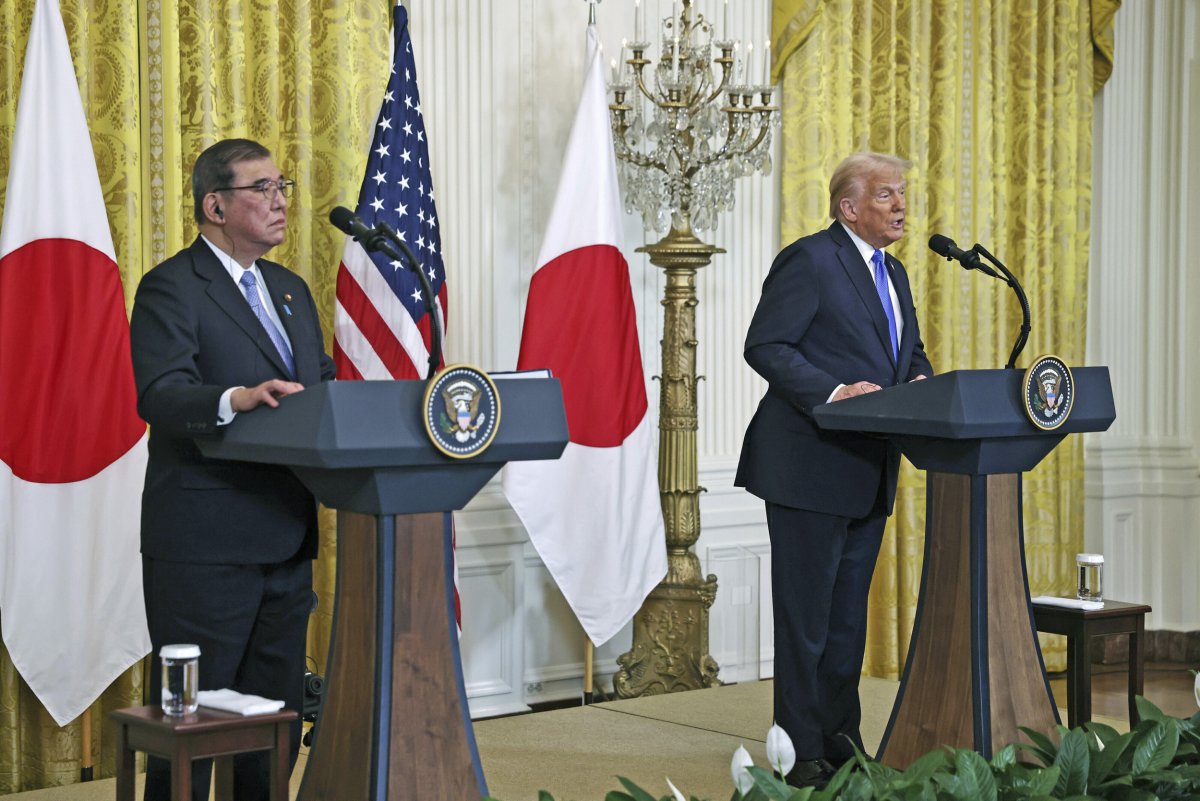
Japan promises $550 billion in US investment and significant agricultural concessions, while Trump’s executive order reduces tariffs on Japanese automobiles.
In an effort to reduce uncertainty for multinational automakers like Toyota, Honda, and Nissan, US President Donald Trump issued an executive order on Thursday lowering tariffs on Japanese auto imports from 27.5% to 15%.
The decree completes a historic trade agreement that was initially revealed in July and imposes a 15% tariff on almost all Japanese exports to the US, including automobiles and medications. Tokyo has pledged to open its economy to more American products, such as rice and automobiles, and invest $550 billion (£410 billion) in US projects in exchange.
According to the White House, Japan has agreed to purchase $8 billion worth of US goods per year, including bioethanol, fertilizers, and agricultural supplies. In a major change from Tokyo’s long-standing defense of its agriculture industry, Japan would also expand its purchases of rice cultivated in the US by 75%.
When the deal was first announced, Trump called it “massive” and insisted that it was a win-win situation. “It’s fantastic for all of us. It must be fantastic for everyone, I constantly say. He told reporters, “It’s a great deal.”
Japan’s chief trade negotiator, Ryosei Akazawa, shared the White House news and greeted the directive with the single word, “Finally.”
With the US as its single largest market, cars continue to be the mainstay of Japan’s export-driven economy, making up roughly 20% of its overall exports. Toyota highlighted the high stakes for both economies last month when it warned that Washington’s tariff policy may cost it $10 billion this year.
Following Trump’s massive worldwide tariff rises in April, months of rigorous discussions led to the agreement, which highlights the strategic significance of the US-Japan trade relationship during a period of significant market volatility.