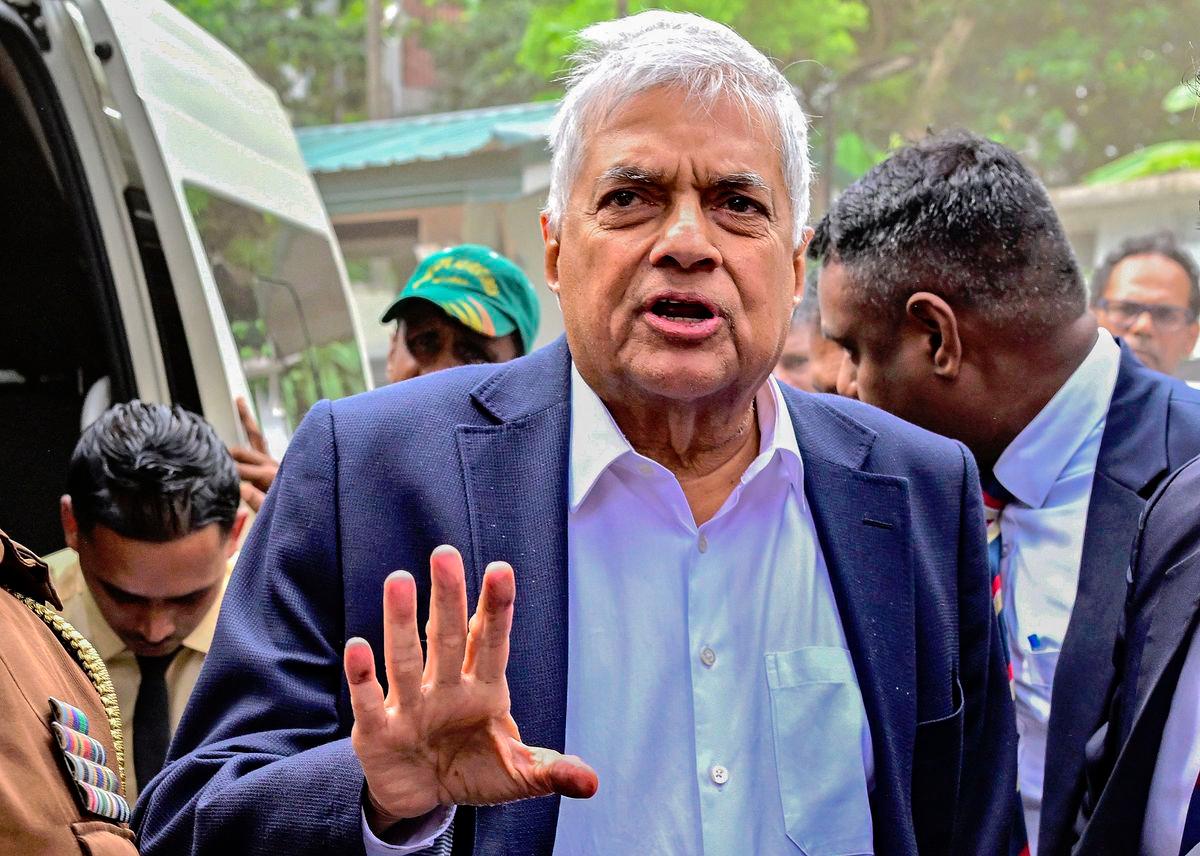
Wickremesinghe, the former president of Sri Lanka, was arrested on suspicion of embezzling public funds while in office.
Ranil Wickremesinghe, a prominent opposition leader and former president of Sri Lanka, was detained by police on Friday on suspicion of embezzling public funds while in office, according to officials.
Wickremesinghe, who was president from 2022 to 2024, was detained on suspicion of using public funds to go to London for his wife’s graduation ceremony after an official visit to the United States, according to police spokesman Fedrick Wootler.
Danushka Ramanayake, an adviser to Wickremesinghe, revealed that the former president was arrested by the Financial Crimes Investigations Department and then transported to court.
Since this is the first arrest of a former head of state from Sri Lanka, Wickremesinghe is the most well-known person under investigation for corruption in the government of President Anura Kumara Dissanayake. Since taking office last year, Dissanayake’s administration has promised to hold former leaders responsible for any corrupt activities.
In September of last year, Dissanayake won the president in an election in which voters turned away established politicians who were charged with causing the country’s economic collapse. He was able to establish a powerful government two months later when his party won a resounding victory in parliamentary elections.
More than a dozen former high-ranking government officials and political figures from the previous administration have been arrested and are currently being investigated for suspected financial malfeasance and corruption.
After Sri Lanka’s economic collapse in 2022 caused political unrest and forced the resignation of then-President Gotabaya Rajapaksa, Wickremesinghe took over as president. He was heavily criticized for enacting strict austerity measures, even though he is credited with stabilizing the faltering economy by lowering inflation, bolstering foreign reserves, and strengthening the local currency. These included higher power prices and tax increases as part of a bailout agreement his administration struck with the International Monetary Fund.