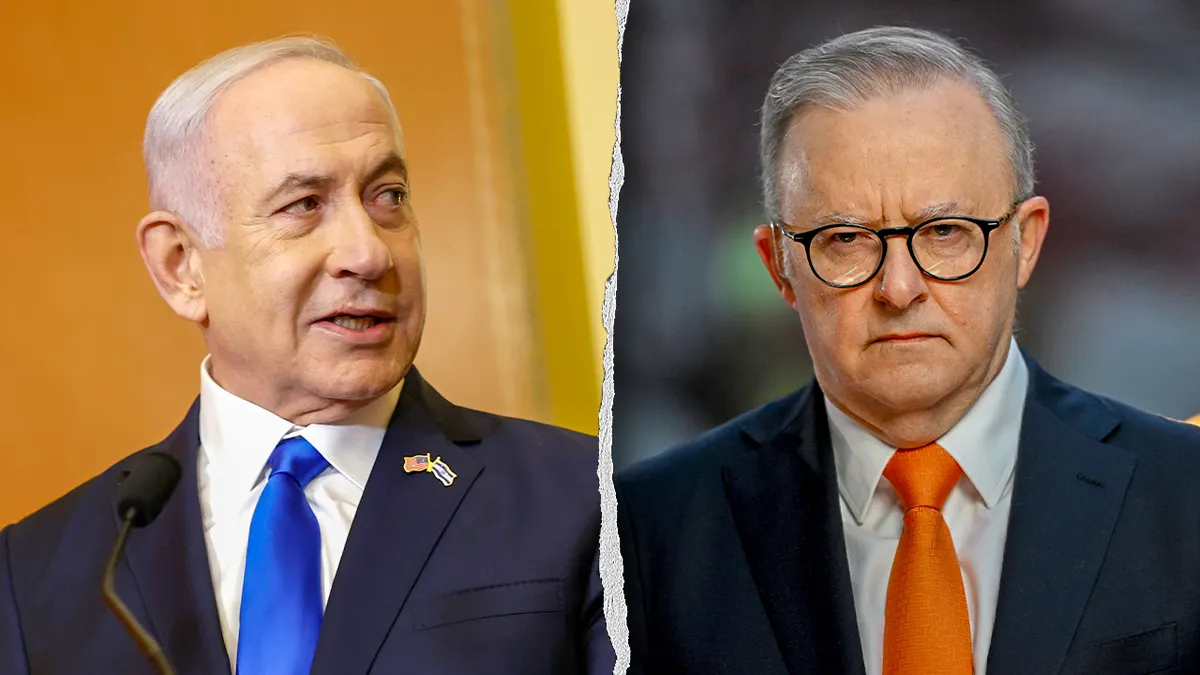
After Netanyahu criticized him for Australia’s acceptance of a Palestinian state, the prime minister of Australia has called for diplomacy, causing tensions in their relationship.
With Israeli Prime Minister Benjamin Netanyahu attacking him personally over Canberra’s decision to recognize a Palestinian state, Australian Prime Minister Anthony Albanese has emphasized the value of diplomacy and respect in international interactions.
Albanese stated: “I interact with people diplomatically; I don’t take these things personally,” during a media session on Wednesday. Regarding other leaders, he has made similar remarks.
Following Australia’s declaration last week that it would conditionally recognize a Palestinian state at the next UN General Assembly in September, there is now a verbal battle. According to Netanyahu’s social media criticism, Albanese was “a weak politician who betrayed Israel and abandoned Australia’s Jews.”
However, Albanese pointed out that he had disclosed the decision to Netanyahu immediately prior to its public release. At that moment, I made it clear to Prime Minister Netanyahu not just what I and Australia thought will happen in the future, but also where we were headed. He remarked, “I gave him the chance to outline what the political solution was.”
Australian diplomats’ visas to the Palestinian Authority were withdrawn by Israel after Canberra canceled the visa of an Israeli lawmaker whose comments were considered offensive, further escalating tensions.
As Israel’s military campaign in Gaza has killed thousands of civilians and displaced a large portion of the population, the conflict coincides with growing international condemnation of the operation. In southern Israel, Hamas-led militants killed 1,200 people and kidnapped 251 others, sparking the onslaught almost two years ago.
In addition to marking a dramatic change in Australia’s Middle East policy, this position has put its ties with Israel to the test during a period of increased regional and global scrutiny.