China will mark 80 years since the victory of WWII by unveiling new weapons in a grand parade
Beijing is getting ready for a huge Victory Day show with thousands of troops, new weapons, and the eyes of the whole world on China’s military power.
Next month, China will hold a huge military parade in Beijing to mark 80 years since the end of World War II. Tens of thousands of people will take part, and a lot of new weapons will be shown off. The event, which will take place on September 3 in Tiananmen Square, will commemorate Japan’s surrender in 1945 and show China’s growing military power at a time when tensions in the area are high.
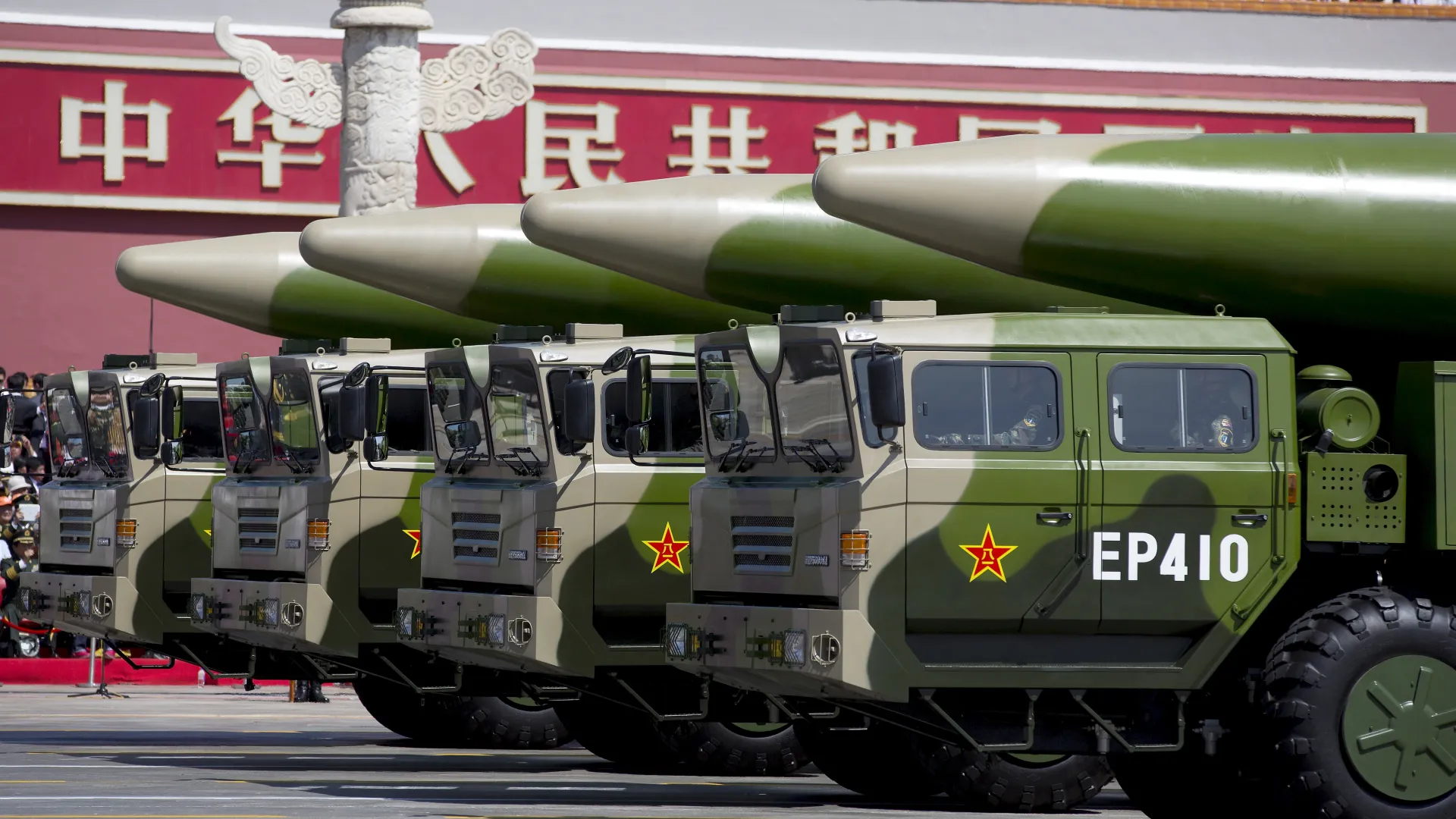
The “Victory Day” parade, which is expected to last about 70 minutes, will include 45 troop groups, hundreds of planes, and high-tech ground vehicles, some of which have never been seen by the public before. Military experts say that the show will probably focus on anti-ship missiles, hypersonic weapons, and air defense systems that are meant to fight drones and keep China’s aircraft carriers safe.
Vice-director of the parade Wu Zeke told reporters at a meeting that the weapons and gear would fully show how strong the Chinese military is in adapting to new technologies and changing war patterns in order to win future wars.
Since 2015, this is only the second parade of its kind to mark Japan’s surrender. It also happens at a time when China is putting a lot of money into modernizing the People’s Liberation Army (PLA). Security and military attachés say the show will send a strong message that Beijing is ready to protect its interests in disputed areas, especially in the South China Sea and across the Taiwan Strait.
The exact number of troops and weapons that will be shown has not been made public, but officials have stated that a lot of the equipment on display will be brand new. Hypersonic missiles, early warning planes, and advanced tanks are some of the things that people are most likely to be excited about. Along Chang’an Avenue in the middle of Beijing, trucks with anti-drone technology are also expected to move.
President Xi Jinping will lead the parade, with top Communist Party leaders and important people from other countries standing next to him. Russian President Vladimir Putin is likely to go, which will continue Moscow’s show of support for Beijing. He would be there like Russia and a few other countries were in 2015, when they marched with Chinese troops.
On the other hand, many Western leaders didn’t go to the last parade because they didn’t want to support what they saw as a show of Chinese power. Japanese Prime Minister Shinzo Abe, who was in office at the time, refused to attend, which shows how sensitive the events were from a political and historical point of view.
As of now, Chinese officials have not said which foreign leaders or armed groups will be taking part in this year’s procession.
Beijing’s security has been stepped up in preparation for the event. There are now checkpoints and traffic has been rerouted. Near Tiananmen Square, shopping malls and office buildings are briefly closed. A lot of people, including soldiers, cops, and civilians, showed up to two big rehearsals earlier this month. Officials said that “basically all” of the work needed for the parade is done.
More than 12,000 soldiers marched in the 2015 parade, along with groups from Russia, Belarus, Mongolia, and Cambodia. They were backed up by more than 500 pieces of military equipment and 200 planes. The scale of this year’s display is expected to match or surpass that precedent, especially given the emphasis on unveiling China’s newest military technologies.
While the parade commemorates the Allied victory over Japan, analysts say it is also intended to send a strong political message to both domestic and international audiences. With rising tensions in the Indo-Pacific and Beijing’s deepening rivalry with Washington, China is keen to demonstrate that its military is equipped to deter threats and safeguard its ambitions.
“Every parade is both a commemoration and a projection,” said one Beijing-based security analyst. “China is showing its people and the world that the PLA is no longer a regional force but one preparing for future conflicts on a global scale.”
For many in China, the Victory Day celebrations serve as a reminder of the country’s sacrifices during World War II. For others abroad, the spectacle will be scrutinised for clues about how Beijing intends to shape the next decade of global security.