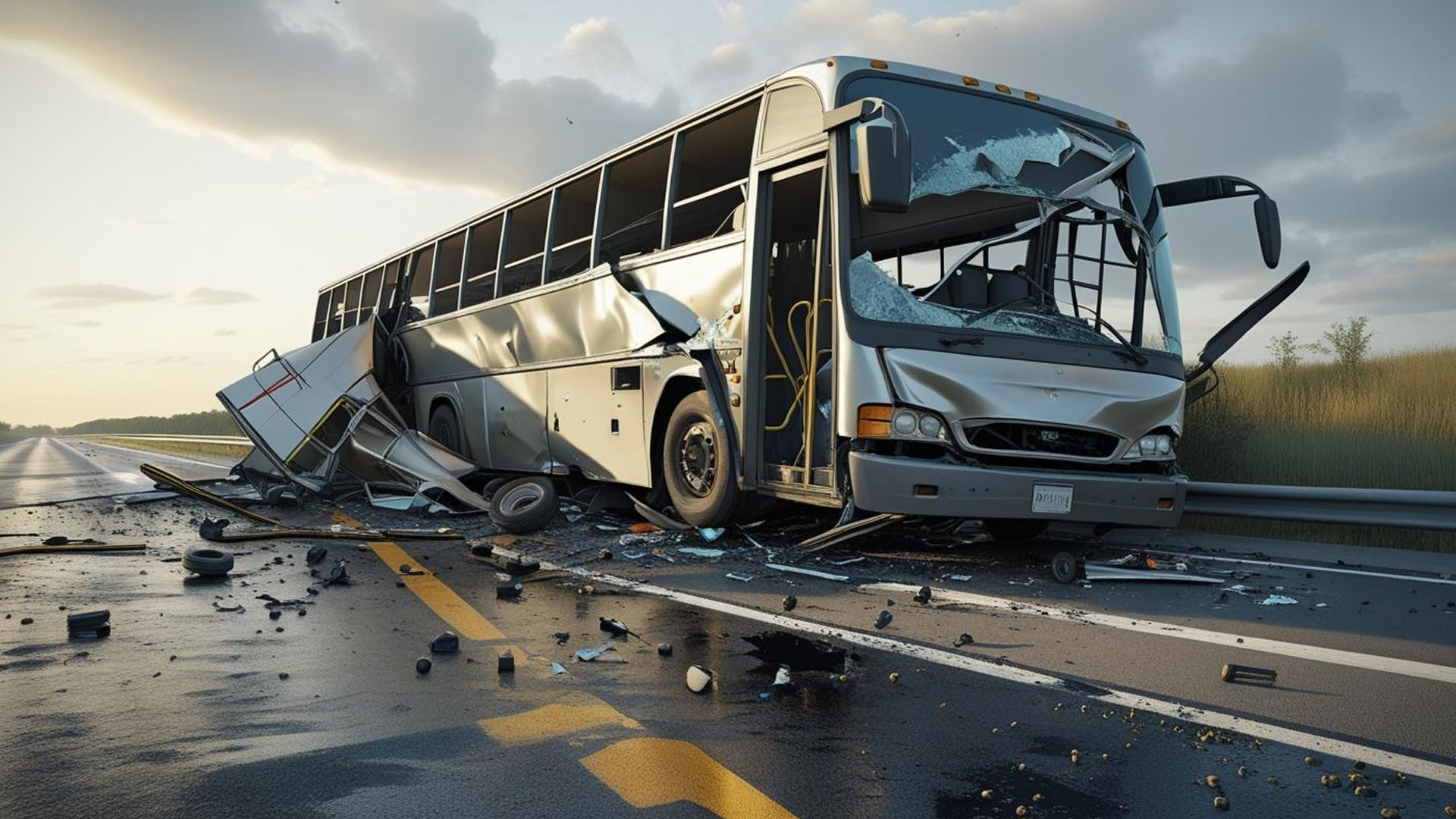
73 people were killed when a bus carrying Afghan migrants who had been deported from Iran collided in Herat and caught fire.
A bus carrying Afghan migrants deported from Iran crashed with two vehicles and caught fire in western Afghanistan, killing at least 73 people, including 17 children, according to local officials on Wednesday.
The bus was traveling to Kabul when it collided with a truck and a motorcycle late Tuesday night in the province of Herat before catching fire.
Mohammad Yousuf Saeedi, the provincial governor’s spokesperson, claimed, “All the passengers were migrants who had boarded the vehicle in Islam Qala,” a town on the Afghanistan-Iran border where thousands of deported Afghans cross every week. He attested to the fact that nobody on the bus lived. The incident also claimed the lives of two more passengers in the other cars.
According to reports, Herat police attributed the accident to the bus driver’s “excessive speed and negligence.” According to Taliban officials, the rapid spread of the fire following the crash made it difficult for rescue personnel to remove remains.
In the midst of a dramatic increase in the deportations of unauthorized migrants, the victims were among the increasing number of Afghans who were forced out of Iran in recent months. Citing national security concerns, Iranian authorities have increased removals since the beginning of this year; however, detractors contend that the expulsions are politically driven and use Afghans as scapegoats.
The United Nations Refugee Agency reports that since January, more than 1.5 million Afghans have been compelled to flee Iran. Some of them had worked in low-paying jobs, construction, and agriculture during their generations-long residency in Iran.
Iran had previously given undocumented Afghans until July to leave willingly, but Tehran has escalated forced deportations after its brief war with Israel in June, arguing that Afghans are a security threat. Human rights organizations and proponents of refugees argue that these assertions conceal more serious social and economic conflicts in Iran.
Millions of Afghans have migrated to neighboring Iran and Pakistan since the Soviet invasion of Afghanistan in 1979; both nations are home to sizable refugee populations. Another significant migration was caused by the Taliban’s comeback to power in 2021, although in recent years, Iran and Pakistan have both increased restrictions and started mass deportations.
Many Afghan families are now stuck in transit towns like Islam Qala as a result of this strategy, where migrants frequently experience prejudice, poverty, and a lack of secure transportation back to their homes.
Experts caution that Afghanistan, which is already experiencing extreme humanitarian and economic hardship, is unable to handle the increasing number of returns. The Taliban government lacks the funding necessary to give deported families homes, employment, or other assistance.
“This new wave of refugees comes at a time when Afghanistan is beginning to feel the brutal impacts of aid cuts, and the return of so many people is adding pressure to already overstretched resources,” said Arshad Malik, country director of Save the Children Afghanistan.
At the same time, the nation is taking in returnees from Pakistan, which in recent months has also pushed hundreds of thousands of Afghans to flee.
The risks posed by Afghanistan’s brittle infrastructure have been further brought to light by the Herat catastrophe. Roads have been severely damaged by decades of conflict, and travel is dangerous due to a lack of enforcement of traffic laws and inadequately maintained automobiles. One of the main causes of mass fatalities in the nation is traffic accidents.
With families escaping poverty and insecurity overseas only to die upon their return, Tuesday’s tragedy highlights the lethal effects of the region’s escalating refugee crisis.