Zimbabwe and Rwanda collaborate to accelerate the expansion of Microfinance
Experts in microfinance have urged swift action to address major issues impeding the expansion of the microfinance industry in Africa, emphasizing the necessity of closer cross-border cooperation.
During the 2025 Microfinance Winter School for CEOs of Microfinance Institutions (MFIs) in Rwanda and Zimbabwe, the call was made on August 18.
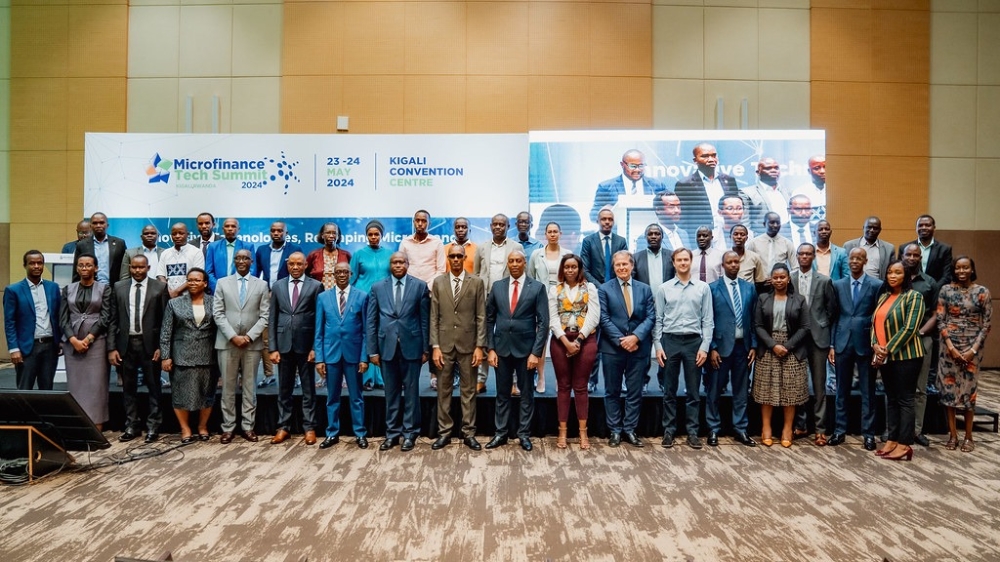
Organised by the Zimbabwe Association of Microfinance Institutions (ZAMFI) and the Association of Microfinance Institutions in Rwanda (AMIR), the two-day forum took place in Kigali with the theme “Forging and Strengthening Sustainable Partnerships in Microfinance Ecosystems through Knowledge Exchange and Collaboration.”
Forging and Strengthening Sustainable Partnerships in Microfinance Ecosystems through Knowledge Exchange and Collaboration was the focus of the event.
Forging and Strengthening Sustainable Partnerships in Microfinance Ecosystems through Knowledge Exchange and Collaboration was the focus of the event.
Enterprise development and microfinance specialist Jeff Njagi listed ten key obstacles to the industry’s growth, which he feels must be overcome by cooperation, knowledge sharing, and cross-border cooperation.
1. Frameworks for regulation and oversight
Njagi emphasized that it is expensive and unappealing for MFIs and Savings and Credit Cooperatives (SACCOs) to develop regionally due to differing laws and regulations between nations.
He said that in order to get around this, “we should pursue mutual recognition of licenses under the frameworks of AfCFTA, COMESA, and EAC and harmonize minimum regulatory standards.”
2. Poor interoperability of cross-border payments
Additionally, he pointed out that the absence of cross-border digital payment networks raises transaction costs.
Njagi said that these obstacles might be removed and that regional trade and financial inclusion could be improved by a unified strategy or perhaps a regional digital currency.
3. Limited availability of reasonably priced finance
One of the biggest obstacles is still the availability of steady and reasonably priced funding.
He pointed out that “even for SACCOs, reliance on expensive deposits due to the convergence of financial services and decreasing donor funds limits growth.”
In order to draw in both domestic and foreign investment, he suggested tax breaks, blended finance vehicles, and regional refinancing facilities.
“There is a fortune at the bottom of the pyramid—this is a huge opportunity for our countries.”
4. Inequality in infrastructure and the digital divide
The growth of digital microfinance is severely hampered in rural areas by low smartphone use and poor internet connectivity.
Njagi stated, “We need to support low-tech delivery channels like USSD and agent banking and invest in digital infrastructure.”
5. Exorbitant operating expenses
Microfinance is costly and less scalable due to its high operational costs per unit and its relatively small target clientele.
Due to the tiny loan amounts, serving rural clients is expensive. “Promoting group lending, combining services, and digitizing procedures are essential solutions,” he stated.
6. Institutional weakness
Strong governance frameworks, risk management programs, and IT capabilities are lacking in many MFIs.
Njagi suggested, “In order to increase institutional resilience, we must invest in regional training hubs, standardized training accreditation, and incentives.”
7. Insufficient credit data
The absence of comprehensive and interoperable credit information systems was brought to light by Njagi.
“Default risk is increased by fragmented Know Your Customer (KYC) systems and disparate credit bureaus,” he stated.
He called for the creation of standardized KYC standards and interoperable regional credit registries in addition to a more comprehensive repayment culture in order to address this.
8. Political and macroeconomic hazards
Political unrest, inflation, and currency fluctuations erode investor confidence and raise borrowing costs.
“To lessen exposure, risk-sharing tools, forex hedging strategies, and political risk guarantees are required,” he stated.
9. Consumer protection and financial literacy
Significant obstacles also include excessive debt, insufficient consumer protection laws, and gaps in financial awareness.
Njagi emphasized the need to “implement nationwide financial education campaigns and harmonize consumer protection laws.”
Forging and Strengthening Sustainable Partnerships in Microfinance Ecosystems through Knowledge Exchange and Collaboration was the focus of the event.
Forging and Strengthening Sustainable Partnerships in Microfinance Ecosystems through Knowledge Exchange and Collaboration was the focus of the event.
10. Unregulated competition and fragmented marketplaces
Formal microfinance institutions are threatened by unregulated entities like some fintechs and informal lenders, sometimes known as “Shylocks.”
“Digital lenders and credit-only businesses must be fairly taxed and regulated. Leveling the playing field is another benefit of formalization incentives, according to Njagi.
The experience of Rwanda
According to the FinScope Survey, Rwanda’s financial inclusion rate rose from 48% in 2008 to 96% in 2024, a development that the country is proud of, stated Damien Gatera, Chairperson of AMIR.
“As we come together, we are exchanging insights, investigating new ideas, and forming alliances to promote inclusive finance and wealth generation,” he stated.
The Ministry of Finance and Economic Planning’s Minister of State for National Treasury, Godfrey Kabera, stated. Between 2020 and 2024, financial inclusion increased from 93% to 96%. Formal financial inclusion has increased from 77% in 2020 to 92%, exceeding our NST1 goal of 90%.
In 2024, the financial exclusion rate was only 4%, down from 7% in 2020.
The upgrading of the microfinance industry, particularly Umurenge SACCOs, which cater to rural people, was credited by Kabera with the success.
Over four million customers are served by Rwanda’s 457 licensed MFIs and SACCOs, which currently have 408 branches and outlets.
“A shared core banking system that was created locally now powers all 416 Umurenge SACCOs, which are entirely automated. Transparency, service delivery, and integration into the larger financial system are all improved by this domestic solution,” Kabera continued.
In order to lay the groundwork for the Rwanda Cooperative Bank, he declared that the continuous consolidation of Umurenge SACCOs into District SACCOs had already produced seven merged companies.
“This will increase outreach to underserved areas, professionalize services, and strengthen capital,” he stated.
The viewpoint of Zimbabwe
Partnerships are essential in the microfinance industry, according to Saul Chin’anga, chairperson of the Zimbabwe Association of Microfinance Institutions (ZAMFI). No one actor can thrive alone at these times of fast technology advancement, global economic turmoil, and growing demand for inclusive financial services.
Establishing inclusive, strategic alliances based on mutual respect and purpose is essential to microfinance’s true sustainability. These partnerships need to transcend national boundaries, industries, and localities.
He praised Rwanda’s dedication to building a robust and accountable microfinance industry.
“We can all learn from Rwanda’s leadership in embracing digital transformation, boosting policy discourse, and bolstering institutional capacity. We’re eager to expand on this partnership and gain knowledge from your experience,” he said.