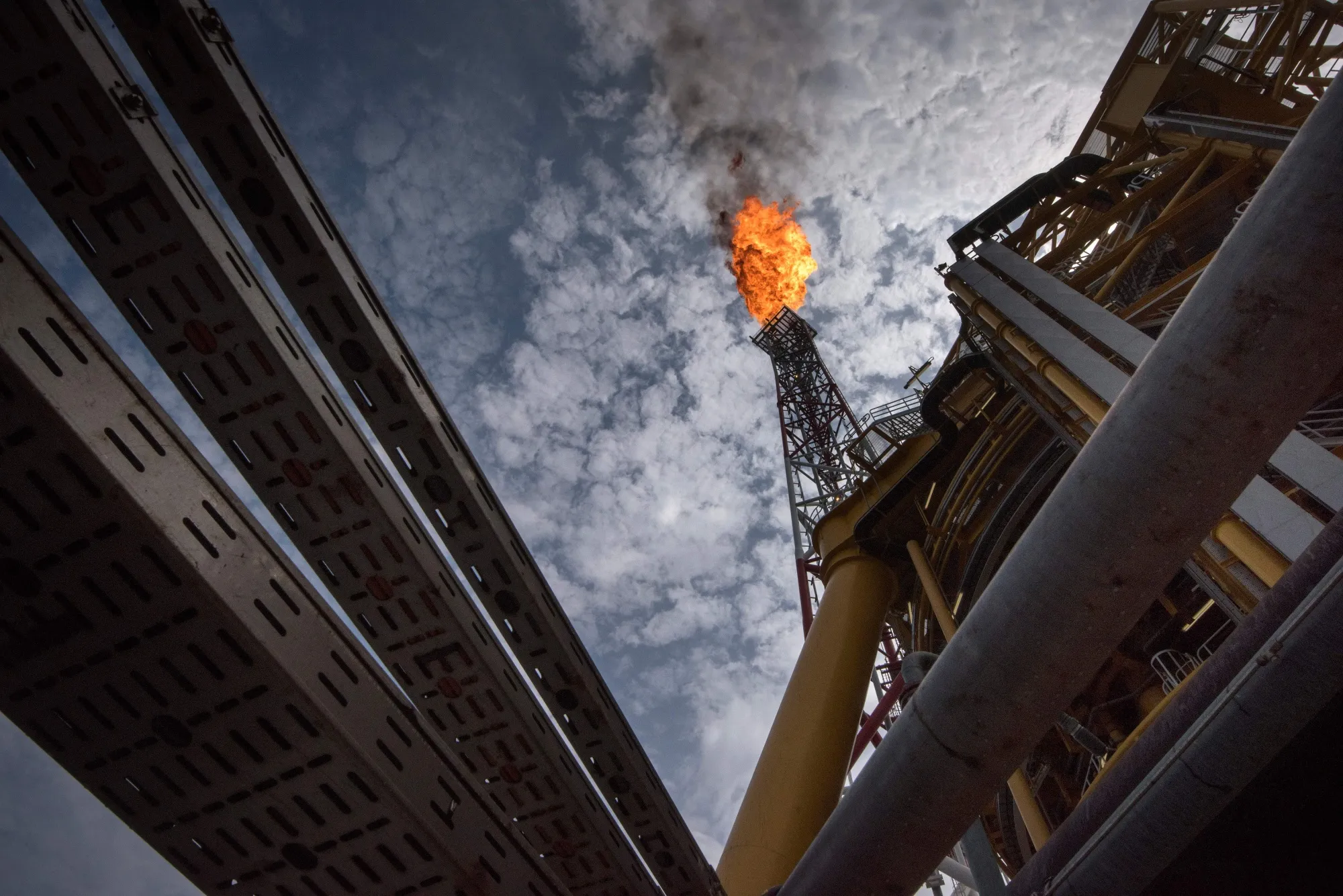
The CEO of Azule Energy told Reuters that the company is thinking about doing another gas exploration well because they are optimistic about Angola’s untapped gas potential. Last month, they led the country’s first drilling operation for gas and it was successful.
Angola wants to increase its exports to Europe and Asia and meet rising internal demand, so it expects gas production to rise more than 20% over the next five years. However, its oil production has stayed the same since it left OPEC.
Angola, which is the second-largest source of crude oil in sub-Saharan Africa after Nigeria, is shifting its focus to natural gas to help power an industrialization plan based on investment-friendly terms.
“Angola has a number of rich basins, so I think we will be able to find a lot more gas reserves,” said Adriano Mongini, CEO of Azule Energy, a company that is a partnership between BP (BP.L) and Eni (ENI.MI).
In response to emails, he said that a second well could be drilled within two years and that infrastructure close to the Gajajeira-01 gas find could help its growth.
A press release said that the first figures show that Gajajeira-01 has more than one trillion cubic feet (tcf) of gas and up to 100 million barrels of condensate.
The latest numbers from the government show that 1.35 million metric tons of natural gas were exported in the second quarter, which is 19.1% more than the first quarter. Most of the exports were liquefied natural gas, and the top two customers were India and Spain.
Gas sales, on the other hand, are a small part of Angola’s $5.6 billion in crude oil sales over the same time period. This is because the oil-exporting country is also unhappy about plans to cut fuel handouts for its own people.
The national oil and gas agency ANPG predicted that Angola’s gas production would rise from 2,973 million standard cubic feet per day (MMSCFD) this year to 3,659 MMSCFD by 2030. However, some experts said that the average production this year might not meet expectations.
The government said that the Azule-led New Gas Consortium (NGC) and Chevron’s Sanha Lean gas project would help lead attempts to get more gas out of the ground.
Jimmy Boulter, an expert at Enverus, said, “The real test for gas monetisation in Angola will be the development of (NGC’s) Quiluma and Maboqueiro fields, which is set to begin around the end of 2025.”
ANPG officials told Reuters that oil production will drop from about 1.1 million barrels per day now to just above 1 million barrels per day by 2027. They said that the lower level could stay in place if investment and growth plans are kept up.
Angola plans to spend $60 billion on oil and gas over the next five years. During that time, 23 exploration wells, 11 of which will be offshore, will be dug.
Angola’s oil profile has briefly gone up thanks to new projects like TotalEnergies’ 60,000 bpd bump and Azule’s 120,000 bpd Agogo FPSO, which began producing oil in July.
David Thomson, an analyst at Welligence, said, “We expect oil production to drop significantly after 2030.”