UN charges against M23 are called into question by a new investigation
Independent studies have questioned the veracity of the sources and the material supporting the claims that the AFC/M23 rebel movement massacred hundreds of people in Rutshuru region, North Kivu province, between July 9 and July 21.
The allegations of a massacre of “Hutu farmers” stem from a joint report released on August 6 by the Office of the UN High Commissioner for Human Rights (OHCHR) and the UN Joint Human Rights Office (UNJHRO). The report claimed that M23 fighters killed 319 civilians—including at least 48 women and 19 children—and injured 169 others in four villages in Rutshuru.
Many victims were reportedly attacked while working in their fields during the planting season.
The charges have been rejected by M23, which claims they are “unverified and politically motivated,” “lack factual backing, are methodologically flawed, and reflect unjustifiable bias,” and “lack factual backing.”
A disparity in the numbers
In a report released on Monday, August 11, African Facts, an independent media organization that studies African wars, contested the UN’s conclusions, claiming that there is no proof in the Democratic Republic of the Congo that the UN’s account of events corresponds to actual events.
According to African Facts’ French-language report, a UNJHRO letter alluding to “alleged” atrocities and naming 169 victims was submitted to AFC/M23 officials on July 28, three days prior to Reuters’ initial coverage of the claims. The media report’s authors questioned why the wording changed from conditional to definitive and how the official report’s toll soared to 319 in a matter of days.
The only official complaint during the purported massacres was made by the Collective of Victims of Rwandan Aggression (CVAR), a group affiliated with the Nyatura-CMC militia, who released 13 photos of bodies—11 men and two women—while claiming that “more than 200 people perished in a cruel manner.”
Questionable sources
According to the inquiry, elements of CVAR’s leadership are associated with Nyatura, an armed group created by the FDLR and suspected of committing multiple crimes and ethnic atrocities against Tutsi villages in Congo. Some of its members are wanted for murder, kidnapping, torture, and criminal conspiracy.
The Rutshuru Territorial Youth Council (CTJR), another organization that is promoting the accusations, is closely associated with CVAR. Patient Twizere Sebashitsi, the president of CTJR, stated, “We have all the data possible… but we cannot disclose it,” in response to a question about the organization’s August 3 assertion of 296 executions by M23 in Binza. It is heavily protected and costs us a lot of money.
“Massacre invented”
The UN investigation also suggested that the Rwanda Defence Force (RDF), accused of assisting M23, “aided” in the killings.
“The gratuitous inclusion of the RDF in these allegations is unacceptable and calls into question the credibility of OHCHR and its methodology,” the Rwandan government said Monday, dismissing the accusations.
Rwanda’s foreign minister, Olivier Nduhungirehe, quoting the African Facts report, criticised the UN’s findings in a post on X, stating: “Thus, a gross manipulation of the CMC Nyatura, an armed group affiliated with the genocidal FDLR, is found, for obscure reasons, as an established fact in a report by the United Nations High Commissioner for Human Rights.”
Nduhungirehe stated, “The United Nations system, which has unreservedly witnessed a real persecution of the Congolese Tutsi for three decades and never had the will to stop a real genocide in Rwanda in 1994, finds a way to sink further by accrediting, with incredible lightness, a’massacre’ invented from scratch by the very people who are guilty of atrocities in the east of DR Congo.”
On the ground, another image
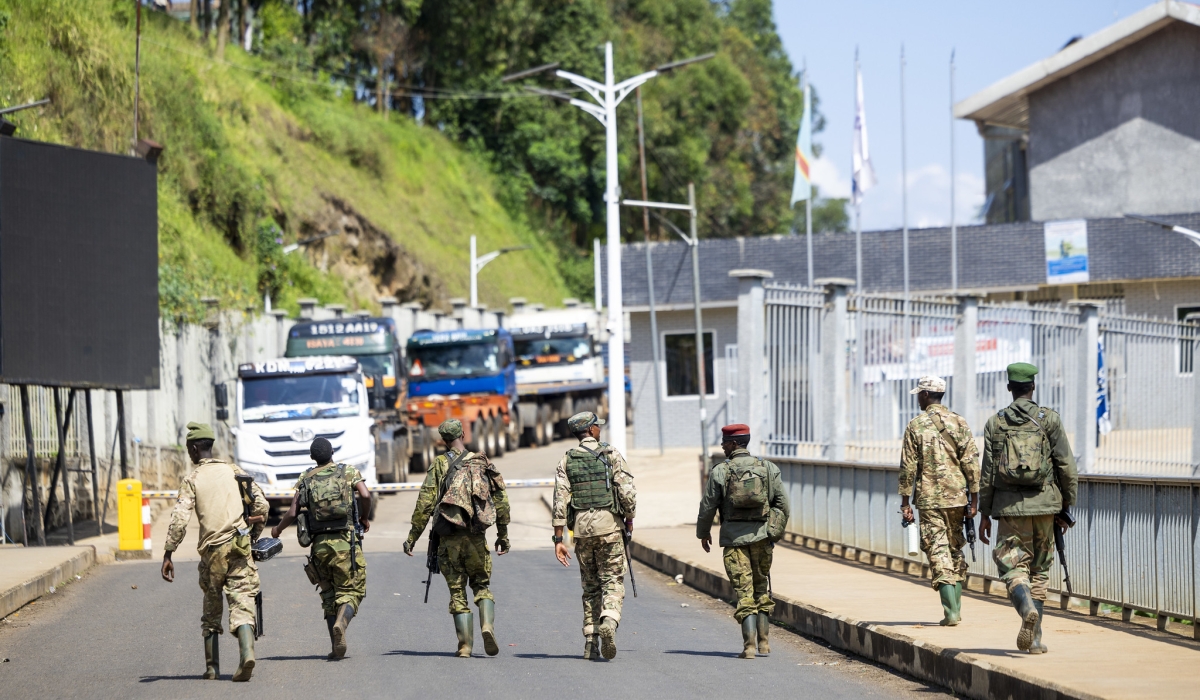
According to African Facts, M23 is engaged in combat in Binza with FDLR and Nyatura soldiers, who are hard to identify from local farmers because they frequently wear civilian clothing while armed.
According to testimonies gathered by African Facts, civilians have been killed in skirmishes, although significantly less than the UN offices report, and none of them were “executed” with machetes as claimed.
During the same time period, African Facts also reported attacks by FDLR and Nyatura militias, which were not covered by the UN report or the mainstream media. These attacks included the July 10 burning of 20 houses in Kizimba and the decapitation of victims.
The authors said that the UNJHRO report’s reliance on anonymous “direct testimony” devoid of victim identities, burial sites, or verifiable photographic evidence further erodes its credibility.
The first major media outlet to report the news, Reuters, acknowledged that it relied on the UNJHRO and one anonymous activist for its coverage because it was unable to independently verify the executions.
The UN offices also failed to include summary executions and other attacks by the FDLR and Nyatura militia in the area, according to the African Facts research, even though there is no concrete proof to back up the claims of the killings attributed to the AFC/M23.
According to the writers, “neither the UN office nor the news agency have produced any material evidence to support these terrible accusations.” “In this area, these kinds of incidents invariably produce evidence that can usually be collected, verified, and placed in context.”