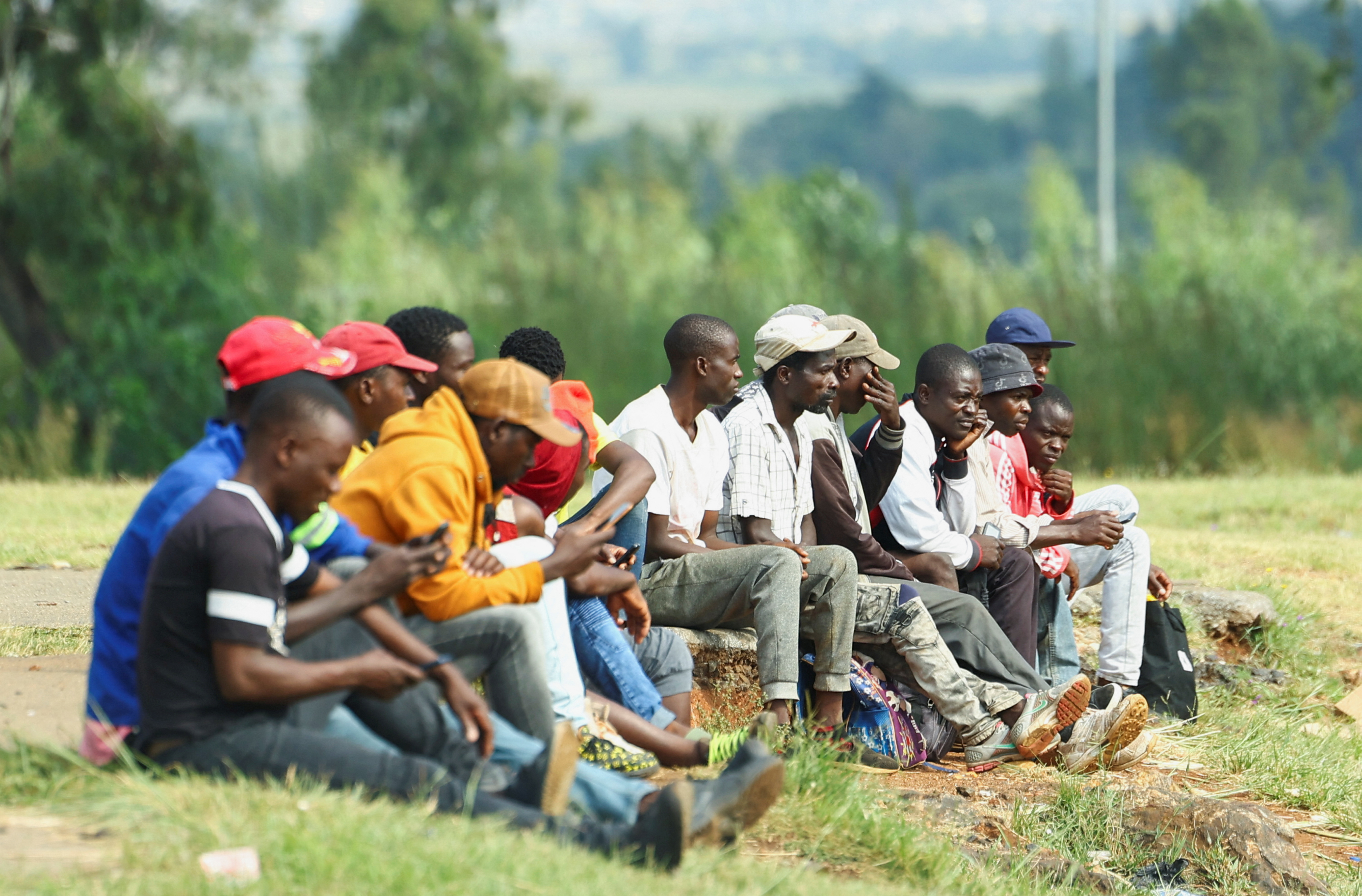
South Africa’s unemployment rate increased for the second consecutive quarter, according to official data released on Tuesday, underscoring one of the main issues facing the nation’s coalition government, which has been in power for a year.
The official unemployment rate increased from 32.9% in January-March to 33.2% in April-June (ZAUNR=ECI), making it one of the highest rates globally.
Despite prioritizing the reduction of the unemployment rate, the coalition government that was established after the African National Congress lost its parliamentary majority in the 2024 election has failed to produce a significant decrease in the rate.
Statistics South Africa reported that, although there was a minor decline in the enlarged definition of unemployment, which takes into account individuals who are deterred from looking for work, the number of unemployed people rose to 8.367 million in the second quarter (ZAUEMP=ECI), opens new tab.
Over the last three months, employment has increased in four of the ten industries the statistics agency tracks, while it has decreased in six of them.
Finance, agriculture, and community and social services lost the most jobs.
According to top statistics official Risenga Maluleke, it is too soon to determine whether U.S. tariffs are affecting the employment figures.
A 30% tax, the highest in sub-Saharan Africa, was imposed last week on South African exports to the United States.
The previous CEO of the large local bank Capitec (CPIJ.J) criticized Maluleke for underestimating the number of people working in informal jobs, but Maluleke ignored the accusations.
According to him, South Africa would be making “a big mistake as a country if we want to assume that we do not have an unemployment challenge.” He said at a press conference that his agency had always measured it and made its figures available.
According to Desiree Manamela, chief director of labor statistics, the official unemployment rate is not expected to be considerably impacted by changes to Statistics SA’s unemployment data collection methods that will be implemented in the upcoming quarter.
“However, they ought to permit the agency to incorporate other indicators of the state of the economy in its reports,” she stated.