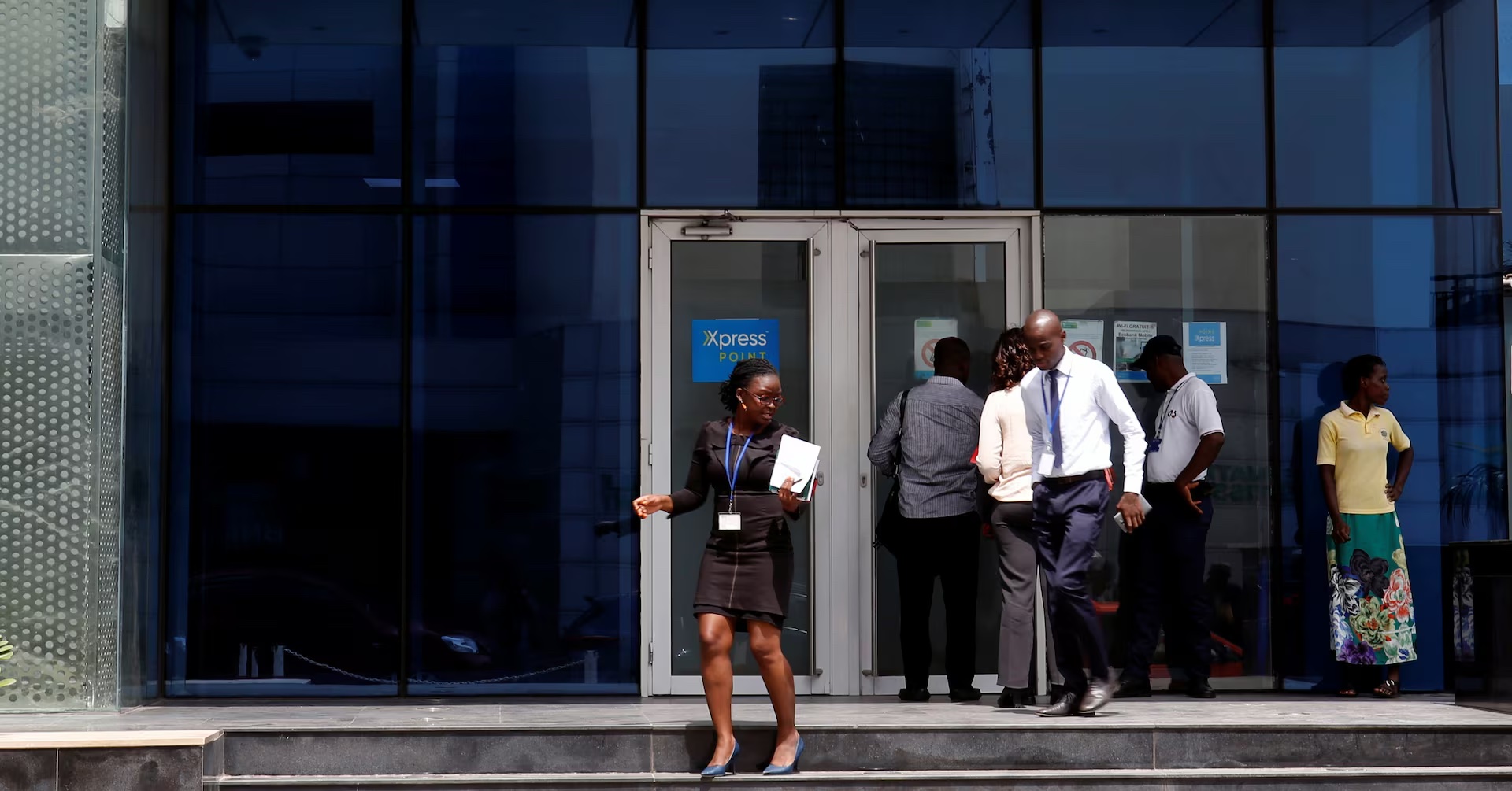
The chief executive of Ecobank (ETI.LG), a pan-African lender, stated that the company is “optimistic” about the outlook for its second-half performance, provided that no additional U.S. tariffs or other global shocks occur.
The lender, which has its headquarters in Lome, Togo, and operates in 35 countries throughout the continent, reported a 23% increase in pretax profit for the first half of this year as a result of recoveries in some of its major markets, including Ghana.
“We have faith in the company’s ability to continue operating. “We have a diverse business,” group CEO Jeremy Awori told Reuters in an interview.
Additionally, trade financing, remittances, payment services, and other non-lending revenue streams are fueling the company’s expansion.
“We are increasing our financing. We are taking that cautious approach because we don’t want to stumble back into non-performing loans (NPLs) and there are still a lot of macroeconomic concerns,” Awori told Reuters on Friday.
After plunging during the global financial crisis, Ecobank’s stock has risen nearly one-third this year. That is more than twice as much as other regional lenders like Access Bank (ACCESSCORP.LG) and KCB Bank (KCB.NR), opens new tab, and significantly higher than the 6% increase in Standard Bank (SBKJ.J), opens new tab.
The largest shareholder of Ecobank, Nedbank (NEDJ.J) of South Africa, opened a new tab last week and offered to sell its 21.2% ownership in the bank, partly because of worries that it might have needed to increase capital in order to avoid “shareholding dilution…”
“The dismantling of the United States Agency for International Development (USAID) by U.S. President Donald Trump has affected Ecobank’s cash distribution business as one of Africa’s largest lenders,” Awori added.
The World Health Organization, another United Nations organization impacted by the USAID reduction, has also had money handled by Ecobank.
Although he did not supply statistics, Awori claimed that the impact was dispersed over its numerous marketplaces, indicating that the hit on deposits was not particularly severe.
In addition, he keeps an eye on more general global events, including the magnitude of US trade restrictions.
“A decision taken by the U.S. against China or against Europe can have a knock-on effect across into our markets,” added Awori. “We are very joined up.”
Given its size and potential, Ethiopia might be an exception to the rule, but Ecobank has no immediate intentions to expand geographically.
“It is never say never, but right now, for the next couple of years, we feel we have enough opportunities where we are,” Awori explained.