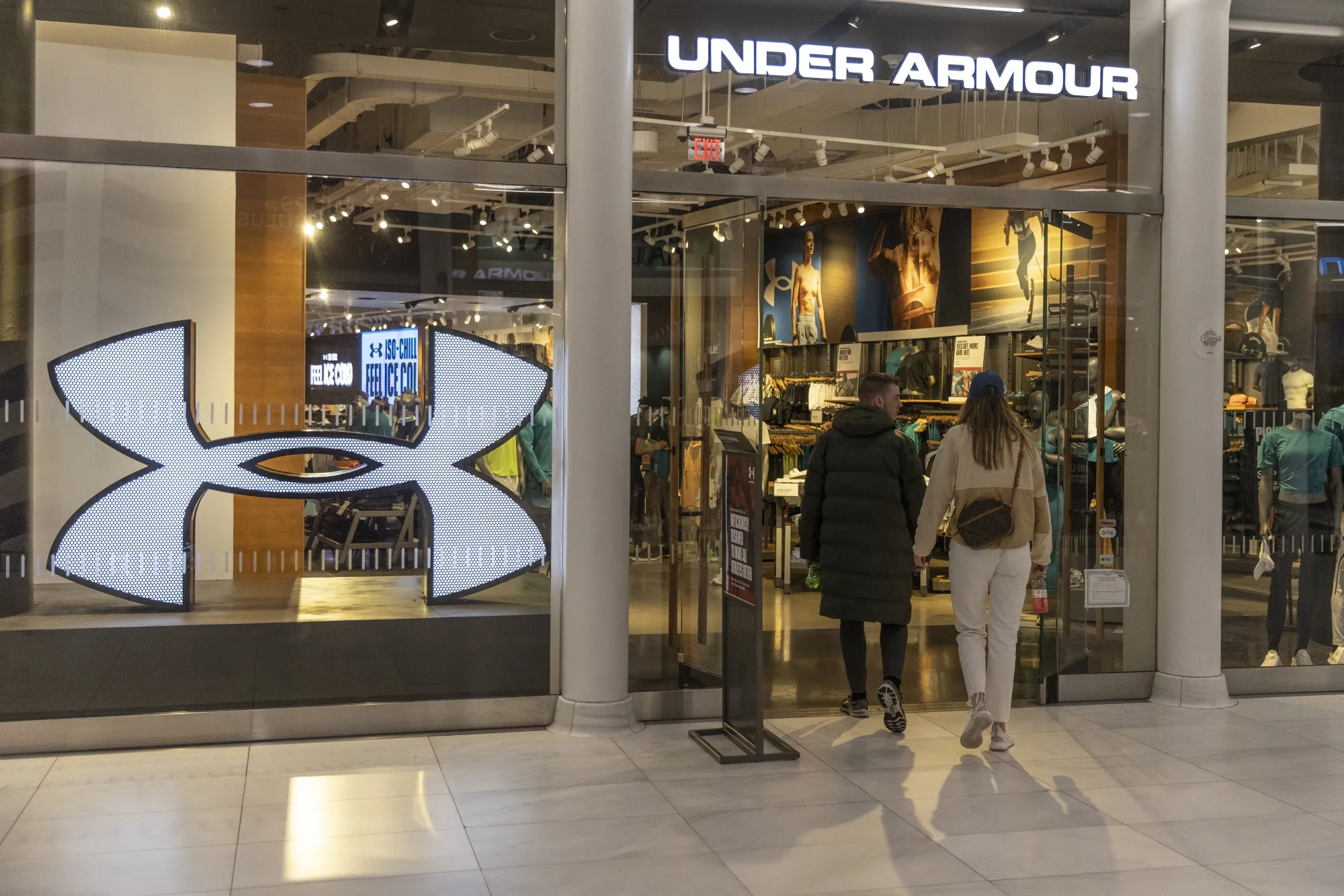
The sportswear manufacturer’s shares fell almost 20% after Under Armour (UAA.N), which opened a new tab on Friday, warned of lackluster demand and an additional $100 million in tariff-related expenses for the year, as well as a worsening of its sales decline this quarter.
Due to the Trump administration’s changing tariff policy, the company has had difficulty increasing demand over the last two years, and recent months have seen additional obstacles to efforts to revitalize the business.
In an attempt to revitalize the company, Maryland-based Under Armour reinstated founder Kevin Plank as CEO in March of last year.
“It’s concerning that, going a year into its restructuring plan, there’s still little sign of a reversal in its revenue declines and profitability struggles on the horizon,” Sky Canaves, an analyst with Emarketer, said.
Prices for the “embedded consumer who we do have pricing power with” may also be raised, according to CEO Plank.
Due to possible supply chain issues brought on by tariffs, it anticipates a quarterly gross margin drop of 340 to 360 basis points; however, it stated that the decline will be somewhat mitigated by advantageous foreign exchange and pricing advantages.
About 30% of the company’s total item volume was sourced from Vietnam as of May, with 15% coming from Indonesia. President Donald Trump’s 20% tariffs on Vietnamese and 19% on Indonesian imports, though it’s uncertain if the penalties are final, directly put it at risk.
“Given the new tariff cost this year and related demand impacts… we expect operating income on an adjusted basis to be roughly half of fiscal 2025 levels,” CFO Dave Bergman stated during a conference call.
According to data provided by LSEG, the company also predicted a loss in current-quarter revenue of between 6% and 7%, as opposed to analysts’ average projection of a 2.9% drop.
Revenue for the first quarter ended June 30 decreased 4% to $1.13 billion, which was in line with projections; however, adjusted profit per share, which was 2 cents, fell short of projections of 3 cents.