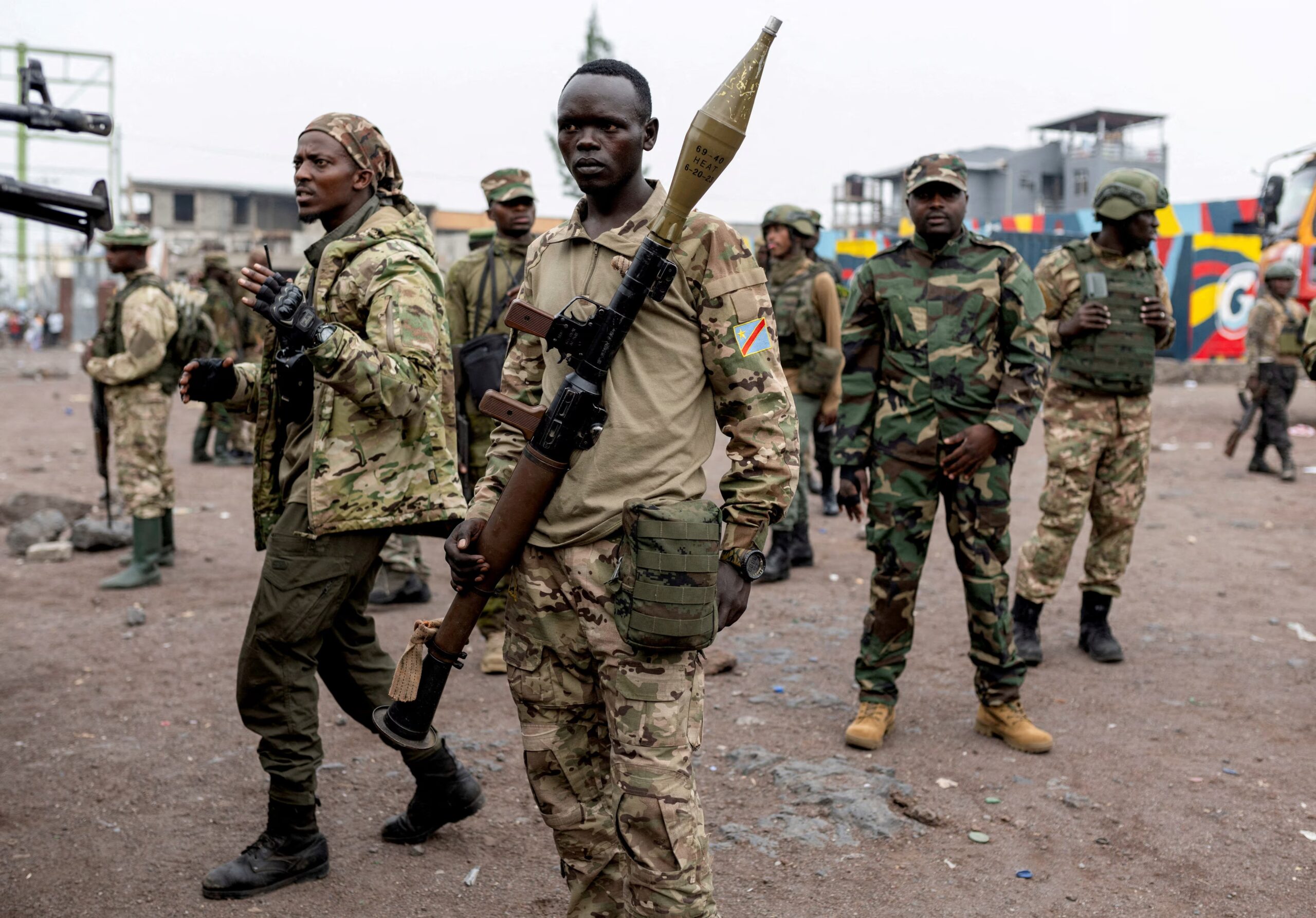
The AFC/M23 movement has condemned the “unverified and politically motivated allegations” made by UN human rights organizations that its fighters killed hundreds of civilians in North Kivu province’s Rutshuru area.
A joint report by the UN Joint Human Rights Office (UNJHRO) and the Office of the UN High Commissioner for Human Rights (OHCHR) claimed that members of the AFC/M23 were accountable for the deaths of 319 civilians and 169 more in four villages in Rutshuru between July 9 and July 21. Rebel spokesperson Lawrence Kanyuka rejected the report.
Kanyuka called the accusations “a blatant misrepresentation of facts, a violation of impartiality, and a serious breach of UN institutional credibility” in a statement released on Thursday, August 7.
The majority of the victims, according to UN human rights official Volker Turk on August 6, were farmers who had camped out in their fields throughout the planting season. He blamed M23 and other local armed organizations for the killings, which he denounced.
The AFC/M23 maintains that the accusations are politically motivated and unsubstantiated, despite the UN’s assertion that the report is based on first-hand testimony.
According to the rebels, the UN assertions “lack factual backing, are methodologically flawed, and reflect unjustifiable bias.” They added they “categorically reject the unfounded allegations.”
The statement said, “The regions mentioned in the report—Kanyakiri, Kigaligali, Dubai, Katanga, Lubumbashi, Kasave, Kakoro, and Busesa—are located within Virunga National Park, a protected area where farming is strictly forbidden.”
“How could farmers in nonexistent farmlands have been massacred? This obvious contradiction demonstrates that the UNJHRO violated its investigative standards by disseminating unconfirmed information, Kanyuka stated.
The Kinshasa-based office of UNJHRO was charged by the movement with issuing the report without independent verification and mainly depending on “regime-aligned sources.”
M23 also asserted that the study disregarded alleged crimes carried out by the Congolese government and its allies against the Banyamulenge in South Kivu and the Hema community in Ituri. Additionally, the group denounced Kinshasa’s drone assaults, claiming they were flagrant breaches of international humanitarian law.
The rebels said that the UN report was based on unconfirmed testimonies and criticized its use of conditional terminology like “allegedly” and “reportedly.” They furthered what they called a “malicious defamation campaign” by accusing the UNJHRO of promoting misinformation that was “uncritically” repeated by the media.
M23 claims that among other militias that are “unreliable,” the UN report cites Wazalendo, the FDLR, a Rwandan genocidal organization, and RUD-URUNANA. The group referred to a UN body depending on such sources as “shameful.”
How can genuine information be provided by organizations that are not present in the liberated territories (territory controlled by rebels)? We demand an impartial inquiry and encourage the organizations that released the report to participate in it,” Kanyuka stated.
They demanded a public apology and the report’s prompt retraction. In order to ensure unbiased examination of all transgressions, including those carried out by the Kinshasa administration, they also called for an end to institutional bias within the UN.