South Korea and the US are getting ready for a meeting, but a trade deal is still not finalized
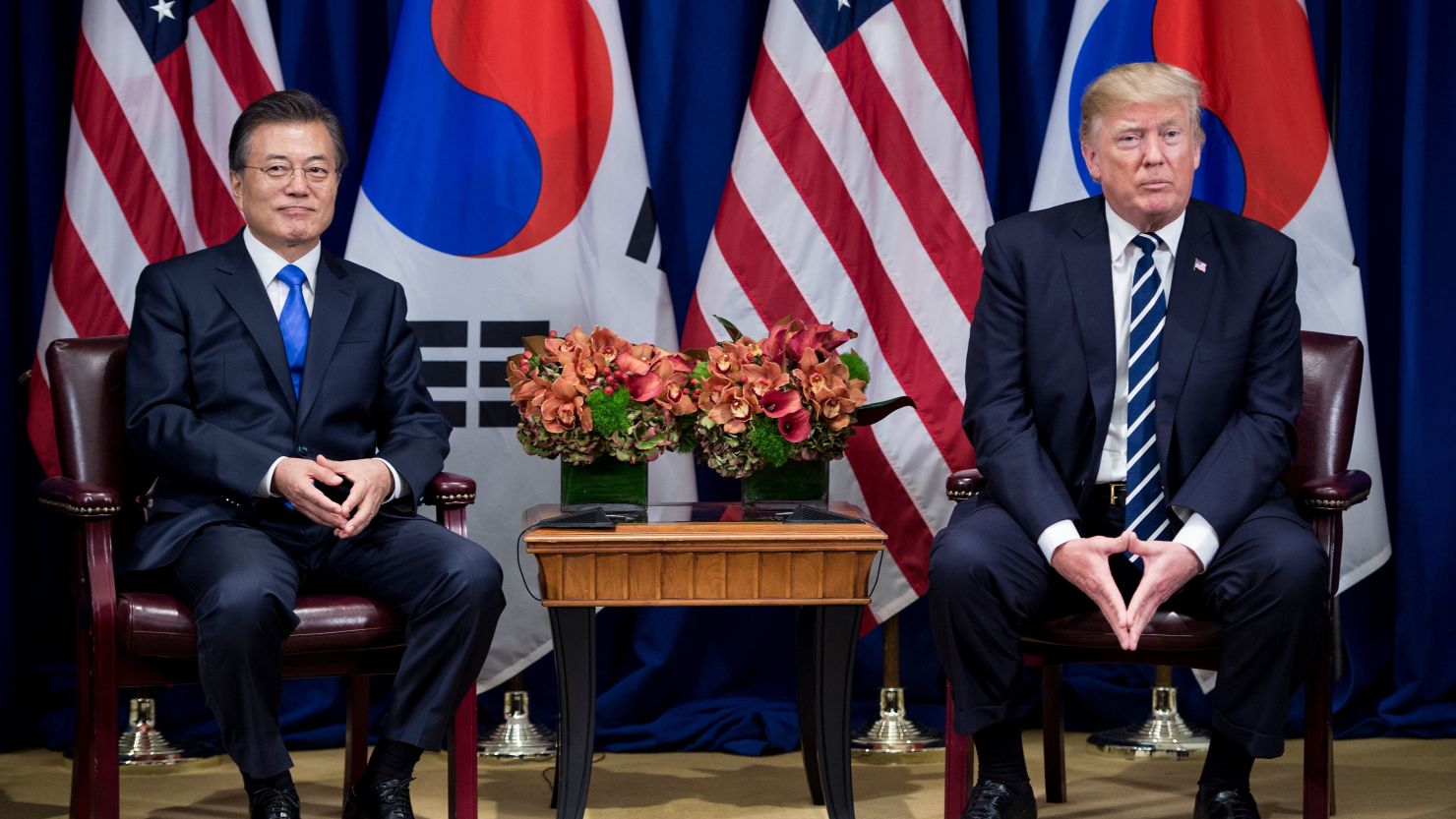
South Korea and the US are getting ready for a summit of their leaders. Six former negotiators and experts said that issues left unresolved by a recent trade deal could lead to more disagreements between the two countries’ most important friends and trade partners.
Analysts say that non-tariff barriers and currency could be tough problems at the summit between President Trump and his counterpart Lee Jae Myung. Trump may use the meeting to try to get more concessions on defense costs and corporate investments that were left out of the deal.
The exact date of the summit has not been announced, but Trump gave a range of two weeks last week.
There was no written agreement to back up last week’s talks, which could lead to disagreements. Already, there are some differences in how the two sides describe the deal.
An important one was when a South Korean presidential adviser denied on Sunday that the U.S. would take 90% of the profit from South Korea’s $350 billion project investments. South Korea also decided to open up its own rice market.
Former top negotiator for the 2007 Korea-U.S. free trade agreement Choi Seok-young warned, “Even a binding deal like the FTA has been effectively scrapped.” “And this is just promise.”
The pact signed last week was not as big as South Korea had hoped for a deal on trade, security, and investment before the meeting between Trump and Lee, who was recently elected.
But Japan and the US made a deal earlier than expected, which made South Korea rush to make a trade deal. Presidential adviser Kim Yong-beom said that security and investment problems would be discussed at the next summit.
Funding plans for $350 billion are uncertain. Trump said that South Korea would spend in the US in projects that are “owned and controlled by the US” and that he would choose. However, he didn’t say much about how the plan would work or when it would happen.
South Korea’s Finance Minister Koo Yun-cheol told reporters on Friday that the allies will have a hard time working out the details of the fund at the future working-level talks.
“People say the devil is in the details,” said he.
Howard Lutnick, the secretary of commerce, said on social media that “90% of the profits will go to the American people.” Karoline Leavitt, a spokeswoman for the White House, said that some of the profits would go to the U.S. government to help pay off debt.
However, Kim, a presidential assistant, said that the two sides did not talk about how to split the profit during the talks. South Korea thought that the profit would be “reinvested” in the US.
“POLICY CRITIQUE”
He also said it was “hard to understand in a civilized country” that the US might take most of the profit. He also called Washington’s claim that it would make all choices about the fund “political rhetoric.”
South Korea had added a safety mechanism to lower the risk of financing, he said. It included U.S. promises to buy goods from the projects under a “offtake” clause and put money into projects that could make money.
Seoul officials said that $150 billion would go to the shipbuilding industry. The other money would go to key industries like biotechnology, nuclear power, chips, batteries, critical minerals, and shipbuilding.
The structure’s terms have not been decided yet, Kim said, adding that most of the money comes from loans and guarantees, with only a small amount coming from equity investments.
South Korea would give “historic market access to American goods like autos and rice,” which was similar to what Trump had said before.
Even though Washington put a lot of pressure on South Korea, they kept saying that there was no deal on the agriculture market, which includes beef and rice.
Trump was very interested in Korea’s process for quarantining fruits and veggies, Seoul said. Improvements to this process will be discussed in upcoming technical talks on non-tariff barriers, which will also cover rules for vehicle safety, but they did not give any more information.
Some non-tariff barriers, like rules that govern Big Tech, could also be problems.
When Trade Minister Yeo Han-koo got back from Washington last week, he said, “We cannot be relieved because we do not know when we will face pressure from tariffs or non-tariff measures again.”
Defense costs are likely to be a big topic at the meeting. Trump has long said that South Korea should pay more for having U.S. troops there.
Trump also said that South Korea agreed to spend a lot of money in the US, on top of the $350 billion. He said that the details of this investment would be announced at the summit on July 30, which he said would happen in two weeks.
Allies are having working level talks about currency policy. This was on the table for the first round of trade talks in April.