Modi and Starmer Sign £6 Billion Trade Deal Between India and the UK
Starmer and Modi signed a £6bn trade deal that will help the UK and India’s economies grow.
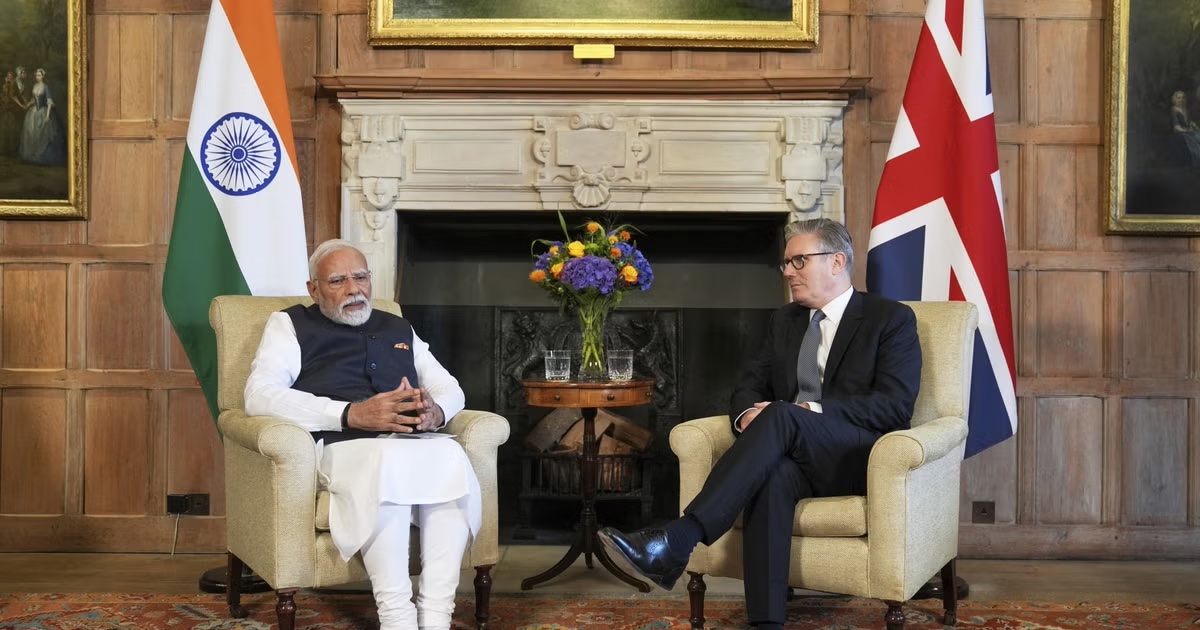
Prime Minister Sir Keir Starmer and Narendra Modi, the prime minister of India, signed a historic £6 billion free trade deal. This will increase exports and strengthen economic ties between the UK and India.
Under the deal, it will be cheaper for the UK to send goods to India, like cars, whisky, lamb, gin, medical devices, and parts for spacecraft. It will also be cheaper for India to send goods to the UK, like textiles, jewelry, and electric vehicles. It took three years of talks to reach the agreement, which includes a new plan to fight illegal immigration and work together better in areas like defense, education, and technology.
Starmer said, “This deal is now signed, sealed, and delivered” at the official signing event held at Chequers, the country home of the UK prime minister. Today, I’m honored to welcome you to what I think is an important day for both of our countries and the fulfillment of the promise we made to each other.
He said that the agreement would make more chances for UK companies doing business in India and create more than 2,200 jobs in Britain. “Britain has won a big victory with our historic trade deal with India,” Starmer said, adding that it would help engineers, technicians, and supply chain workers, especially in the aircraft, technology, and advanced manufacturing industries.
“The hardworking people of the UK are getting more money, and families are getting help with the cost of living. We’re determined to go even further and faster to grow the economy and raise living standards across the UK,” he said.
The deal is expected to boost the British economy by £4.8 billion every year, according to the UK government. The agreement has been approved by the Indian cabinet, but it still needs to be ratified by the parliament before it can go into action. This won’t happen for at least a year.
Cuts in tariffs on clothes, shoes, frozen prawns, gems, and cars are some of the most important ones. India used to charge 150% more for whiskey, but now they only charge 75%. By 2035, they will only charge 40%. The average tariff on other UK products will go down from 15% to 3% at the same time.
It will be easier for Indian automakers to sell their cars in the UK, especially electric and hybrid cars. The government made it clear that the deal will help businesses grow and create jobs by giving both sides better access to markets.
The deal also creates a new way for people to share criminal records, which will help with prosecutions, improve watchlists, and help implement travel bans. Corruption, major fraud, organized crime, and illegal migration will all be targeted by better sharing of information.
But the UK did not get as much access to India’s financial and legal services markets as they had planned. There are still talks going on about a planned bilateral investment treaty and India’s concerns about the carbon tax.
One of the most controversial parts of the bill lets Indian and British workers briefly assigned abroad avoid paying national insurance. Officials in India have called this “an unprecedented achievement.” People who were against the rule said it could hurt local workers, but Business Secretary Jonathan Reynolds denied those claims.
Reynolds said on BBC Breakfast, “I can say without a doubt that is not the case.” You won’t save money on taxes if you hire an Indian worker instead of a British worker. Also, he said that visa and NHS extra fees would make it more expensive to hire people from other countries: “Nobody is being put down.”
Right now, the UK shares similar social security rules with 17 other countries, such as the US, EU member states, and South Korea.
Since becoming prime minister in 2014, Modi has made four trips to the UK. After the UK-India Technology Security Initiative last year, which led to new cooperation in telecoms and new tech areas, he is on a trip.
The trade deal was first talked about in 2022, when Boris Johnson was Prime Minister. “This trade deal has only been made possible because of Brexit delivered by the Conservatives,” said Andrew Griffith, the shadow business secretary.
Griffith warned, though, that Labour’s economic policies at home could wipe out any benefits from the trade deal: “It should not be lost on anyone that any gains from this trade deal will be blown out of the water by Angela Rayner’s union charter… and Rachel Reeves’ inevitable tax hikes that will punish Britain’s makers just to reward those who do not contribute.”