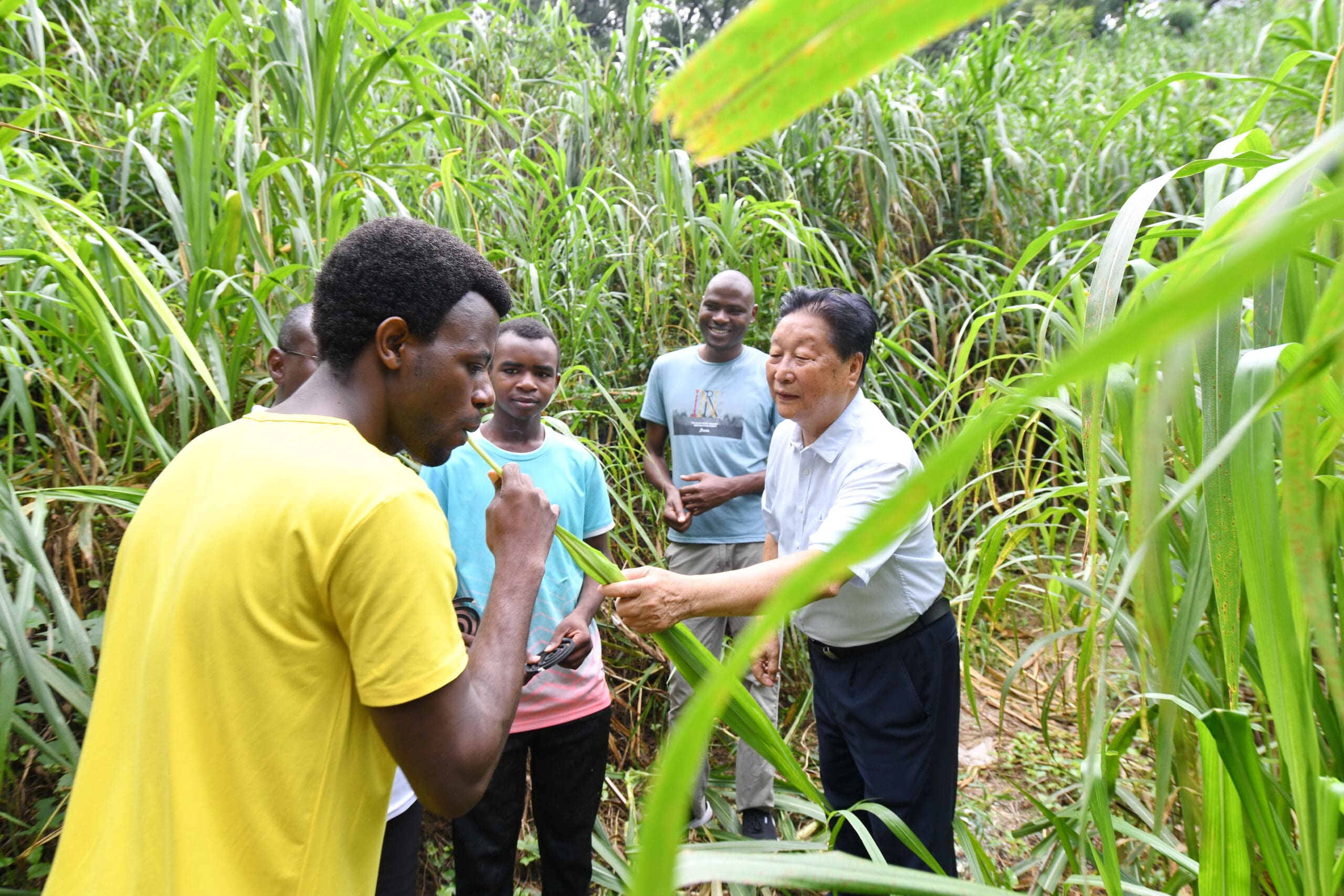
Farmers and agricultural experts in Africa have praised the effects of Juncao technology, a Chinese invention that is being utilized more and more throughout the continent to produce livestock feed and mushrooms.
Juncao, a hybrid grass that was created in China, is a multipurpose agricultural resource that was first used to grow mushrooms. Since then, it has shown promise in tackling issues related to revenue generating, food security, and the environment.
Zimbabwe’s Ministry of Lands, Agriculture, Fisheries, Water, and Rural Development’s principal agriculture extension specialist and project coordinator, Innocent Shayamano, stated that the technology is revolutionizing rural communities in Zimbabwe.
“Lives can be changed by this technology. On the fringes of a workshop on Juncao technology in Huye District, southern Rwanda, Shayamano told Xinhua, “It is in accordance with our national development goal, especially Vision 2030, which seeks to increase rural household incomes.
The United Nations Department of Economic and Social Affairs, the Rwandan Ministry of Agriculture and Animal Resources, and Fujian Agriculture and Forestry University of China are co-hosting a workshop at the China-Rwanda Agriculture Technology Demonstration Center from July 16–23 that focuses on the application of Juncao technology for environmental protection, livestock feed, and mushroom farming.
It brought together development specialists, educators, and agricultural officers from all around Africa.
Five Zimbabwean farmers joined Shayamano, who was attending the course for the second time, in order to gain a deeper understanding of mushroom cultivation in Juncao.
Although Zimbabwean farmers have long grown mushrooms from cotton waste, he pointed out that this practice is no longer as viable due to the growing price and scarcity of cotton.
On the other hand, Juncao grass offers a more affordable option, yielding more than 200 tonnes per hectare.
“With climate change affecting livestock feed availability in dry regions, Juncao grass also offers a timely solution for fodder,” Shayamano stated. “That’s why we are working to scale this technology across more farming communities.”
As lead trainers, he said, the Zimbabwean participants will return home with the responsibility of disseminating their expertise and promoting broader technology use.
Several African nations, including Rwanda and Zimbabwe, are using Juncao into their farming methods.
Nigerian farmer Abbas Ahmad Umar, who was attending the class for the first time, called Juncao a “grass of grace” because of its adaptability.
“We utilize it to stop soil erosion, raise livestock, and even grow mushrooms. I want to spread the word about Juncao when I go back to Nigeria, especially among ladies and young people,” he stated.
Umar was optimistic that the versatility of Juncao may promote sustainable farming and reduce poverty throughout Africa.
“Mushroom farming has many benefits, and I plan to apply what I’ve learned and eventually train others in my country,” he stated.