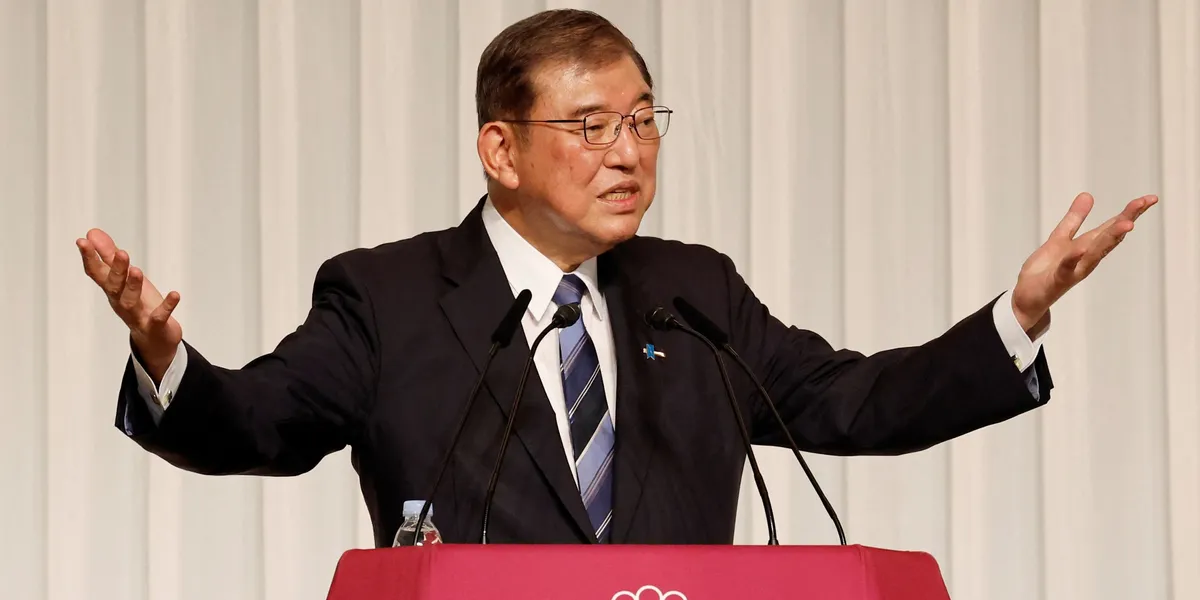
PM Ishiba claims that leaving now would halt Japan’s progress despite losing the majority due to economic pressure and US trade discussions.
After his ruling coalition lost its majority in both chambers of parliament, Japanese Prime Minister Shigeru Ishiba has promised to stay in power, stating that his “serious responsibility” at this time is to prevent political instability and deal with pressing national issues.
Ishiba rejected calls to resign and told reporters on Monday, “Although I painfully feel my serious responsibility over the election results, I believe I must also fulfill my responsibility I bear for the country and the people so as not to cause politics to stall or go adrift.”
Ishiba’s Liberal Democratic Party (LDP) and its junior coalition partner Komeito fell three seats shy of a majority in the 248-seat upper house in Sunday’s election.
Although the LDP is still the largest party, the alliance no longer controls the whole Diet as a result of October’s lower house defeat.
Rising consumer costs, declining wages, and the impending August 1 deadline to achieve a tariff agreement with the United States are just a few of the urgent issues the prime minister mentioned.
He emphasized how urgent it is to get Japan past these obstacles. He declared, “Natural disasters and the global situation are challenges that will not wait for a better political situation.”
Minister Ryosei Akazawa, Ishiba’s chief economic negotiator, is traveling to Washington this week for the eighth round of trade negotiations. In order to finalize a deal that would benefit both parties, the prime minister also stated that he would like to meet with US President Donald Trump “as soon as possible.”
The public’s dissatisfaction with the government’s incapacity to stop price hikes, particularly for necessities like rice, and stagnant wage growth were the main causes of the LDP’s defeat. Past corruption scandals and a series of compromises with opposition MPs have undermined the coalition.
Meanwhile, conservative and right-wing populist parties gained support from voters. By advocating for increased take-home income, the Democratic Party for the People increased its number of seats by fourfold. With its harsh views on immigration and gender roles and its “Japanese First” agenda, the nationalist Sanseito party rose to third place in the opposition.
Opposition leaders expressed no interest in joining Ishiba’s coalition, despite his claim that the LDP will “quickly analyze the results and learn the lesson.” According to Yoshihiko Noda, leader of the Constitutional Democratic Party of Japan (CDPJ), “the public clearly said ‘no’ to the Ishiba government.”
But Sohei Kamiya, the leader of Sanseito, stated that he was willing to collaborate with the ruling alliance on conservative matters. “We performed better than anticipated,” he stated, adding that after winning additional seats in the upcoming election, he will try to build a larger alliance.
Despite the obstacles, Ishiba maintained that he is remaining because he has a duty to “put the pressing issues on a path to a solution,” not out of self-interest.