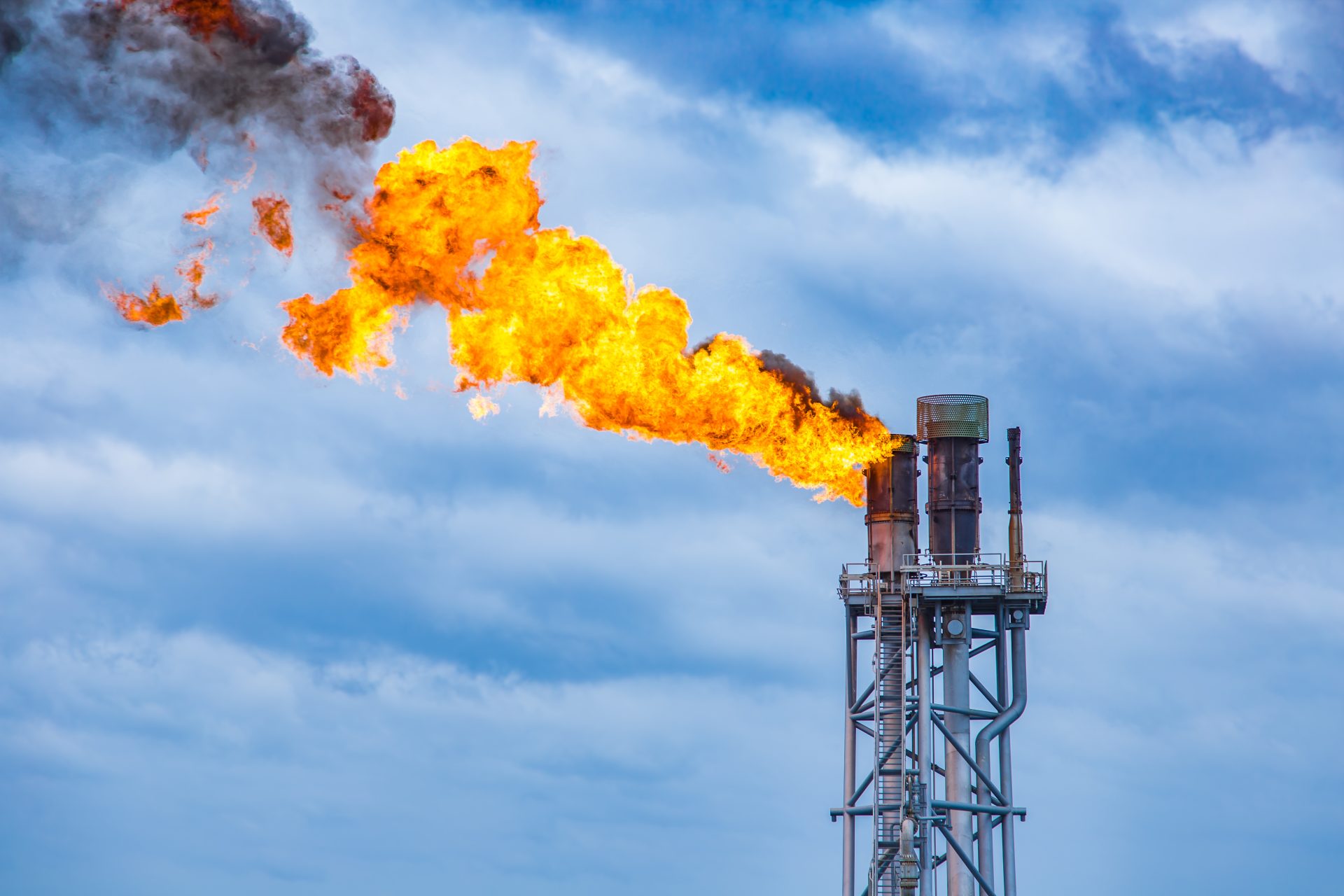
Global gas flaring reaches a 17-year high and produces 389 million tons of carbon pollution in 2024
Nigeria’s gas flaring increased by 12% in 2024, exacerbating emissions even with a modest rise in oil production, according to World Bank reports.
A World Bank report has revealed that the fossil fuel industry released an additional 389 million tonnes of carbon pollution into the atmosphere last year through unnecessary gas flaring, representing a “enormous waste” of fuel that contributes to global warming equivalent to the emissions of the country of France.
Flaring serves as a method to eliminate gases like methane that are produced during the extraction of oil from the earth. Although it can occasionally protect workers by alleviating pressure buildups, this practice is common in numerous countries due to the fact that burning gas is frequently more cost-effective than capturing, transporting, processing, and selling it.
According to a report by The Guardian UK, global gas flaring increased for the second consecutive year, reaching its highest level since 2007, even amidst rising concerns regarding energy security and climate breakdown.
In 2024, it was reported that 151 billion cubic metres (bcm) of gas were burned during oil and gas production, an increase of 3 bcm compared to the previous year.
“Flaring is an unnecessary waste,” stated Zubin Bamji, the Manager of the World Bank’s Global Flaring and Methane Reduction partnership (GFMR), which authored the report. “It represents a lost chance to enhance energy security and ensure access to dependable power,” he stated.
Observers often express concerns that the regulations aimed at preventing unnecessary flaring are insufficient and inadequately enforced, leaving companies with minimal motivation to cease the practice since they bear no financial responsibility for the resulting pollution.
The report indicated that nine countries – Russia, Iran, Iraq, the US, Venezuela, Algeria, Libya, Mexico, and Nigeria – accounted for three-quarters of all gas flaring in 2024. The majority of the most significant offenders were nations that operated state-owned oil companies.
Despite attempts to curb the practice, the intensity of flaring and the volume flared per barrel of oil produced have remained “stubbornly high” over the past 15 years, according to the report.
The International Energy Agency (IEA) has urged the complete cessation of all flaring, except in emergency situations, by the year 2030. The value of gas flared last year, estimated at around $63 billion based on EU import prices for 2024, exceeds half of the initial costs identified by the IEA as necessary to completely eliminate the practice.
The report utilized satellite data to estimate flared gas and was produced by the GFMR, comprising some of the world’s most polluting governments and companies.
The funding sources comprise European energy companies like BP, Eni, Equinor, Shell, and TotalEnergies, along with significant oil-producing nations including the US, Norway, and the United Arab Emirates.
In 2024, Nigeria experienced a 12 per cent rise in gas flaring volume, as reported by the latest World Bank’s Global Gas Flaring Tracker Report, despite the initiatives taken by the Nigerian Upstream Petroleum Regulatory Commission (NUPRC) to address the issue.
Nigeria saw a 12 percent rise in gas flaring in 2024, indicating the second consecutive year of increasing flaring volumes. Oil production saw a modest increase of 3 per cent, leading to an 8 per cent rise in flaring intensity, from 11.0 m³/bbl in 2023 to 12.0 m³/bbl in 2024. This figure is more than double the global average flare intensity.
In recent years, international oil companies have consistently divested their onshore assets, leading to the Nigerian National Petroleum Company (NNPC) and several smaller, predominantly indigenous companies acquiring and operating these assets. In 2024, flaring at upstream oil and gas facilities operated by NNPC (along with its wholly owned subsidiaries) and smaller companies accounted for 60 percent of Nigeria’s gas flaring and contributed to 75 percent of the increase in flaring.
“Many smaller companies are likely aiming to maximize oil revenues in response to the higher prices that emerged from 2022 onwards, which has consequently led to increased gas flaring.” These companies might also be deficient in the necessary expertise and funding to engage in capital-intensive gas utilization projects.
“Funding could pose a challenge for NNPC, which has faced difficulties in covering its share of investment costs when it acts as a non-operating partner.” The potential for utilizing associated gas for power generation remains a challenge, particularly due to the lack of energy access for millions of Nigerians, compounded by commercial and regulatory issues, electricity grid stability, and limited project financing.
“Additionally, the report noted that gas export opportunities are constrained, as many smaller companies lack commercial access rights to the fields. The fields that continue to flare are often small and isolated, which complicates and raises the costs of projects aimed at utilizing the gas.”
In response to this issue, the report indicated that Nigeria launched the “Nigerian Gas Flare Commercialisation Programme” in 2020. By the fourth quarter of 2023, contracts were awarded to 38 companies to tackle more than 40 flare sites, along with four companies tasked with developing flare reduction projects at nine sites by clustering the flares for greater economies of scale.
The report additionally disclosed that Russia continues to hold the title of the world’s largest gas flaring country, with flaring volumes increasing by 2 percent in 2024. Global flaring in upstream oil and gas facilities rose from 148 bcm in 2023 to 151 bcm in 2024.